Posts: 12,604
Threads: 6,706
Joined: Nov 2020
The Book of Destiny
An Open Statement of the Authentic and Inspired Prophecies of the Old and New Testament
by Fr. Herman Bernard F. Leonard Kramer
Taken from here [slightly adapted]. :
J. S. Considine, O.P.
Censor Deputatus
John M. Mueller, D.D.
IMPRIMATUR: * Bishop of Sioux City, Iowa
January 26, 1956
Originally published in 1955 by Buechler Publishing Company, Belleville, Illinois. Reprinted in 1972 by Apostolate of Christian Action, Fresno, California using entirely new type set under the author's supervision, from which this printing has been made.
+ + +
DEDICATION
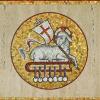
This work is dedicated to the LITTLE LAMB, who is the ROOT OF DAVID, the HEAD of the Church, the MASTER and CENTRAL FIGURE OF HISTORY, the RULER over the kings of the earth, the KING of kings and the VICTOR over all evil powers, and who has been shaping the destiny of the world in His own Mysterious Manner since His Sacrificial Death on the Cross.
About the author: Father Herman B. Kramer was born in Petersburg, Iowa, March 24, 1884. He lived all his early life in Iowa, attending parish schools in the Diocese of Sioux City. He graduated from business college at the age of 21 with a degree in accounting. A year later, he entered St. Lawrence College (now Seminary) at Mt. Calvary, Wisconsin, completing a course in philosophy in five years. He studied theology at Innsbruck, Austria for one year. Ill health forced him to return to America, and he completed his studies at St. Paul Seminary, St. Paul, Minnesota, where he was ordained a priest in 1914.
He served as a priest in the Diocese of Sioux City for 40 years in various capacities, including a two-year term as chancellor and 37 years as a pastor. He is presently retired (1975) and residing in Oakland, California. Father Kramer learned to read and write seven languages. He became interested in the Apocalypse after reading it as a student in the seminary, and it later became a life-time study. His world famous Book of Destiny took 30 years to complete and is the result of these years of study.
FOREWORD
The title chosen for this book sets forth the contents of the inspired message revealed to St. John, the Apostle. It is a summing up of the prophetical work in the Bible by the Holy Spirit and a revelation of the Great Causes shaping future history which will constitute the destiny of mankind. This destiny will be created and developed by man's free will. It is the Book of Destiny, because it shows forth the destiny of the whole human race. It is building up now and will grow until the Day of Judgment. This building up began with the renewed persecution of the Christians by Trajan after the benign lull under the Emperor Nerva.
The Apocalypse received its name from the first word of these revelations. Whether St. John gave it this name or not cannot be established. The secrets of the future written in this book have mystified and intrigued the minds of the most inquisitive for nineteen hundred years. St. Vincent Ferrer five hundred years ago and St. Bernardine of Siena a half a century later threatened their hearers with the judgments enumerated in the Apocalypse, but their words were not well heeded. Yet the FIRST WOE was averted from the countries which they evangelized. For a hundred years now the secrets have been quite openly expressed and written about, though with some uncertainty and misgivings, but have not been noticed by the world. In the meantime events have succeeded with increasing speed and growth towards a denouement of the secrets of the GREAT WORLD DRAMA so long wrapped up in mysterious visions. Any day may flash upon the consciousness of men the DESTINY towards which mankind is hastening.
- The Author
"So let us be confident, let us not be unprepared, let us not be outflanked, let us be wise, vigilant, fighting against those who are trying to tear the faith out of our souls and morality out of our hearts, so that we may remain Catholics, remain united to the Blessed Virgin Mary, remain united to the Roman Catholic Church, remain faithful children of the Church."- Abp. Lefebvre
Posts: 12,604
Threads: 6,706
Joined: Nov 2020
I. INTRODUCTION
THE APOCALYPSE A PROPHETICAL BOOK
The word PROPHET, derived from the Greek, orginally meant the same as the Hebrew word 'NABI', an interpreter or mouthpiece of God. (Exod. VII. 1-2). The prophet in the Old Testament was commonly called "a man of God", being His spokesman, the inspired deliverer of His revelations and the interpreter of His Will and His Designs with the people of Israel. When Samuel was the great leader about 1000 B.C., the prophets were a permanent institution and formed communities or schools, in which young men were educated and trained for their calling to praise God in psalms and hymns, especially when moved by the Holy Spirit (1 Kings X. 5-12). Throughout the history of His people, God chose by an extraordinary act those whom He desired for special manifestations of His Will and Power to Israel. Thus He chose Samuel, Elias, Eliseus, Isaias, Ezechiel and others.
The prophets are divided into two classes: The older prophets, who delivered God’s message orally, many of whom were mighty in power and deed; the younger prophets, who appeared later in time and committed their message to writing, although they also preached to people and rulers. All the great prophets envisioned future events and evolutions of history. And therefore the word, PROPHET, eventually came to mean only one who foretells the future. St. Paul (1 Cor. XIV 24-25) does not use the word exclusively for one who foretells the future but includes those who reveal present secrets. In the Apocalypse, prophecy denotes both a revelation of present secrets and of future facts.
In the Old Testament, the prophets wrote seventeen books during the course of about four hundred years, from 800 to 400 B.C. Thereafter the voice of prophecy became silent. All prophets were held in highest esteem by the Israelites. They exercised far-reaching authority both before and after the Babylonian Captivity. And later, when even the priesthood was in perplexity and doubt, deliberating what course to pursue, they waited "till there should come a prophet" (1 Mace. IV 46). But the spirit of prophecy remained dormant in Israel up to the time of our Lord, who is the Prophet of prophets. Then Mary and Zachary, Simeon and Anne prophesied (Lc. I. 46, 67; II. 29). And our Lord called John the Baptist the greatest of all the prophets, because he held the office of Precursor (Lc. VII. 28).
Jesus Christ was soon recognized as a "great prophet". He came into the world endowed with the prophetic dignity, and He exercised this office during His whole public ministry. Even before this, when but twelve years old, He manifested this prerogative (Lc. II. 46). When outlining His mission to the world, He promised His hearers prophets who should reveal new truths as well as interpret the old (Mt. XIII. 52; XXIII. 34). But He obviously had the apostles in mind not the charismatic prophets who appeared later among the gifts of the Holy Spirit. Not our Lord, but the Holy Spirit sent them. The Apostles had the gift of prophecy in a more eminent degree than those who were mere prophets; the prophetical office promised by our Lord was embodied in the apostolate, embracing the power to teach, rule and sanctify the Church, for He made those whom He appointed apostles His spokesmen and the bearers of His message. He conferred the OFFICE of the apostolate on His chosen and appointed ones; while the Holy Spirit, by the graces and charismata He infused into them, endowed them with the ability to carry out the threefold office of the apostolate. Our Lord called and ordained the original apostles for OFFICIAL positions in the Church, and these in turn appointed their successors, the college of bishops. But the GIFT of the apostolate was given by the Holy Spirit to other men not appointed official apostles by the Lord, to those who together with them were gifted to do apostolic work, to preach the Gospel and establish churches. These other apostles received the charismata of the Spirit. There is therefore a distinction to be made between this charismatic gift and the office of the apostolate.
There is likewise a distinction to be made between the gift of prophecy and the office of prophet. The gift of prophecy was a grace of the Spirit, in the light of which wonderful, secret and future things hidden even from the official apostles were revealed to the recipients (Acts XX. 22; XXI. 11). All the charismatic gifts were particular endowments of the Spirit for particular works in the Church. The charismatic prophets were gifted to edify, exhort and console the faithful, as the doctors were to instruct them in their faith. These prophets were not like the prophets of Israel, appointed to hold any jurisdiction in the Church. Such jurisdiction was reserved for the bishops appointed and ordained by the Apostles (Acts XX. 28; Titus 1. 5). In choosing bishops to rule the Church and to continue the work of the apostolate, the Apostles may have considered only those whom the Holy Spirit had endowed with the gift of prophecy, because the grace of prophecy was an efficacious help in the work of the apostolate and ranked next in order to the grace of the apostolate (I. Cor. XII. 28). But that the Apostles gave preference for the episcopate to those who were thus endowed cannot be proven from Scripture.
On Pentecost, St. Peter in his first sermon announced to the world the conferring of the gift of prophecy by the Holy Spirit. But neither his explanation nor our Lord's promise means that a hierarchical order of prophets would be instituted in the Church. St. Peter merely explained that the astounding miracle witnessed by the multitude manifested the presence of the Holy Spirit. St. Paul enumerates prophecy as one of the charismata of the Spirit (1 Cor. XII. 28; XIII. 2; XIV 3; Eph. III. 5; IV 11).
Greater than the gift of prophecy is charity (1 Cor. XIII. 1 ff). Prophecy is not called an order; it gave no authority to rule; it was but a special gift to extend the power and influence of the Church after the Apostles had established it to bring new converts into it and to edify, exhort and console the believers (1 Cor. XIV. 3, 24).
In his letter to the Ephesians, St. Paul makes the apostles and prophets the foundation of the Church and Christ the cornerstone. The reference there is clearly to the prophets of the Old Testament. The church pre-existed in the Old Testament, and the prophets were the teachers officially appointed by Jahve as were the Apostles by Jesus Christ, so that the Church of the Old Testament was prophetic in character as that of the New is apostolic. Both the teachings of the prophets and apostles constitute the foundation of the Church, and the revelations of the charismatic prophets are not part of that foundation.
The Apocalypse is a prophetical book (IV 1), and it ranks St. John with the prophets of the Old Testament (X. 11). The "mystery of God" had been declared by His "servants the prophets" (X. 7), and that prediction promised the complete victory of Christ. No records exist of the charismatic prophets making any such predictions. The Apocalypse is so largely a restatement of the Old Testament prophecies, that some have called it a mere compilation. Where the "prophets and saints" are mentioned (XI. 18), the reference is to the Two Witnesses and the martyrs who shall suffer and die under Antichrist. And the same significance is attached to "the blood of saints and prophets" (XVI. 6), which calls for the seven last plagues; and the same motive is given for the rejoicing over the fall of Babylon (XIX. 2), the capital of the False Prophet, from which shall issue the edicts of persecution and bloodshed meriting the vengeance of Heaven (XVIII. 24). The ancient prophets had pronounced the judgment upon Old Babylon, and St. John was inspired to pronounce it upon the new. And perhaps the blood of all Old Testament prophets as well as of all martyrs of the Church shall be avenged in the destruction of this city of sin as it was in the destruction of old Jerusalem (Mt. XXIII. 35).
The Apocalypse is not the work of the charismatic prophets but the work of an apostle who is endowed with the gift of prophecy. The Christian prophets contributed no literature to the treasury of the Church as did the prophets of old. The charismata in the Church may have disappeared before the Apocalypse was written, for St. Ignatius mentions no prophets in the churches at the time of his martyrdom With him the all-important offices are the ranks of the hierarchy, those of bishop, priest and deacon. The prophets he makes reference to are those of the Old Testament (Magn. VIII. 2; Phil. V 2, 9). Obviously therefore the Christian prophets of apostolic times were an ephemeral product of the Holy Spirit called to convince unbelievers of the divine origin of the Church and never intended to be a permanent teaching force. The Apocalypse does not appear to make any reference to the prophets and other charismatic men so numerous in the days of St. Paul. Chapters I. II. III. IV. treat of the hierarchy as the life-giving principle within the Church, through which the destiny of the Church and the world is to be shaped, and the final enduring victory for Christ and mankind is to be won.
Use Of The Old Testament
The author of the Apocalypse uses the Old Testament extensively. He not only adapts the symbolism and imagery of the prophets to his needs but gives out a new edition of many prophecies. Whole passages are verbally taken from the Septuagint. Other passages are re-stated and are the substance of prophecies as contained in the Hebrew text. St. John does not make formal quotations from the prophets and does not appeal to their authority, because he writes in the strength of his own apostolic authority, which excels that of the prophets. His verbal extracts from the prophets must then be understood to be interpretations of the obscure Old Testament prophecies. Some coincidences of language, of words and phrases with those of the Greek Septuagint, are no doubt accidental.
The common commercial or conversational Greek was adopted in the composition of the Apocalypse, the same as used in the Septuagint. In that simple Greek style, a deep student of the Septuagint would readily use the same words to describe the same visions. For these and other reasons many passages of the Apocalypse are verbally the same as those found in the voluminous contents of the Old Testament. However, from the contents of the Apocalypse, it is perfectly plain, that St. John verbally copied many passages from the O.T. to give them fuller expression and to put them in a context where their true meaning can be easily understood. Such use of the prophets appears decisively intentional in many instances. Many prophecies of the Old Testament are just fragments, are mere glimpses of the future empire of the Messias. St. John takes these fragments and pieces them together and shows the full import of each prophetic glimpse.
His work is not a compilation of those prophecies but is as concise as possible a statement of the revelations made to him. Since those revelations were the completed visions, the glimpses of the Old Testament prophecies fit in here and there without an apparent conscious effort by the Apocalyptist.
The apocalyptic visions gave the prophets ages in advance the materials for their prophetical descriptions. In our interpretation, St. John is not supposed to have borrowed any ideas from the Old Testament other than similes and figures of speech by which he gives more vivid expression to some of the descriptions and narratives. The materials of the Apocalypse, where they are the same or similar to those of the Old Testament, are always handled in an original way. So this is not the work of a mere poet who combines ideas and forms of older poets into new forms and new ideas but is a new creation of the prophetic mind. No poet could have taken the prophecies of the Old Testament and made our Apocalypse out of them by his own unaided poetic genius. Whatever St. John borrowed from the Old Testament, he always modified to suit his purpose making the detailed descriptions of the visions sometimes approach nearer to those of the Hebrew version, sometimes to those of the Septuagint. It is claimed that he refers to the book of Daniel in forty-five places. Isaias, Ezechiel and Zacharias are next most frequently in evidence. And the book of Psalms has a large share in his attention. With all that, the book is not a compilation but a logical unity from beginning to end. The logical sequence lies in the text and will be demonstrated in this interpretation. The unity of authorship is also so evident in the text itself, that even without the unvarying external evidence from Christian antiquity, no serious student of the book could find any difficulty in admitting it.
The Author Of The Apocalypse
The genuineness of the authorship of the Apocalypse is solidly established from both the internal and external evidence. St. Clement of Rome seems to quote it (Ad. Cor. 34). St Justin quotes it (Dial 81) and according to Eusebius attributes it to St. John (Eus. Hist. Eccl. XVIII. 8). Irenaeus writes a commentary on it and ascribes the book to St. John, the Apostle (Adv. Haer. V 25-30). Hippolytus writes a large treatise on Antichrist explaining the apocalyptic description about him. Theophilus, Cyprian, Tertullian, Clement of Alexandria, Origin and Victorin all attribute the book to St. John, the Apostle. The Apocalypse was in the Itala and in the Sahidic and Bohairic versions of the Bible. It is also enumerated as Scripture in the Muratorian Fragment.
The internal evidence is so decisive especially when combined with the external historical testimony, that no doubt can remain about the authorship. The contents clearly delineate the character of St. John, the beloved disciple. Some of the so called super-critics have tried to overthrow the internal evidence by making a distinction between the Apostle John and the beloved disciple and even another John called the Presbyter. For the deeper and more thorough student of the gospel and epistles of St. John and of the Apocalypse, the same mind and character is prominent in all these documents. Hence those critics realizing the strength of the evidence have tried to ascribe even the gospel to some one else not the Apostle. In the Apocalypse he mentions his name as the author and as a servant of Christ. He writes in the name of Christ with apostolic authority to the seven churches and to all the world. The Apocalypse simply states that it is "John" who wrote the book. That simple mentioning of his name clinches the argument of his authorship. The name "John" was a sufficient guarantee of the writer's authority to gain a respectful hearing or reception for the book. He received the revelations on the Island of Patmos.
Irregularities of grammar in the composition of the Apocalypse are no proof that the author is not the same one who wrote the gospel. It may have been written by one or more secretaries under St. John’s dictation. Or St. John may in his last years have lost some hold on the Greek language, or he may not have taken the time to correct the Greek of his original notes.
The Time of Composition
The time of its composition is very definitely stated by Irenaeus to have been towards the end of Domitian's reign (V 30, 3). Irenaeus writes that he met and tarried with Polycarp, the disciple of St. John. The testimony of Eusebius agrees with that of Irenaeus.
From the internal evidence we glean a respite from persecution during which the Apocalypse was written, but Asia might soon expect the arrival of the "great tribulation". There were martyrs long ago, as the letters suggest (II. 3, 13), and many of them in the Empire (VI. 10). Now the first persecution was begun by Nero, A.D. 64. The next one was towards the end of Domitian's reign. The Apocalypse quite clearly suggests the reign of Domitian, during which emperor-worship was at a high pitch (II. 13; VI. 2; XIII. 4, 15) reaching its culmination towards the end of his life. The letters reveal that the faith had long been planted in the cities addressed and that some of the people had lost the apostolic fervor, which would suppose that a second generation had grown up, and thirty years or more had passed since the establishment of these congregations. This would bring the composition of the book after the year 90 A.D. Furthermore, St. John could not have interfered in the administration of the churches during the lifetime of St. Paul. But the letters indicate a long acquaintanceship with the churches and a comprehensive knowledge of their spiritual and temporal condition. The mentioning of the Temple in the Apocalypse on the other hand is no proof if its existence, because the Temple mentioned is an ideal temple, like that of Ezechiel.
The so-called HIGHER critics claim the first three verses to be spurious and the work of a later editor or compiler. Only their prejudice could prompt them to thus contradict the internal evidence. For the language of these verses including grammatical irregularities is that of St. John. The first three verses are a suitable introduction. To begin the book with verse four would make it begin like an ordinary epistle. It would be just as logical to reject the first eight verses as the first three and following out the same kind of logic reject the first nine chapters. In the present interpretation, we take the verdict of the true critics and accept the whole received text as genuine.
The work of determining the true and authentic text has been completed by the archeologists, commentators, exegetes and textual critics. Such research is therefore superfluous at present and does not come within the scope of our interpretation. Ours is but an attempt to establish and prove some fundamental principles, which seem to be the key to the revelations, and interpret the whole book by adhering to and following out those principles from beginning to end. And the received Greek text makes such an attempt possible. Each word in the text has its rightful place of importance and no word is superfluous. There are some differences in the ancient manuscripts as well as in the quotations of the Fathers, but the textual critics are in agreement on the original text and have adopted the manuscripts that have always been held nearest the original. The Apocalypse has received the same careful study in this regard as all the other books of the New Testament, so that at present there is little disagreement on the true Greek text among Catholic, Protestant and Orthodox scholars.
Purpose of the Apocalypse
The immediate purpose of the Apocalypse is quite evident in many statements. It is plainly to CONSOLE the Christian congregations in the hardships of a virtuous life and in the dangers of practicing their religion with persecutions facing them. Their rights as citizens were jeopardized; their possessions were made evanescent. There was danger that the present persecution begun by Domitian would be extended to Asia. The Christians were viewed with suspicion, because they would have nothing to do with the worship of the gods or the worship of Caesar and kept aloof from many public functions. St. Paul, their spiritual father, had been martyred long ago. This was not the generation which St. Paul had converted but one that had grown up since his martyrdom. They had learned the promises of the Apostle from hearsay. The Parousia of which he had often spoken had not materialized, and therefore a new revelation was necessary to bolster up the courage of the Christians and steady them in their faith. Likewise was such a revelation needed to clear from the churches abuses and relapses into superstitious practices.
A revelation that assured judgment upon the enemies of Christ, the speedy Parousia and the final triumph of the kingdom of God was of immediate and constant practical use. So the Apocalypse was of inestimable value to the Church upon its publication. The letters in the second and third chapters explain the dangers existing in the several congregations after each is ex-rayed by the Spirit. In that divine light material prosperity is seen to be far more dangerous than persecution. Each congregation has particular perils to face, and each is in turn specifically directed how to combat these perils.
The Apocalypse is also a book of consolations for all time to come, because the Church will at all times have many trials and persecutions to bear. The most insistent need of consolations shall be during the greatest crisis of its history in the days of Antichrist. The Apocalypse reveals the outcome of all attacks on the Church and the final victory of Christ. Not only does an eternal crown await the martyrs but also the triumph of Christ in the world through their constancy. And not only in the letters but throughout the book, the Christians are warned against drifting with the maelstrom of sin (XIV 9) and are urged to keep themselves unsullied (XVI. 15) and to hold out until death against persecution (XIII. 10; XIV 13). The book thus becomes a book of consolations for all times.
In the inspired outlook of St. John, the book was to reach a wide circulation down to the farthest horizons of future generations (XXII. 18). It would, like all other inspired writings be a book for all times, because it is the recital of the victories and the final grand triumph of his beloved Master. St. John recognized both his own gift of prophecy and the revelations as a prophecy (IV 1-2), and he ranks this book with the other inspired Scriptures (Deut. IV 2; XII. 32). In the most emphatic language possible, he promises the fullfillment of all prophecies in it.
The Apocalypse not only revealed the triumphs of Christ but of necessity also the sufferings of His Church, His mystical body. The growth and activities of the forces that caused these sufferings had to be revealed too. Thus the Apocalypse re-iterated the statements of Christ in the gospels, that His Church will suffer hatred and persecution but through this persecution will be purified and will win the victory over sin, over the world and over Satan.
The Apocalypse was needed at the time of its appearance for another reason. From the time in which prophecy ceased in Israel until the birth of our Lord, the chosen people had experienced many dire calamities. Those calamities moved many to decide that a prophecy was needed to bolster up the courage of the people and to revive their hope in the ultimate triumph of their nation over their oppressors. Many false prophets then took to writing apocalypses of various kinds. They produced the many apocryphal apocalypses of pre-Christian and early Christian times. The book of Enoch is the most important of pre- Christian days, while after the destruction of Jerusalem, the apocalypse of Baruch and the IV book of Esdras appeared. With the destruction of Jerusalem, the hope of that Israel that rejected Christ collapsed. Then, like the false prophets in the days of Jeremias, the false apocalyptists tried to keep alive the false hopes of the antichristian Jews. The revelations made to St. John appeared in the midst of this flood of false apocalypses to save the Christians of Jewish origin from being misled and to reveal the true destiny of God's people.
The text is similar to some passages of the apocryphal apocalypses, but not because St. John made use of those books. Those books are very largely plagiaristic and had been verbally copied from the apocalyptic prophesies. Hence St. John, in restating the Old Testament prophecies, comes very near to the diction of the apocryphal books. He probably knew of the existence of these books, but there is no evidence to prove that they furnished him any material for his Apocalypse. His revelations are real and true, and his book is only the recital of what was revealed to him. His apocalypse bears his own name, while the apocryphal ones all bear the name of some older prophet. That St. John might have used current words and phrases often on the lips of people such as the word "logos" in the Gospel is not impossible.
It was not necessary that the prophecies be understood at once. In fact, if they could have been interpreted as covering thousands of years of Church history, they would not have been so pithy. The Christians were not all of such heroic calibre and of such unwavering constancy as to be willing to lay down their lives, and more, suffer the most excruciating torments for an unseen reward, when those who denied their faith and saved their lives could have the good things of life, repent at leisure and be forgiven before they died. Had they known the true meaning of the prophecies, they might have apostatized during persecution. But the thought that the judgments upon the wicked were to begin at once, and they were to be wiped from the face of the earth, and only the good were to remain to inherit all things was a strong inducement to risk everything on the side on which the only hope of winning existed. Hence the book of the "seven seals" was a closed book, and when the seals were opened, events were revealed in such mysterious language and symbols, that they could not be understood or interpreted until after their happening. But the revelations contained in the open "booklet" are not so figurative and might be understood in advance. There is in it a far more minute description of events to come than in the seven seals and the first six trumpets. This is all-important for those who shall be on earth during the greatest crisis of history, the days of Antichrist.
The Imagery of the Apocalypse
St. John cannot be reasonably supposed to have been versed in all the literature and mythologies of the Greeks and Latins and all other ancient pagan peoples. It might even be going too far to credit him with a knowledge of all apocryphal books of the Jews. Before his call to the apostolate, he surely was not conversant in pagan lore or in spurious Jewish scriptures, and after his call he was the constant companion of our Lord and drank deeply at the divine fount of learning. After the Ascension began the incessant labors of the apostolate. To master the Greek "Koine" language, to study the Septuagint version of the Old Testament and to preach the Gospel and establish churches was enough to fill up a human life. Added to that were the wearisome journeys of the apostolic life, during which there could be little time for study, and the all-absorbing attention to the churches established and to the Christians converted. In the light of all this, it seems unreasonable to consider an apostle as having time to study pagan literature so thoroughly as would enable him to adopt its phraseology and imagery spontaneously when writing an inspired book.
In our interpretation all borrowing from pagan sources and all allusions to mythology are rejected, and the traditional view is held that the visions are true and real, and that St. John labored to depict them as exactly and concisely as was possible with his knowledge of the Greek language. The Holy Spirit, as appears throughout the Old and New Testaments, accommodates Himself to the imagination, mind, will, temperament, attainments and experience of the one He inspires. In conveying to the writer the truths to be revealed, He excites those images that most naturally shape themselves in the seer's mind, higher or lower in the intellectual scale, consonant with his natural and acquired gifts. And He arouses those emotions that are most exactly expressive of the writer's character and temperament. The Prophet Amos, being a shepherd, uses pastoral similes and symbols to illustrate his message. Daniel, who spent most of his days at court, receives revelations concerning kingdoms and empires. Ezechiel, who was of priestly family, is ever solicitous about the Temple and the worship of the Deity and traces out the consequences of false worship. And St. John in the Gospel and epistles manifests a character of the highest spiritual tone. He begins the Gospel with the loftiest flight of imagination and theology and during the whole narrative maintains the same spiritual elevation of thought. The Apocalypse presents the same mind and heart, the same imaginative power, emotions and temperament as the Gospel and the epistles?
In the composition of the Apocalypse, which treats of a subject very different from that of the epistles and Gospel, St. John necessarily exhibited with prominence those faculties of the mind that were in the background in the other writings and relegated to the background those faculties that were in evidence in the Gospel composition. The Gospel was more subjective in tone, while the Apocalypse is more objective. The mind, heart and character of St. John were eminently qualified to receive these revelations. The great prophets of the Old Testament had received only glimpses of these and similar visions. But since St. John was spiritually and morally far superior to the ancient prophets, his qualifications made him worthy of receiving the complete revelations which the prophets received only in fragments.
The imagery of the Apocalypse is either entirely new or supplementary of the revelations partially made to the prophets. The Old Testament prophecies are thus interpreted and made clear. The Apocalypse is the finish, completion and summing up of all revelation. It was not necessary that the imagery be drawn from the apocrypha or still less from pagan mythology. All that could be drawn from the apocrypha is contained in the inspired books, because the apocrypha are largely plagiarisms. They take the imagery of the prophetical books and embellish them with apt imaginings, but they reveal nothing new and clarify nothing. To suppose that St. John borrowed visions from spurious sources or even from pagan poetry or mythology would be supposing that his words were not true, for he represents all the visions as true and real. They could therefore have no affinity to the fancies of pagan poets. The revelations in the Apocalypse are likewise totally different from those received by the other Christian prophets of St. Paul's time. Theirs were only glimpses, flashes of divine light, and their purpose was edification or consolation for the time and place in which they were received without any obligation to record them. What visions they had cannot be known, because they were not recorded. The revelations of the Apocalypse were intended for all times.
St. John draws his imagery from all parts of creation and from all conditions of human life. The heavens lend a touch of sublimity to many truths revealed. The sun enwraps the Woman, the moon serves as her pedestal and stars encircle her head for a crown. At other times the sun is dimmed with mystery, the moon turns to the color of blood and stars fall from heaven. A meteor sweeps across the sky; lightnings and thunders terrify the peoples; winds and hail flay the earth. And the sea appears now and then with its fish, ships and mariners. Mountains and islands move away or sink into the sea, and into it is tumbled a volcano. Also a crystal sea appears. Earthquakes rock the earth; caves and dens furnish hiding places for the wicked; deserts, fertile fields, trees, orchards and vineyards, rivers and fountains adorn the descriptions.
All phases of human life appear. Agriculture furnishes its symbols of trees, vines, herbs and grass; the harvest and vintage pass review. Commerce with its freighter ships illustrates prosperity; business methods are hinted at; the opulence of the rich and the squalor of the poor come into view. Occasions of joy, the wedding feast, and occasions of mourning and weeping at the plagues of the destroying angels; The sensual pleasures of the lustful, and the spiritual joys of the virgins: All these are seen in turn. Priests appear in priestly robes and penitents in sackcloth. The patience of the saints, the benedictions pronounced upon them, the praises and adoration they offer the Deity exalt the mind of the reader; whilst the wailings and despair and blasphemous ravings of the inpenitent worshippers of the Beast and his sinful proposals instill a wholesome fear and dread. The ravages of raiding warriors or barbarian hordes and vast armies, despotic kings and world-controlling powers are depicted shedding the blood of defenseless victims. All classes of men: the kings of the earth, merchants, sailors, soldiers, musicians, craftsmen, slaves and free citizens cross the stage.
The powers of darkness are depicted battling the spirits of light; and the kings of the earth submitting to the direction of the dragon, the king of darkness, are drawn up in battle array against the King of kings and His armies of light. The happiness of the virtuous on earth in the midst of all turmoil encouraged by promises of everlasting bliss is contrasted with the sordid satisfaction of the servers of sin who are confronted with nothing but prospects of endless torments in the pool of fire.
The animal kingdom likewise furnishes many symbols. The living creatures, the wild beast and other beasts, a lion, a lamb, a calf, a leopard, a bear, an eagle, horses, locusts, scorpions, frogs, vultures and birds of the air appear and vivify the scenery. The elements, fire and water, personifications of death and sin, the underworld and the pool of fire and a bottomless abyss form settings for parts of the world-wide drama.
A very large part of the imagery is identical with that of the Old Testament, in employing which, St. John gives a new or fuller interpretation to its symbolism. Other symbols are taken from the Old Testament to represent new developments in the history of the Church. Symbolic names of Old Testament personages appear in the Apocalypse, such as the lion of the Tribe of Juda or the root of David. The tree of life, the water of life and the book of life are given a clearer meaning and add a halo of sublimity to the narrative. Famous places, such as Babylon, Sodom, Egypt come before us, and a New Jerusalem takes the place of the old. Many symbolic numbers are employed: 2, 3, 314, 4, 5, 6, 7, 10, 12, 24, 42, 144, 666, 1,000 1260, 1600, 7,000 and 200,000,000. Of all of these numbers SEVEN is the most frequent. It is the sacred number of completion. The mystic number, the number of the Blessed Trinity, is combined with many numbers to compose the others. FOUR is the number of universality, and this multiplied by three gives the perfect number, 12, God’s number. The world's number of perfection is TEN.
The last Judgment with the Great White Throne is the final scene toward which the whole action of the Great Drama converges. Glimpses of this judgment are flashed on the canvass as a background for intermediate judgments and to keep the final summing-up of all events before the mind of the reader.
The Interpretation of the Apocalypse
Our interpretation treats the Apocalypse as an inspired book, because the infallible Church has spoken, has placed this book on the canon and proclaimed its inspiration. This is no longer an open question. As an inspired book the Apocalypse could not contain errors in matters of faith or morals. The INTERPRETATION of the Apocalypse is, however, an open question, and the odium theologicum could not attach to one which contains no teaching in conflict with the dogmas or moral doctrines of the Church.
Verbal dictation by the Holy Spirit is not held throughout, for in the ordinary narrative and in the descriptions of the visions, St. John chooses his own words. Verbal dictation is held where Christ or His representatives are directly quoted. The letters to the seven churches are a verbal dictation from Christ, and the choice of those churches are Christ's.
Divine inspiration would also preclude all possibility of images from pagan mythology, idolatry or astrology, because those things are unrealities, superstitions and abominations and could not condignly become vehicles of thought or expressions of divine revelation. Such use would seem repugnant to the Spirit of Truth and to human reason. However, the mentioning of superstitious practices and errors in doctrine, in order to refute and condemn them would not seem repugnant to the dignity of an inspired book. But it does not seem reasonable that the Seer would have drawn illustrations from apocryphal sources. Divine inspiration deals with realities, past, present and future.
In accommodating Himself to a human mind for the purpose of making new revelations or of completing or re-stating old ones, the Holy Spirit evidently leaves His instrument intact with all his natural and supernatural equipment of mind and will; He leaves grace, intellect, will, memory, imagination, temperament, education and experience true to the owner. And it may be held He raises all these endowments and acquisitions to a higher plane for keener and more perfect use. He then rouses in the mind of the inspired one thoughts and images and brings before his senses visions which he will be most apt to understand clearly in all their relationships to the revelations to be made, so that he may easily and most naturally record every part and particle of the revelations truthfully. He may draw his words, images, symbols, figures of diction, allusions and amplifications from every source of human knowledge with which he is familiar; he may draw from the revelations formerly made through any and all inspired writers, from the revelations made by Jesus Christ Himself, from the organization of the Church, from her liturgy, laws, worship, doctrines; he may depict the revelations on a background of political, social, economical, moral or spiritual conditions in the world; he may use current literary expressions to attach new and higher meanings to them; he may allude to figures of speech in common use in particular communities to which he addresses his message; he may take cognizance of the moral and spiritual as well as social and political status of his readers: All this would not detract from the dignity of an inspired message. But to admit mythology or idolatry or any other abomination into the composition of an inspired book would seem like blasphemy to the Spirit of Truth and Holiness.
Accepting the above premise, we reject as unworthy of consideration many accretions to the text as contained in the commentaries on the Apocalypse after so many centuries of study. As is evident from the Gospel, St. John must have learned the Greek language very well. His diction, however, is not the classical but the conversational Greek. In this simple parlance, there would be many classical expressions from mythology having a practical meaning as in all our modern languages. But he would not by using the words and idioms allude to all the mythologies from which the words were derived. When therefore the philologists trace up the origin of these terms and read into the text the mythologies and astrologies for which they were coined, they "add unto" the prophecy.
In our interpretation, all definitions have been drawn from the Old and New Testaments. Many scenes and visions have been cleared up by the study of history, because a large part of the prophecies seem already past history. Studies on the constitution of the Church and on apostolic Tradition, as well as studies into the spiritual, moral, social, political, educational, economic and cultural conditions of the times have shed a great deal of light on the obscure symbolism of the Apocalypse. Using all this as a working basis, our interpretation has been worked out logically from beginning to end. It was written and rewritten before commentaries of many sorts were searched for further light.
In the knowledge of St. John, the Church surely possessed of divine truth all she possesses today though in a less developed form Hence for an interpretation, no one is restricted to the words of the text alone but may take the Apocalypse as a poetic description of many truths written down later in the traditional writings of the great Fathers and Doctors. If therefore an interpretation, which holds the doctrines of the Church of today to have been clearly outlined in the mind of the Sacred Writer and which understands these doctrines as portrayed in the historico-prophetical visions of the Apocalypse to be the same as those contained in the crystallized expressions of theology, will work out logically from beginning to end, such an interpretation should be justifiable. And surely St. John had a clear knowledge of the doctrines which in later ages were crystallized by the church, and he might express them in symbolic language such as makes up the Apocalypse. But he may not have understood the manner nor seen the perspective of time in all details in which the events revealed to him would go into fulfillment.
The Apocalypse can have no multiple literal sense any more than any other part of the Scriptures. But to discover the exact literal sense with certainty in the Apocalypse is more difficult than in any other book of Holy Writ. Our interpretation is written in a hypothetical strain throughout, because being a prophetical book and as mysterious as it is, the Apocalypse could not be affirmed to have absolutely such and such a meaning anywhere, even in the part that is commonly considered to be past history and that is held as such here. Prophecies can never be interpreted in advance with positive certainty, unless God gives the revelation of their exact meaning. Therefore it cannot be stated with certainty how much of the Apocalypse is fulfilled in our day. And the application of the visions to past historical events must always be made with reservations, no matter how true they may seem All the more can the unfulfilled part of the Apocalypse be only a probability however convincing the text is. But it did not seem necessary to use the phrases, "probably this is the meaning", "possibly this will happen", or "maybe this and maybe that" on every page or in every paragraph. It has intentionally been worked out to appear as probable or plausible as possible.
The Beast
The Apocalypse is a vivid portrayal of St. John’s knowledge of the struggle between the Church and the anti-Christian world-power in Asia. The Empire was the representative of that world-power that had continually existed for many ages and had led the nations and peoples of the earth into idolatry and emperor-worship by the military forces of an organized government and now silently and openly counteracted the influence of the Church. It is not so remarkable that St. John uses the word "Beast" and not the word "Antichrist", because he writes a prophetical book, and by using the same term used by Daniel, he puts this book in the same category. St. John, as Daniel did, presents the world-power under a figure that would arouse the reader's resentment and would heighten his trust in God to defend His Church against its malevolent might. Had he used the word "Antichrist", he would have restricted the prophecies to the man of sin, who according to both St. John and St. Paul was a person destined to gather all the evil forces in the world and unite and co-ordinate them under his dominion for the last desperate attack on the Church of Jesus Christ. By using the word "Beast", he could unite his empire of evil and his person of evil in one single term and include under it the anti-Christian world-power of his own time and unify their efforts against Christ and God by the mind and power of Satan. He thus aptly portrays the evil world-power of all times in the form of a bloodthirsty beast.
St. John presents Antichrist in a two-fold role, personal and political. He depicts the first in chapter XIII. and the second in chapter XVII. His idea of Antichrist is exactly that of St. Paul, that he is not on impersonal power but a man. "Little children, it is the last hour: and as you have heard that Antichrist cometh, even now there are become many antichrists" (1 Jo. n. 18, 22; IV 3). St. Paul had expressed the same view: "unless there come a revolt first and the man of sin be revealed . . . etc." (2 Thess. II.), leaving no doubt of its being a man. St. John gives another view of Antichrist, that he not only "cometh" but is already in the world and his presence is in the form of a power or organization, and it manifested itself in the doctrines of the Docetae (1 Jo. IV 3, 33; 2 Jo. 7). Irenaeus and Hippolytus apply the name to a person only not to an organization. The former identifies the "beast" with Antichrist. (Adv. Haer. V. xxvi, 1).
According to St. John’s view so clearly revealed in the Apocalypse, before Antichrist appears, the beast is non-existent for a time. "The beast that was and is not and yet shall be" (XVII. 8) is the anti-Christian world-power. This sentence has mystified many interpreters. St. Jerome left the last clause out of his translation, probably because he considered it a contradiction. However, the beast in chapter XVII. is the empire of Antichrist though not entirely differentiated from his person. This anti-Christian empire existed in former times for a long course of ages but then ceased to exist for a time.
The Apocalypse demonstrates very clearly that the victory of the Lamb over all the forces of evil including the author of evil will be achieved by human agents. The more unwavering the loyalty and the truer the spirit of sacrifice with which the human actors play their roles, the more decisive and far-reaching will the victory be. If all the hierarchy labored with the zeal and perseverance of St. Lrancis Xavier and in them were found none of the vices of the pharisees, the heresies and schisms which will finally usher in the reign of Antichrist would not be established, nor would the apostasy before Antichrist come about, nor evil grow to the enormities it shall attain during his reign. After having redeemed mankind and endowed His Church with all power needed to convert the world, Christ left it free to mold its own destiny. Man's perverse will has produced all the evil that has grown side by side with good in the same field. God left men's will free. The Apocalypse might be called the Book of Destiny, because it clearly outlines the evolution of the world's destiny to the end and shows the forces acting to create it.
The Apocalypse seems to point obscurely and guardedly to Domitian as the present embodiment of the beast. St. Paul does not in his epistles take this view of either the empire or the emperor. Although in the epistles of St. John, the Docetae are antichrists, in the Apocalypse, the reigning emperor is the persecutor of the Church (Apoc. VI. 2). Still, the Seer does not identify him with Antichrist, although he desired to be called "Lord and God". This blasphemy made Domitian in his own time the representative or type of Antichrist but not Antichrist himself, because the numbers 666 or 616 do not fit his name. Emperor-worship was in St. John's estimation the greatest sin, for it made the city that practiced it the "seat of Satan" (Apoc. II. 13) and will make Antichrist "the man of sin" (2 Thess. II. 3-4). The term "Beast" was for St. John therefore the most felicitous and most expressive term for all purposes he had in mind.
Another evil force were the Jews in attacking and persecuting the Church. St. John calls them "the synagogue of Satan". They are thus classed with the emperor-worshippers for denying Christ His rightful honor. Connected with emperor-worship was the worship of Askulepius in Thiatira, of Artemis in Ephesus and of Dionysus and Zeus in Pergamum. Then there were the heresies of the Nicolaites (II.6), of the partakers of sacrificial meats in the pagan temples (11.14) and of compromisers with magicians and soothsayers (II. 20 fif). All of these abominations indicated that the empire of the coming Antichrist was under construction. St. Paul had stated that "the mystery of iniquity already worketh" (2 Thess. II. 7), and St. John stated the same, "he is now already in the world" (1 Jo. IV 3). In the Apocalypse, the Seer outlines the preparation of his empire in the first nine chapters and thereafter its growth to maturity under the personal direction of Antichrist and then its destruction. Emperor-worship, idolatry, magic, Judaism, heresy, schism, agnosticism, infidelity, liberalism, atheism, compromise with error or unbelief, persecution of the Church, hypocrisy and other vices are the roots out of which the enormities of Antichrist's reign will grow until they will overshadow the world.
The Defeats of Satan
The Apocalypse might be crowned by the caption of "The Book of Victories", for it depicts the victories of Jesus Christ, which culminate in His grand final triumph over Satan and all enemies. It would be more accurate to say that it depicts the last phase of the final victory over the archenemy. Throughout the sacred writings, he stands exposed as a constant loser in his war on God. Every new seeming victory brought him a more humiliating and crushing defeat. Had he stopped warring on God after his dethronement in the first instance, his degradation would have been at the hands of the Almighty. Not satisfied with that first verdict, he allured man to his side against God. That earned him a stinging humiliation in the elevation of human nature to union with God in one divine person for the purpose of redemption. Human nature united to that divine Person overpowered him then and began to destroy his kingdom in the world. He then contrived to have that Person put to death. This forever frustrated his initial design of keeping man from obtaining the glory which he and his angels had lost. And it brought a more humiliating defeat upon him than any former one in that the Church renews the death of Christ in a mystical way and through that mystical sacrifice shall ultimately root up his empire altogether. Thus in trying to destroy Christ and His work, he brought the greatest defeat and humiliation of all upon himself and lost everything he had apparently gained in Paradise. With man redeemed and heaven re-opened, Satan's kingdom in the world has been dismembered ever more and more, not so much by an almighty act of God or by an almighty word of the God-man, as by the words of mere man pronounced at the Consecration of the Mass. Man is here empowered to overthrow the kingdom of Satan and drive him out of the world. Christ is now triumphant over Satan in the humble and lifeless appearance of the eucharistic species. This is the last phase of the final and hopeless defeat and utmost humiliation of the archenemy of God and man. St. John describes in epic splendors this last act of the grand drama of Redemption with its series of victories for Jesus Christ and mankind and its consequent defeats for Satan.
Christ entrusted the power to renew His bloody death on the Cross in an unbloody mystic manner to the priests of His Church elevating man thereby to God-likeness and defeating forever the designs of Satan with the utmost humiliation to himself. So much has man been exalted and Satan's pride humiliated, that he who was far lower than the angels in natural gifts now rises in the power of grace to defeat his enemy and stand forth triumphant. The judgments executed by the eucharistic Lamb upon Satan shall involve the whole world not to destroy but to chasten it and wrest it from the hands of Satan liberating the human race from his sordid servitude.
The firm belief of the faithful of the Church in this sacred mystery, in the Reality of the Great Presence, in the truth and effectiveness of Christ's words at the Last Supper, just as the Church has explained and believed it through all ages, undoes the unbelief of the head of the human race in Paradise. This is the "victory that overcomes the world" and the empire of Satan with all its earthly and unearthly forces, THIS FIRM FAITH. In and through the Eucharistic Mystery, the power with which Christ endowed His priesthood, distinguishing it thereby from all other priesthoods of history, and the unshakable belief in the words of Christ by the faithful of the Church, Paradise will be regained, and the honor refused God by Adam through the intrigue and deception of Satan will be restored to Him. The Apocalypse reveals the fruits of the victory gained by the Mystic Presence in the restoration of more than paradisiac conditions on earth. Satan is thus exposed in the complete and finished defeats brought upon by himself by his own pride in presuming to measure his strength and excellence with that of his Creator.
"So let us be confident, let us not be unprepared, let us not be outflanked, let us be wise, vigilant, fighting against those who are trying to tear the faith out of our souls and morality out of our hearts, so that we may remain Catholics, remain united to the Blessed Virgin Mary, remain united to the Roman Catholic Church, remain faithful children of the Church."- Abp. Lefebvre
Posts: 12,604
Threads: 6,706
Joined: Nov 2020
SYNOPSIS
BOOK I
In the first three chapters of the Apocalypse, we have the principles out of which good and evil will evolve. The churches are warned against the existing evils in them, the harbingers of disaster, and are commended for their good qualities through which Christ shall renew the world. In chapters IV. and V., the constitution and organization of the Church are outlined and the Lamb is introduced. He will direct all future history, will foster the growth of all good and establish His everlasting kingdom through a decisive victory. In chapter VI., the judgment begins upon those who oppose Christ and adhere to false doctrines and principles. God's judgments will emanate out of the evils present in the world and will again check those evils and give all that is good a fair chance to grow. In chapter VII., there is a pause in the action of the world-drama to review the fruits of the Lamb's activities and of His victories so far won. The first scene in chapter VIII. presents an institution in the Church and in the world that will hurry the human race onwards to the destinies foreseen in prophetic light and prepare it for both the culmination of the "mystery of iniquity" and the revelation of the "mystery of God". Chapter nine reveals the last stages of this preparation, when evil will go unchecked and will welcome the advent of Antichrist.
BOOK II
An open booklet is presented to the Seer by an angel. It contains the judgments from this point to the end, and it begins with the judgment of the Church indicating the complete separation of the good from the wicked. This is immediately followed by the reign of Antichrist. Chapter X. is an interlude to introduce the action that follows upon IX. 21-22. Chapter XI. describes the work of the Two Witnesses, who labor to restore all things in Christ, combat the power of Antichrist and make the final victory possible and complete. Chapter XII. depicts the judgment at the headquarters of the Church, intimated in XI. 1, and her success in ridding herself of all evils and reproach. The dragon thus loses his last opportunity of destroying the Church from within. He then attacks her from without but to no avail. Chapter XIII. reveals the full license given Satan to do his utmost against the Church, and he establishes the universal reign of evil. He operates through the two beasts, the first of which is Antichrist and the second his prophet. The character of Antichrist, his method of attack against the Church, or rather against the faithful, and his campaign to gain universal world-dominion is described in this chapter. Chapter XTV. in various visions depicts the struggle, the first fruits of the victory for Christ and gives a glimpse of the final results of the whole contest, the defeat of Antichrist and end of all the wicked. Chapter XV. introduces the preparation for the third woe and the final judgment on the wicked. Chapter XVI. describes the execution of this judgment and the preparation for the last battle to destroy the forces of evil that have corrupted the earth. Chapter XVII. gives the political aspect of the powers of evil that rule the world through the Evil City. Chapter XVIII. describes much in detail the judgment upon this evil city and her complete annihilation, never to be rebuilt. In the first part of chapter XIX., the Church rejoices over the victory of Christ in the end of the evil city and celebrates in advance His final decisive victory over the two beasts in the last battle which has not yet been fought. Thereafter the triumphant advance of the armies of heaven against Antichrist, the False Prophet and their followers is reviewed and the result of the battle is briefly stated. Chapter XX. relates the expulsion of Satan from the world for 1,000 years, the last uprising against the Church by Gog and Magog and the Last Judgment. This should be the end of the Apocalypse. But chapters XXL and XXII. are added to reveal the blessed state of the Church and the near paradisiac conditions in the world when Christ holds universal sway and brings all good to full maturity during the thousand years after the destruction of Antichrist. The book ends these revelations with the promise of the positive realization of all prophecies narrated on its pages and with a solemn threat against all who will not heed them or who will try to falsify the text.
DIVISION AND CONTENTS
The Apocalypse has been divided into partitions of various kinds, shapes and sizes of shapes according to the intentions and purposes of the interpreters. In this present work there are two main divisions: the Sealed Book, which is Book I., and the Open Booklet, which is Book II. The first three chapters are the introduction of Book I. and chapter ten is the introduction of Book II. The Apocalypse is then divided as follows.
BOOK I
THE BOOK OF THE SEVEN SEALS
I. INTRODUCTION
A. The Author, Purpose and Commission
1. Prologue: Chapter I., Verses 1-3.
2. Address to the Churches. Verses 4-9.
3. The Commission. Preparatory Vision of the Glorified Christ. Verses 9 - end.
B. Messages To The Angels Of The Seven Churches
1. To the Angel of the Church of Ephesus. Chapter II. Verses 1-7
2. To the Angel of the Church of Smyrna. Verses 8-11.
3. To the Angel of the Church of Pergamum. Verses 12-17.
4. To the Angel of the Church of Thyatira. Verses 18-to end.
5. To the Angel of the Church of Sardis. Chapter III. Verses 1-6.
6. To the Angel of the Church of Philadelphia. Verses 7-13.
7. To the Angel of the Church of Laodicea. Verses 14-end.
II. ADORATION OF GOD AND LAMB
A. The Glories Of The Church
1. The Vision of God. Chapter IV. Verses 1-3.
2. The Twenty-four Ancients. Verses 4-5.
3. The Crystal Sea. Verse 6.
4. The Four Living Beings. Verses 7-end.
B. The Book Of The Seven Seals
1. The Sealed Book. Chapter V. Verses 1-5.
2. The Vision of the Lamb. Verses 6-7.
3. The Adoration of the Lamb. Verses 8-end.
III. THE SEALS
A. Opening Of The First Six Seals
1. The First Seal. The White Horse. Chapter VI. Verses 1-2
2. The Second Seal. The Red Horse. Verses 3-4.
3. The Third Seal. The Black Horse. Verses 5-6.
4. The Fourth Seal. The Green Horse. Verses 7-8.
5. The Fifth Seal. The Souls of the Martyrs. Verses 9-12.
6. The Sixth Seal. The Powers of Heaven are moved. 12-end.
B. The Establishment Of The Church
1. The Vision of the Four Angels holding the Winds. Chapter VII. Verse 1 .
2. The Vision of the Angel from the Rising of the Sun. Verses 2-3.
3. The Sealing of the 144,000 from the Tribes of Israel. Verses 4-8.
4. Countless Multitudes also are signed. Verses 9-end.
IV. THE SEVEN TRUMPETS
A. Preparatory Visions
1. The Seventh Seal. Half Hour's Silence. Chapter VIII. Verse 1.
2. The Seven Angels with the Seven Trumpets. Verse 2.
3. The Second Vision. The Angel with the Golden Censer. Verses 3-5.
B. The Four Winds
1. The First Trumpet. The Plague of Hail. Verses 6-7.
2. The Second Trumpet. The Burning Mountain. Verses 8-9.
3. The Third Trumpet. The Star, Wormwood. Verses 10-11.
4. The Fourth Trumpet. The Lights of Heaven Dimmed. Verse 12.
V. THE WOES
1. The Eagle in Mid-heaven announces three Woes. Verse 13.
2. The Fifth Trumpet. The First Woe. Vision of the Locusts. Chapter IX. Verses 1-11.
3. The Sixth Trumpet. The Second Woe. Vision of200,000,000 Horsemen. Verses 12-end.
BOOK II
THE OPEN BOOKLET
I. INTRODUCTION
1. The Mighty Angel with the Open Booklet. Seven Thunders. Oath. Chapter X. 1-7.
2. St. John takes and eats the Booklet. Verses 8-10.
3. He must prophesy again. Verse 11 .
II. CONTINUATION OF SECOND WOE
1. St. John Measures the Temple. Chapter XI. Verses 1-2.
2. The Testimony of the Two Witnesses. Verses 3-13.
3. Seventh Trumpet. Third Woe and Victory of Christ announced. Verses 14-end.
III. BATTLE BETWEEN THE CHURCH AND THE DRAGON
1. Vision of the Woman. Chapter XII. Verses 1-2.
2. Vision of the Dragon. Verses 3-4.
3. Delivery of the Woman. Her Flight. Verses 5-6.
4. Battle in Heaven. Verses 7-12.
5. Malice of the Dragon against the Woman and her Children. Verses 13-end.
IV. DESCRIPTION OF THE TWO BEASTS
1. The Beast out of the Sea. Chapter XIII. Verses 1-4.
2. The Works of the Beast. Verses 5-8.
3. Warnings and Consolations. Verses 9-10.
4. The Beast out of the Earth. Verses 11-15.
5. The Character of the First Beast. Verses 16-end.
V. SOUNDS OF VICTORY
1. The Vision of the Virgins. Chapter XIV. Verses 1-5.
2. The Three Announcing Angels:
A. Warning against Beast-worship. Verses 6-7.
B. Second Angel announces Fall of Babylon. Verse 8.
C. Third Angel threatens Punishments of Beast worshippers. Verses 9-11.
3. Consolations for the Martyrs. Verses 12-13.
4. The Harvest of the Good. Verses 14-16.
5. The Vintage of the Wicked. 17-end.
VI. THE THIRD WOE
1. Preparation for Third Woe. Seven Angels and the Crystal Sea. Chapter XV. Verses 1-4.
2. The Open Sanctuary and Seven Angels receiving Seven Vials. Verses 5-end.
3. The Seven Last Plagues. Chapter XVI. Verses 1-end.
First Plague: Ulcer on Followers of Antichrist. Verses 1-2.
Second Plague: The Sea becomes Blood. Verse 3.
Third Plague: The Rivers and Fountains become blood. Verse 4.
Pronouncement of the Angel of the Waters. Verses 5-7.
Fourth Plague: Excessive Heat. Verses 8-9.
Fifth Plague: Darkness settles on Capital of Antichrist. Verses 10-11.
Sixth Plague: Euphrates is dried up. Armies from East.
Evil Spirits gather all Antichrist's Followers. Verses 12-16.
Seventh Plague: Final Judgements of God on Wicked reviewed. Verses 17-end.
VII. THE GREAT HARLOT AND THE BEAST
1. Description of Babylon, the Great Harlot. Chapter XVII. Verses 1-6.
2. Symbolic Meaning of the Beast. Verses 7-17.
3. Symbolic Meaning of the Harlot. Verse 18.
VIII. DESTRUCTION OF BABYLON
1. An nouncement of Her Fall. Chapter XVIII. Verses 1-4.
2. Reasons for Her Fall. Verses 5-8.
3. Lamentations over Her Fall. Verses 9-19.
4. Rejoicings over Her Fall. Verse 20.
5. Demonstration of Her Fall. Verses 21-end.
IX. THE LAST BATTLE
1. General Rejoicings: Thanksgiving for the Fall of Babylon. Chapter XIX. Verses 1-6.
2. The Wedding Feast of the Lamb. Verses 7-10.
3. The Warrior on the White Horse. Armies of Heaven. Verses 11-16.
4. Invitation to the Supper of the Beast. Verses 17-18.
5. The Defeat of the Beast. Verses 19-end.
X. LAST JUDGMENTS
1. The Fruits of the Victory:
A. Satan is Bound for a Thousand Years. Chapter XX. Verses 1-3.
B. The Martyrs shall reign a Thousand Years. Verses 4-6.
2. The Last War of Gog and Magog Verses 7-8.
3. Satan's Final Destiny. Verses 9-10.
4. The Last Judgment. Verses 1 l-end.
XI. THE NEW CITY AND THE NEW WORLD
1. The New Jerusalem Chapter XXI Verses 1-2.
2. Diverse Promises to the Faithful. Verses 3-8.
3. The New Jerusalem described. Verses 9-end.
4. Paradise Re-established:
A. The Water of Life. Chapter XXII. Verses 1-2.
B. The Tree of Life. Verses 2-5.
XII. CONCLUSION
1. The Testimony of the Angel. Verses 6-11.
2. The Warning of our Lord. Verses 12-15.
3. Final Attestation. Verses 16-end.
BIBLIOGRAPHY
Arndt-Allioli Ausgabe der Heiligan Schrift Des Alten mid Neuen Testamentes in drei Banden, mit dem Urtext der Vulgata. Herausgegeben von Augustin Arndt, S.J. Die Vulgata ubersetzt mid mit erklarenden Anmerkungen versehen. Funfte Auflage, 1910. Diuck von Friederich Pustet.
The Apocalypse is explained with extensive footnotes. These explanations are taken largely from the Fathers and Doctors of the Church, from Irenaeus to St. Thomas.
A Lapide, Cornelius, S.J. Commentarius in Apocalypsin Sancti Joannie, Apostoli. Feb. 18, 1626.,
Alio, P.E.B., O.P. Professeur a l'Universite de Fribourg Suisse. Deuxieme Edition. Etudes Biblique . . . Saint Jean L'Apocalypse.
Paris, Libraire Victor Le Coffre, J.Gabalda, Editeur . . . 1921.
This a complete and uptodate commentary on the Apocalypse, and takes in review all interpretations from the most ancient Fathers to the modem scripturists and biblical critics. It gives a synopsis of all the most noted interpretations and schools of interpretation. His synopsis covers the whole range from St. Justin to modern times.
Ante-Nicene Fathers. Ancient Fathers and Ecclesiastical Writers.
The English translation quoted is the edition of Charles Scribners & Sons, 1926, re-editing that of the Rev. Alexander Roberts, and James Donaldson and is finally the American re-print of the Edinburgh Edition in 10 volmnes.
Justin, Saint, Martyr, d. 167 A.D. Dialogue with Triphon.
Irenaeus, Saint, Martyr, d. 202 A.D. Adversus Haereses, Book V.
Hippolytus, d. 236 A.D. Treatise on Christ and Antichrist. Fragments from Commentaries on Daniel.
Methodius, d. 312. The Banquet of the Ten Virgins: Discourse V. Chap, vi., viiL, Discourse VIII. Chap, vi., x., xi., xiii.
Victorinus, Martyr about 305. Commentary on the Apocalypse of the Blessed John.
Melito of Sardis, d. 180 A. D. Treatise on the devil and the Apocalypse of St. John.
Catholic Encyclopedea. Special Edition 1914.
Comely, Rudolph, S.J.: I ntroduction to Sacred Scriptures, sixth edition, emended by Martin Hagen, S.J. Parisiis Sumptibus P. Lethielleux, Editoris . . . 1909.
Eaton, Rev. Robert. Sands & Co., London & Edinburgh. Imprimatur May 26, 1930 Preface by Rev. E.T. Bird, D.D., Ph. D. Professor of Sacred Scripture at Oscott College.
Eyzaguirre, Rev. Raphale A., Apocalypseos Interpretatio Literalis; Romae 1911.
Gallois, R.P.M. Aug., des Freres Precheurs.
L'Apocalypse de St. Jean. Paris, P. Lethielleux, Libraire-Editeur. . . 1895. A short essay on the allegorical and prophetical visions of this book (Apocalypse).
Hogan, Fr. Stanislaus M., O.P.: Life of St. Vincent Ferrer., O.P. Longmans Greene & Co. 1911.
Honert, Wilhelm Herman. PROPHETEN STIMMEN 3te verbesserte Auflage. Regensburg. 1922. Verlagsanstatt vonn. G.J. Manz, Buch-U-Kunsdruckerei.
Kohlhofer, Dr. Mathis. Die Einheit Der Apokalypse. Herdershe Ver lags handlung, 1902. It is a refutation of the latest hypotheses of bibical criticism, which deny the inspiration of the book and the reality of the visions. It refutes most strikingly the theories of Eberhard Vischer, Otto Pfleiderer, Fr. Spitta, H. Bousset, Heinrich Holzman, Adolf Julicher, Hilgenfeld and others who were the representatives of the rationalistic critics.
Swete, Henry Barclay, D.D., F.B.C., . . . Third Edition, MacMillan & Co. 1922. A very learned and complete commentary on the Apocalypse, based on the Greek text.
His studies comprise the Greek commentaries from Melito, Bishop of Sardis, under Marcus Aurelius, to Arethus who died about 900 A.D., Syrian commentaries, Latin commentaries from the third to the sixteenth centuries, and modem commentaries in Latin, French, German, English, the works of Catholics and heretics of the early centuries and of Catholics and Protestants in modem times. It reviews The ancient manuscripts which contain the Apocalypse, such as the Codex Vaticanus, Sinaiticus, Alexandrinus, Ephraemi and many miniscules. It makes comparisons of the ancient Itala and Vulgata in Latin and the Syrian, Armenian, Egyptian and Ethiopic texts. It follows the Greek text received by the scholars and critics as genuine, but shows throughout the book text diversities of the
ancient codices of both uncials and minuscules.
Thureau-Dangin, Paul. S. Bernardine de Siene. Paris, 1896. Life of St. Bernardine of Sienna. The best one ever written.
Westminster version of the Sacred Scriptures. Longmans Green & Co., 1915 Edition.
The commentaries and interpretations of the great Doctors of the fourth and later centuries and of the theologians of the Middle Ages have been skipped, because they gave the interpretation of the Apocalypse a purely "spiritual" direction, even before St. Augustine. Only modern scholars and theologians and scripturists have searched more deeply into the writings of ancient Fathers and into the prophetical books and fragments of prophecies of the Old Testament. They have come nearer to the true meaning of the prophetical visions and words of the Apocalypse than the doctors and theologians of the Middle Ages.
Many other modern commentaries, Catholic and Protestant, have been read and analysed carefully, and in all of them many parts have been found that agree exactly with the interpretation presented here. But many swerve off from the logical sequence in too many places to make a clear picture and narrative possible. Through many of them our interpretation might be said to run like a red line. How near it is to the truth, the advent of future facts of history must reveaL
After these many years of study on this wonderful book, the Apocalypse seems to be perfectly clear in all its visions. The same terns cannot be given the same meaning every time they return, nor can similar visions be always given the same significance. It depends on the setting in which they appear. The words and phrases also depend for their meaning on the context in which they appear.
"So let us be confident, let us not be unprepared, let us not be outflanked, let us be wise, vigilant, fighting against those who are trying to tear the faith out of our souls and morality out of our hearts, so that we may remain Catholics, remain united to the Blessed Virgin Mary, remain united to the Roman Catholic Church, remain faithful children of the Church."- Abp. Lefebvre
Posts: 12,604
Threads: 6,706
Joined: Nov 2020
CHAPTER I
Westminster Version
The Revelation of Jesus Christ which 1 God gave to him, that he might disclose to his servants what must speedily befall. And he signified it by a message of his angel to his servant John, who 2 bore witness to the word of God and to the testimony of Jesus Christ, even to whatever tilings he saw. Blessed is he 3 that readeth and they that hear the words of this prophecy, and keep the things written in it: for the time is near. John to the seven Churches 4 which are in Asia: grace and peace from him who is and who was and who cometh, and from the seven spirits who are before his throne, and from Jesus Christ, 5 the faithful witness, the first-bom of the dead, and the ruler of the kings of the earth. To him who loveth us and hath loosed us from our sins in his blood, and made us to be a kingdom, priests to 6 God and his Father — to him be the glory and the might for ever and ever: Amen!
Behold he cometh with the clouds, and every eye shall see him, even they 7 who pierced him, and all the tribes of the earth shall wail because of him Yea, Amen! 'I am the Alpha and the Omega,' 8. saith the Lord God, 'who is and who was and who is to come, the Almighty One.'
I John, your brother and copartner 9. in Jesus in the tribulation and in the kingdom and in the patience, came to be in the island which is called Patmos, for the sake of the word of God and my witness to Jesus. I was (rapt) 10. in the spirit on the Lord's day, and I heard behind me a great voice as of a trumpet, saying: 'What thou beholdest, 11. write in a book, and send to the seven Churches, to Ephesus, and to Smyrna, and to Pergamum, and to Thyatira, and to Sardis, and to Philadelphia, and to Laodicea."
And I turned to see what voice it 12. was that spoke to me; and having turned, I beheld seven golden lamps, and in the midst of the lamps, one like to a 13. son of man, clothed with along robe and girt around at the breasts with a golden girdle. But his head and his hair 14. were white as white wool, as snow, and his eyes were like a flame of fire; his feet were like bright bronze, as when 15. refined in a furnace, and his voice was as the voice of many waters. In his right hand he had seven stars, and out of his mouth issued a sharp two-edged sword, and his countenance was as the sun shining in its power.
And when I beheld him, I fell at his 17 feet as dead; and he laid his right hand upon me, saying, 'Fear not! I am the first and the last, and he who liveth; I died, 18 and behold, I am living forever and ever; and I have the keys of Death and Hell Write therefore the tilings which thou 19 has seen, and the tilings which are, and the tilings which are to befall after these, the mystery of the seven 20 stars which thou sawest upon my right hand, and the seven golden lamps: the seven stars are the angels of the seven churches, and the seven lamps are the seven churches.
BOOK I
THE BOOK OF THE SEVEN SEALS
I. INTRODUCTION
A -AUTHOR, PURPOSE AND COMMISSION
1. PROLOGUE, Chapter I. Verses 1-3.
Verse 1
The name Apocalypse is naturally the title of the book because it begins with that word, and it goes by that title in the Canon of the Church and in the oldest Greek manuscripts. St. Irenaeus uses the term "apocalyptic vision" in commenting on its revelations. (V 30, 3.). The word means "revelation," and rightly so, because the book reveals truths heretofore unknown to man.
In the New Testament, the word "apocalypse" nearly always signifies a revelation that goes forth directly from God the Father, Jesus Christ or the Holy Spirit (Rom XVI. 25); (1 Cor. I. 7; Gal. I. 12; Eph. III. 3; 2 Thess. I. 7; 1 Peter I. 7, 13). It stands for the unveiling of hidden truths which remain shrouded in mystery even after the revelation has been made. In substance those visions are a revelation but a revelation clothed in a mysterious garb. They are wrapped in prophetical light, and their content is mostly of an eschatological nature. The word therefore denotes a mystery revealed but not fully unveiled until the Church comes face to face with the facts concerned. St. Paul suggests that all such revelations are difficult of interpretation (1 Cor. XTV. 26). These revelations should then be expected to remain mysterious until their fulfillment.
The genitive complement to the word "Apocalypse" gives precision to its meaning. If Jesus Christ is the source of the revelation, the word has a different meaning than if He is the object. The former is evidently here intended, because the context of the verse seems to make Jesus Christ the Cause and Subject, since God gave these revelations to Him to make them known to His servants. Christ speaks in person many times, and He dictates the seven letters. Chapter V. throws considerable light upon this view, because there the ^pvtov "Little Lamb,” is the Revealer and Executor of the revelations (V 9). He paid the price of man’s redemption in His Bloody Sacrifice, acquired for His human nature all divine prerogatives, and in His Unbloody Oblation, He continues, extends and completes His priestly triumphs. He is the Head of the Church, the Master and central figure of history, the King of kings and the Victor over all evil powers. As such He reveals Himself in this prophecy. Yet it is true that the revelations concern themselves with Jesus Christ and His guidance of the Church and the world. And the "mystery of God" (X. 7) and the "great day of Almighty God" mentioned often by the prophets concern Christ no less than the Father. Hence Jesus Christ is also the object of these revelations, which portray Him in His glorious Parousia. The book is therefore a revelation of Jesus Christ and by Jesus Christ.
By virtue of His Hypostatic Union, He acquired as man the right to have all divine knowledge necessary for the mediatorship between God and man and to bring the fruits of the Redemption to all men. He possesses the foreknowledge of everything that pertains to the guidance and destiny of the world. The purpose of this foreknowledge is here to make known whatever will bring safety and consolation to the Christian communities and to the individual Christian, in the dire visitations that are soon to afflict the universal Church. This book is therefore intended to be a message of consolation for all generations by showing what triumphs Christ will win through His Church in the loyalty of His faithful servants.
The "Mystery of God" revealed herein "must befall". It is not the effect of blind fate but a part of God's design. It can befall, because Jesus Christ has been slain making a perpetual oblation in the Church possible, through the mystery of which He will carry to completion all the decrees of God. The victory is so positive a certainty, that in this first age of the Church, He reveals as actually happening the successive events which will lead to His full and final triumph.
These revelations were urgently necessary at this time, for the Christians might after the death of the last Apostles lose courage when compelled to face the fierce persecutions impending. The fulfillment of these prophecies was to begin shortly, but the interval of time separating the many events would be a future revelation. The words ev Ta X ei , do not promise a completion of the whole prophecy at once but a beginning of its enactment very soon. It was not necessary for St. John to have the perspective of time for its accomplishment. It needed only to be clear as was called for in any critical epoch. The Seer demonstrates that he understood the delay in the full realization of the prophecy, when he admonishes the Christians to await the designs of God (XIII. 10; XTV. 12). The events related would become actuality in God’s own time, in their proper order and in the way best fitted to reach the fulfillment of His intentions without frustration, for which the Christians must trust in His wisdom and power.
Sending the angel to St. John puts the seal of truth and reliability upon the recorded prophecies and on the promises to the faithful. The angel is to assist him in receiving the revelations entirely, to explain all unclear and unintelligible parts and guide him in recording all of them correctly. This makes it evident that he did not begin the composition of the book until after he had received all the revelations.
The book is in every sense a prophecy. St. John is called a servant of Christ as the prophets were called the servants of God. The revelations place him in the ranks of the prophets, for as God's spokesman he writes down many exhortations and predictions. He adds his name to the introduction to inform the reader that he who is the author of a gospel is the one who has received these revelations. Such mention was not necessary for the Evangelist John; for the Seer John, however, it was necessary, because there were no human witnesses to the reception of the prophecies. Whether the angel was a visible witness cannot be determined from the text. The first verse only briefly states that the Revelation originated in the mind of God, that Christ is the efficient cause of its disclosure and that its scope is to divulge the mysteries of the future. The witnesses are God, who gave the revelations to Jesus Christ and sent His Angel to assist St. John in receiving and making known the truths to the Christian communities.
Verse 2
St. John had borne witness to the word of God in various ways and on many occasions during a long and active life. The clause may have one of several meanings. As an Apostle, he had preached the word of Christ and God for almost three quarters of a century. He may have written the three epistles before the Apocalypse. And there is not wanting in the Apocalypse itself an indication that he had written the gospel first. In chapter nineteen he calls Christ THE WORD OF GOD giving no definition of that appellation, as he does in the first chapter of the gospel. This may be the testimony he means. He had also borne witness to the "testimony" of Jesus Christ: he had borne witness to the words, miracles and prophecies by which Christ had testified to His own divinity, and he had written a gospel which has for its specific purpose to prove that divinity. And because he had witnessed the proofs given by Christ Himself, he was able to testily to the truth of his Master's revelations. "Seeing" the testimony means also "hearing" it. He had indeed given testimony by preaching the word of God. But this verse, if viewed in the light of the title given Christ in chapter nineteen, seems to refer to the gospel as the specific "testimony" which he claims. St. John may use the word here to convey the same meaning which it commonly conveyed in later times, that he had given testimony by deed as well as by word, by martyrdom as well as by preaching and writing. He was cast into a caldron of boiling oil in Rome but being miraculously preserved from death or harm was banished to Patmos. By his martyrdom he had given the most emphatic testimony of his faith in Christ and of his sincerity in all he had written and preached.
Verse 3
St. John speaks with our Lord's own words when he pronounces blessed whoever reads this prophecy and likewise whoever hears it read. But only then are they blessed if they ponder it in their hearts and regulate their lives by its doctrines. The Vulgate does not follow the Greek text closely. The text connotes the obligation for those to whom the revelations were addressed to read them publicly in the churches as part of the divine liturgy. Both readers and hearers in such congregations are pronounced blessed if they all persevere. This indicates that terrifying trials are drawing near, so that temptation to surrender and apostatize shall be very insistent. But those who take the admonitions seriously and are ready to lose all will persevere.
The modernists hold the Apocalypse to be a book of mere consolations, but St. John calls it a prophecy and thereby makes it rank among the prophecies of the Old Testament, as in truth it completes and sums up all prophecy. It does more than this — it interprets the obscure prophecies scattered through the Old Testament.
"For the time is near" does not mean that all the predictions in the book are imminent, but that the beginning of the judgments is at the door. These words add special significance to what the first verse stated by Ta X ei , "at once".
Some "critics" imagine the first three verses to have been added later by some follower of St. John. However, the words, ideas and style are too eminently Joannine to be anything but genuine. They bear such wonderful resemblance to verses 6 and 16 of the last chapter that they are surely the product of the same mind. St. John probably added them as a brief introduction, after he had finished the whole book, for introductions are ordinarily written last. These verses were certainly written with the contents of the whole book in mind.
2. ADDRESS TO THE CHURCHES
Verses 4-9.
Verse 4
The whole book is addressed to the Seven Churches in Asia. Asia in apostolic times meant proconsular Asia, a part of what is now known as Asia Minor. Many different reasons why the Lord chose those particular churches to receive the revelations at first hand have been advanced. The most probable and natural reason will be stated in verse eleven. Seven is the sacred number in the dealings of Almighty God with men to express perfection and universality. It is the sum of 3 plus 4, the number of the Blessed Trinity plus the number of visible creation. It comprises the activity of God manifesting Himself through visible creation, which He finished in six days or periods of time. In the seventh day its purpose was actualized, for man, the crown of visible creation, appeared. This purpose shall continue in fulfillment until all is consummated. The sacred number SEVEN thus sums up all God's revelations. This book, which is to show the completion of God's purposes in revelation, is addressed to SEVEN bishops or SEVEN congregations, and the contents of the whole book are apportioned among a series of SEVENS.
The Seven Churches represent Christ's kingdom on earth, as the Temple visibly embodied the Old Testament theocracy. These churches are the "place of rest" of the Blessed Trinity, as the Jewish Temple was Jahve's "place of rest", (Isa. XI. 10; LXVI. 1). In the Old Testament, the "place of rest" was located only in one city, the city of the chosen people, while in the New Testament all peoples are chosen to have resting places of the Lord. Hence the book is not addressed to ONE people or city or nation but to a number that represents the whole world, the number of perfection and universality. The signification of these numbers grows clearer as the revelations progress. Satan, Antichrist and the city of the False Prophet also bear the number SEVEN in derision of the Sacred number. The number of the Holy Spirit is likewise SEVEN. This is found to be the sacred number throughout the Old and the New Testaments, possibly to indicate that both are the work of the Holy Spirit, for through the operations of the Seven Gifts, He leads the world to its consummation and final destiny. So then the book in being addressed to these seven churches is addressed to the whole Catholic Church.
In all his letters, except in that to the Hebrews, St. Paul expresses his affections for his followers by wishing them grace and peace. St. Peter too has this salutation in his two letters, and St. John has it in his second letter. The Apocalypse is a prophetical letter and should bear a resemblance to both the prophetical books of the Old Testament and the apostolic letters. The word grace is found only here and in the last chapter. "Peace" bears an ominous significance in view of the terrifying revelations to be made in this prophetical missive.
God is called "He that is, and was, and is to come", which is His stereotype name throughout the Apocalypse. In Exodus (III. 14) God revealed the first part of his name as His own. That title is here given to the Father alone. The addition to the Old Testament title, "He that is to come", points to the future events recorded in this book. As the Father was the Creator and Preserver in the past and the Ruler at present, so will He be the Director of all evolutions of history and the Guide of future ages, although the Lamb is the Executor of His Will.
The "seven spirits" here, as in III. 1, is the Holy Spirit, who in IV 5 appears as the "seven lamps" and in V 6 as the "seven eyes" of the Lamb. Those forms denote His diversified external activity in the Church or mission in the world, and therefore the "seven spirits" are before the throne of God. He obscurely revealed Himself in Isaias (XI. 2) as the "seven gifts" of the Messias and in Zacharias (IV 10) as the "seven eyes". His relationship to the seven churches is here hinted at, because He abides with the Church and will direct and guide it till the consummation. The seven golden lampstands represent the seven churches and the Church Universal. The Father and the Holy Spirit are not named in this verse, are merely given these descriptive titles as a token of their relationship to the Church and their guidance of its destinies.
Verse 5
Grace flows from Jesus Christ as it does from the Father and the Holy Spirit. The divinity of Jesus Christ is thus implied in this new expression of the threefold personality in one God. The symbols of "grace" in the gospel and epistles of St. John and elsewhere in this prophetic epistle are "light" and "life" and "love" and the figures of speech corresponding to those words. St. John employs the definite article when writing "to THE seven churches", as if there were no more churches in Asia. But these churches chosen by Christ are in His intentions the models of all churches in Asia and of the Universal or Catholic Church. This entire message to be sent to each of the seven churches as to ONE reveals the mind of the Apostle and excludes a multiplicity of churches.
Jesus Christ is "the witness, the faithful one", who came "to give testimony to the truth" (John XVHI. 37). These words recall those of St. Paul to Timothy (1 Tim VI. 13). Christ has until death given testimony of the truth by His word, His works and His martyrdom; and the Christians can rest assured that what He shall here reveal is pure truth. The characteristic trait of Christ as being the faithful one is set forth to signify that he will not only reveal in this book the future designs of God but will watch over His followers and lead them from grace to grace and to the final grand triumph. The purpose and result of this new revelation is to give absolute assurance of final "peace" to the Church.
This attribute of "the faithful witness" who assures peace but truth suggests the fact that follows, His Resurrection. He is the "first-born of the dead" (Coll. I. 18), for death gave birth to His immortal life. And since He is the first-born to the glorious life of the body, others who are faithful shall follow in this glorious birth. This new birth is the pattern and cause of all others (Thom) and is a consolation in all persecutions and an encouragement to perseverance until death. In the confident hope of his faithfulness, the Christians shall have peace. Such peace he procured for Himself by his death, wherefrom follows the succeeding idea that by His self-abnegation He overcame the world in a perfect victory (Jo. XVI. 33).
By His victory over the world and over death, Christ has won the right to a name that is above all names (Heb. I. 2-6) and to be the "ruler of the kings of the earth, King of kings and Lord of lords" (Apoc. XIX. 16). Thus the Apostle represents Him in His threefold Messianic dignity as Prophet, Priest and King, who preached the word of God, offered Himself in a sacrificial death and thereby became King of Kings.
The felicitous results from His triple dignity for the Apostle and the bishops to whom he wrote this book are wrapped in words that form a doxology of praise to Christ, namely (1) "who has loved us", (2) "and washed us from our sins in His blood", (3) "and has made us a kingdom, priests to God and His Father". The love of Christ as expressed in that doxology was His human love, the natural affection of His heart made divine by the union of the divine with the human nature in one person. In the strength of that human love He said: "Greater love than this no man has, than that a man lay down his life for his friends" (Jo. XV 13). From clause number one above follows the other happy effect, that Christ by His voluntary death has washed them from their sins by his Blood. What keen, ecstatic joy must the pure, virgin-Apostle have felt in giving utterance to this thought. It expresses the fine enthusiasm of the lofty mind. He is clean because his beloved by a pure act of love washed him clean in His blood. And he owes it to no one but his beloved Lord and Savior, and to Him alone he wished the glory of it, and his wish is fulfilled.
Verse 6
The third and still greater result from the triple dignity of Christ for the apostles is the establishment of an eternal kingdom in which they are the kings and also priests. The elders express this again in V 10. In the apex of the doxology, St. John places the priesthood above royalty, elevating it to the feet of God by the phrase, "priests to God and His Father". He thereby reminds the bishops of their participation in the royal and priestly dignity of Jesus Christ (Heb. IX. 11-12). The last word, "His Father", recalls the other words of St. John spoken by our Lord at the Last Supper (Jo. XIV 23). Through the redeeming blood of Christ, St. John and the bishops were cleansed and made priests acceptable to the Father. The priesthood of Jesus Christ connotes the Eucharistic Sacrifice. Overcome by so much love, he simply adds: "to Him be glory and empire forever and ever". The only two members in this doxology are, "glory and empire". But they comprehend and sum up all the Seer could express. And he closes the doxology with "so be it ever". A creature giving himself unreservedly to God can offer Him only praise and thanksgiving, yet it expresses love and submission, which is all that God demands. The two words embrace all creation. St. John desires for Christ "all glory", which is the homage due Him as God, and "empire", which is the submission to Him as Man of all peoples and kingdoms of this world. This is only just and fair to Him and would be the greatest blessing for the world. St. John in this passage places himself in equal rank with the bishops of the seven churches, because he and they are priests of God and through the priesthood kings and rulers in the kingdom of Christ.
The prevailing ideas of the Apocalypse are contained in the words: "He who is to come — the Prince and Ruler — the Kingdom — and the Priesthood". The order, which is consistent throughout the Apocalypse, is the same as in the last three verses. As here each succeeding idea emanates from the foregoing one naturally and necessarily, so each succeeding chapter evolves out of the foregoing theme naturally and with necessary sequence. This order holds out till the epilogue. No repetition, reduplication or parallelism is conceded in our interpretation, because it does not seem to exist in the text. After the action of the grand drama begins there is a constant development and unchecked onward movement.
Verse 7
Like the prophets of the Old Testament, St. John now loses sight of the perspective of time and points to the final consummation, towards which all the prophecies to be recorded converge. The final Parousia will complete the triumphs of his Lord. And all those who receive the prophecies and take the warnings contained in them to heart will rejoice at the COMING of the Lord in the clouds of Heaven. St. John voices this rejoicing so long pent up in his heart in a cry of exultation. The vision is modelled after Daniel (VII. 13) and St. Matthew (XXIV 30; XXVI. 64) and St. Mark (XIV 62). Clouds body forth His divinity and the myriads of angels at His service. "Every eye shall see Him" contains the doctrine of the resurrection of all flesh. "They also that pierced Him" points to the gospel of St. John (XIX. 34) — St. John has before his mind the whole scene of the passion ending with the thrust of the lance into the Savior's side. This scene described by St. John himself (Jo. XIX. 34) brings in that of Zacharias (XII. 10) as also that of Daniel. It indicates that he wrote the gospel prior to the Apocalypse. Does he want to say that Christ will appear with His cross? Probably yes, because our Lord seems to say so (Mt. XXIV 30). SS. Cyprian, Chrysostom and Jerome drew the conclusion here that His five wounds will be visible marks of glory. Those who "pierced" Him are not only the crucifiers but all the indifferent, the scoffers and other enemies of the cross. These words are a warning not to grow unfaithful when the "great tribulation" shall begin.
The main topic of the book is expressed in this last verse. The whole book deals with Christ's coming as Judge. He executes His judgments upon the Church and the world again and again during the course of ages, but comparatively few understand the events as judgments. In the end, however, all shall see Him. Then shall the wicked bewail themselves, not their sins, because they did not heed His other judgments, which were only acts of mercy urging them to repent and do penance. This verse seems to presage an apostasy of whole tribes and perhaps nations when Christ shall come for the final judgment, and they shall bewail the end of their career of sin which they enjoyed so much.
The fundamental antithesis running like a red line through the book is here announced in the introduction. The good and the bad are assembled in the two camps which compose the Church on the one hand and the "gates of hell" on the other. The judgments will separate them ever more from each other until the separation is complete. Throughout the book, the adherents of the enemy, schismatics, heretics, infidels and followers of Antichrist are "of the earth". The faithful are in "heaven", are those who "dwell in heaven" and are the "saints". The mentality of the two groups is contradictory. The wails of the wicked at the coming of Christ are contrasted with the rejoicing of the faithful.
The verse ends with the double affirmation in Greek "to be sure" and Hebrew "amen", "so be it". It gives the proper solemnity to the grand theme and points to Christ as the "Amen". It is solemn confirmation by the Seer himself of what the verse contains, which is equivalent to a corroboration by the Holy Spirit under whose guidance St. John writes. It is a double assurance of a fulfillment of all that shall be recorded in the book.
Verse 8
Not satisfied with the voicing of his own solemn conviction and the testimony of the "Faithful Witness," St. John adds the testimony of the Father. He is the source of all created things and the end for whom all were created; He is the Alpha and the Omega, the first and last letter of all that is decreed to happen; He is eternal, all-knowing and almighty, the Ruler of all: And therefore events do not begin to exist in His mind but were known to Him from all eternity and do not outgrow His control. He knew the outcome from all eternity, because He is Irresistible Power, who will be able to accomplish His decrees, and nothing can frustrate them Thus by the triumph of His Son Jesus Christ, so the Father assures us, shall all creation be brought to its final destiny.
This coming in the clouds of heaven alludes to the "Shekhina" of the Old Testament and concedes to the Son equality with the Father; and the testimony of the Father confirms that truth. St. John thus christianizes the symbol of the shekhina as he christianized the Gnostic word "logos". The text alludes clearly to Isaias (XLI. 4; XL IV 6; XLVIII. 12), where the prophet writes down the ultimate restoration of Israel after its preservation in the Captivity. At that time the same solemn assurance was necessary to convince the Jews of the undoubtable fulfillment of the prophecy. The Seer uses the Greek alphabet because the book was intended for Greek readers. The Alpha and Omega appear again in XXL XXII.
3. THE COMMISSION
Preparatory Vision Of The Glorified Christ. 9-End.
Verse 9
Verse nine begins the narration of the visions that compose the whole book. St. John mentions himself again as the recipient of the Revelations. In the Gospel such mention was not necessary because he related historical facts witnessed by thousands of competent witnesses, who had long ago testified to their belief in the veracity of the gospels by dying for them Now he is about to relate something whereof he is the sole witness. He mentions his name as does Daniel (VIII. 1; IX. 2; X. 2.) emphasizing thereby the reality of the revelations and the authenticity of their authorship. This man should stand for truth and reliability. He adds "your brother and your partner in the tribulation" to place himself in the ranks of the bishops and call attention to their apostolic dignity and power and participation with him in the priestly gifts and to some degree in ecclesiastical jurisdiction. The word "partner" expresses very weakly the sense of the Greek text, which really signifies that he is a common fellow-sufferer in THE tribulation. The tribulation" is the great Roman persecution which was soon to break forth with renewed fury.
The bishops are his brethren because they share with him the inheritance of the spiritual kingdom of Christ, possessing its powers and prerogatives on earth and expecting to be entitled to the kingdom of glory with Him in Heaven. The "kingdom" is the Church, as it was often so designated by the Lord Himself St. John then reminds the bishops of his own "patience" in persecution, in which he is a shining example to them. His example points out the way to bear up under the persecution. Patience really means constancy in enduring the tribulation as he had endured it for the sake of Jesus. He suggests to them the Eight Beatitudes and all other promises of reward made by our Lord.
He mentions his place of exile, to reveal the place of the reception of the revelations. It reminds the bishops of his martyrdom in Rome, in which he had miraculously escaped death. He came to Patmos an exile, a prisoner of the Lord, for "the word of God and for the testimony of Jesus". Eusebius (III. 18) says that under Domitian, St. John was cast into a cauldron of boiling oil at Rome but being saved by divine power was banished to Patmos. It is a small island in the Aegean Sea, southwest of Ephesus, between Naxos and Samos. The island is barren and unhealthy. Pliny (Natural History IV 12-13) says that it was a common place of exile. It was the last stopping place from Rome to Ephesus. The island is shaped like a crescent with the horns pointing east.
Verse 10
St. John here begins the narration of the revelations. He was "in the spirit on the Lord’s day". The clause rather states that he became rapt in the spirit or elevated to a state of ecstasy or inspiration. He was inspired by the Holy Spirit and he knew it. In this state the senses are either shut off or elevated to a supernatural perfection enabling them to behold scenes hidden from the natural eye (Aug.). The events about to unravel themselves to the vision of the Apostle are in the mental order (Council of Ancyra). He was in communication with the spirit of prophecy. The visions came on the Lord's day, the first day of the week, on which the Christians from apostolic times were wont to assemble for the "breaking of the bread" as is mentioned in the Acts (XX. 7). This rule of assembling for sacrifice on the first day of the week is mentioned by St. Paul (1 Cor. XVI. 2). It is explained in the Didache and by St. Ignatius. St. John on this day was not privileged to offer the Holy Sacrifice but was transported by the Lord in spirit to see its reality, which lies beyond the reach of the senses.
He hears behind him a "great voice", which he hears frequently in the course of the revelations. A clear distinction is always made between the "voice as it were thunder" and the "great voice". This voice announces the beginning of the revelations. It may be the voice of the angel of verse one or the voice of Christ. His likening it to a trumpet expresses its strength and musical tone. It alludes to Joel (II. 1), where the priests are commanded to blow the trumpet to announce the coming of God's judgments. It also alludes to St. Paul's letter to the Thessalonians (IV 16). It is not a trumpet but a voice that has some likeness to the sound of a trumpet.
Verse 11
The trumpet voice enjoins on St. John the command to write in a book whatever shall be revealed to him and to send a copy of it to each of the churches named. Since the seven churches are represented by the seven golden lamps; and since this number corresponds with the seven gifts of the Holy Spirit who directs the Universal Church; and since it symbolizes universality: These seven churches stand for the whole Catholic Church. The book is thus addressed to all Christians.
The seven cities named were situated in the west and center of proconsular Asia, which comprised the ancient kingdom of Pergamus. From Ephesus, evangelized by St. Paul, the Church spread along the valleys of the Meander and the Lycus to the other Phrygian cities, Hierapolis, Laodicea and Colossae. Smyrna, Pergamus, Thyatira and Philadelphia received the faith about the same time including Troas from St. Paul himself. Cysicus, the most important port of Bithynia, was likely also a Christian center (1 Peter, I. 1). Tralles and Magnesia received letters from St. Ignatius some 10 or 15 years later and were then important Christian centers and populous cities. All were in the neighborhood of Ephesus. Why did St. John at the command of Christ select the seven cities named for his message?
That he should choose SEVEN cities is quite intelligible, because it is God's sacred number and the fundamental number of the Apocalypse. And if his words are literally true, it was the number stipulated by the Lord Himself, and His was the choice of these particular churches. Perhaps St. John was better acquainted with those congregations or they were larger at that time. Ephesus was the great seaport, and from there the Roman highway ran north to Smyrna and Pergamus. Sardis and Laodicea were district capitals or seats of Roman government (Conventus). But Thyatira and Philadelphia were unimportant cities. Many another city among those mentioned above could have been chosen. The cities did not correspond to geographical divisions either.
A seemingly natural explanation is obtained from the studies of Ramsay. The seven cities are all situated on the grand circular route that connects up the richest, most influential and most populous provinces of Asia. If a messenger left Patmos, he would disembark at Ephesus and take the Roman highway northward to Smyrna and Pergamus along the imperial mailroute, which thence ran southeast to Thyatira, Sardis, Philadelphia and Laodicea. Thence he would return by the central route of Asia Minor along the valleys of the Cayster and Meander and reach Ephesus. But why should he omit Hierapolis, Tralles and Magnesia, more important cities than Philadelphia or Thyatira? Ramsay supposes each of the seven cities being a distributing point for mail, that the whole of Asia Minor could be reached from these points, if the messenger left a copy of the Revelations at each church with the instruction that copies be made and transmitted to the neighboring churches. "They were the best points on the circuit to serve as centers of communication with seven districts: Pergamus for the North", including Troas and Cysicus . . ; "Thyatira for an inland district on the Northeast and East; Sardis for the whole middle valley of the Hermus; Philadelphia for upper Lydia and North Phrygia; Laodicea for the Lycus valley and for central Phrygia; Ephesus for the Cayster and lower Meander valley and coasts; Smyrna for the lower Hermus valley and north Ionian coast". "Planted at these seven centers, the Apocalypse would spread through their neighborhoods and from thence to the rest of the province".
This ingenious explanation does not explain everything. For practical reasons the seven cities may have been well situated to spread the message throughout the whole of proconsular Asia. But if it were the purpose to spread the Revelations as far and as fast as possible to all Christian communities in Asia, why not also send copies to the cities in Galatia and Greece, which had equally important Christian churches? And why not send copies to the most important churches of all, Jerusalem, Antioch and Rome? Surely those Christians needed to be warned as much as those of proconsular Asia. The Apocalypse itself being inspired and written at the command of Christ states positively that the Lord chose those churches and dictated each letter. Would not St. John prevaricate, when he states that he was commanded to write to the churches named, if the Lord left the choice to him? Our Lord states particular reasons in each letter for which he orders St. John to write.
The following explanation is therefore ventured, because our Lord would more probably select the churches most suitable to receive his message for supernatural than for natural reasons. These seven churches and bishops may have been guilty to such a marked degree of the defects, faults and vices stated in the letters, that they would most likely admit their wrongdoing, if their attention were called to them. Such faults would court spiritual disaster in any persecution. All Christian communities, the whole Church, would at all times profit by a warning against them. They were conspicuous in the churches chosen and for that reason above all others, these seven churches were singled out to receive the message of Christ. On the other hand, they may have been pre-eminent for virtues, which would be the strength and glory of any congregation or Christian and would uphold him in the hour of trial. The seven churches were thus proposed as examples of highly reprehensible faults as well as patterns of divinely commendable virtues; and through them, all congregations of the world would receive a much needed warning against evils and encouragement for fearlessness in virtue.
Verse 12
At the sound of the voice, St. John slowly turned to see the one who spoke. And he saw seven golden lamps, seven separate lamps. The prophet Zacharias describes the vision of the golden lamp with seven arms. That lamp was the Synagogue or Temple. The seven flames fed by olive oil symbolized the seven-fold activity of the Holy Spirit (Zach. IV 6). But here the seven lamps are the seven churches in Asia, to which St. John is to send the revelations. The lamps are all alike, but each one does its own work in serving God. They are golden lamps, because they are permeated with the grace of God and are therefore His precious possessions. The light of each one enlightens heathendom in its own way. The flames allude to the tongues of fire that appeared on Pentecost and to the eyes of the Lamb (V 6) (See Zach. IV). The churches are able to enlighten the world, because the Spirit of God is within them and operates through them. Each gift of the Holy Ghost manifests itself in the Church and in the lives of Christians, and therefore although consisting of but one element they are seven separate flames. Furthermore these seven lamps reveal the kinship of the Catholic Church to the Holy Spirit and visibly manifest His varied influences and activities.
Verse 13
St. John saw Someone standing in the midst of the seven lamps. He does not say how these lamps were arranged nor where the figure stood. The lamps may have stood in a circle as in the vision of chapter five, where the Lamb occupies the central place, or they may have stood in a row and the figure behind them. The Someone did not hover in the air above the flames but stood on His feet. He looked like a "son of man". These words are the very words of Daniel (VII. 13), where they shadowed forth the figure of Christ. So this is evidently the Lord Himself. The name St. John gives Him was not taken from Daniel, for Christ assumed it Himself in almost every chapter of the Gospel. St. John beholds Him in His transfigured humanity and with the attributes He manifests later in action. (II. III. XIX.). Again this description is not picked by St. John from the Old Testament nor from apocryphal writings, which are only fiction, but from an original vision of Christ as He appeared then and there.
A white linen garment flows down to His feet. It is the emblem of His priesthood and calls to mind the Ephod of the high priest. The white linen also symbolizes sanctifying grace and the eminent holiness of Christ. Moreover it is the emblem of victory foreshadowing the holiness of Christ as the cause of victory. The girdle worn by the high priests indicated their continency. Christ wears it around His breast indicating the immunity of His human nature from all carnal as well as sinful desires. The golden girdle is also a symbol of His royalty, because in ancient times gold was presented only to kings and worn by kings. King Alexander presented a golden buckler to Jonathan (1 Mace. X. 89) as an acknowledgement of his royalty. Gold is lastly a symbol of wisdom and here of the divine wisdom of Christ's human mind. Thus the name "son of man" designates Christ as a prophet, the white garment a priest and the golden buckler a king.
Verse 14
In this verse St. John begins to set forth those attributes of Christ that will exert their power in the Apocalypse. "His head and His hairs were white as white wool and as snow". His head means His forehead and the roots of His hair and they are white showing forth His eternity and divine wisdom and His ability to guide the Church aright. For His hair St. John uses the plural, which is not the ordinary use in Greek any more than in English. He thus calls attention to every individual hair and may wish to refer to His manifold activity and to elaborate at the same time the details of His plan in the Church and in the world. The whole description recalls that of God, "the Ancient of Days". (Dan. VII. 9).
His eyes "were like a flame of fire". Those flaming eyes beam with omniscience. They know the deeds of the wicked, and they flame with wrath towards all wickedness. With such eyes He appears again to the Bishop of Thyatira, as the "one who searches the reins and hearts" (II. 23) and in XIX. 12 to judge and fight with justice and to destroy the wicked. But for good and faithful, those eyes beam with love. The power of His eyes was noticed by His disciples (Me. III. 5; X. 21; Lc. XXII. 61) during His mortal life. How much more now did the gaze of those eyes reveal His divinity!
Verse 15
His feet were like bronze glowing in a furnace. Many attempts have been made to describe the meaning of the bronze or mixture of metal meant by the Greek word, x a ^ K0 ^ l fi ai 'V but no one is satisfied with his own explanation. It must have been some mixture of metals that had an awe-inspiring glow when in a molten state. The glowing feet harmonize well with the flaming eyes. The feet are the symbol of stability and of destructive power. He will tread upon everything unholy and will consume it with fire. This vision contrasts the irresistible power of Christ with that of the world-empires which Nabuchodonosor saw in the form of a huge statue that had feet of iron mixed with clay (Dan. II. 33). These glowing feet menace all who give way to false teachings, false moral standards, hypocrisy and apostasy. The Latin translation, "Aurichalcum", for the Greek term points to very fine and precious brass resembling burnished gold. That would be ever emblematic of Christ's justice and purity of intention in treading upon evil.
The voice which the Seer heard was like the roar of the Aegean Sea, euphonic with sublime music for the good but terrifying for the wicked. Like fire, water is another beneficial element as well as a powerful instrument of vengeance. Christ's voice threatens and warns the wicked and defends and encourages the good. He announces His decrees to His Church and halts the attacks of the enemies. The waters symbolize the peoples of the earth. His voice is re-echoed among all peoples, and by it He subjects them all to Himself. (Greg. Bede).
Verse 16
The meaning of the SEVEN STARS which Christ holds in His right hand is given in verse 20. In the Old Testament, stars denoted various offices of God's people; In Numbers (XXIV 17) and Isaias (XIV 12) kings and in Daniel (XII. 3) teachers. The seven stars here represent the bishops of the seven churches. Bishops are the official teachers of Christ's doctrine. In their official capacity, they are the light of the world and like the stars in the firmament should light the faithful over the stormy waves of time. Christ holds them in His hand betokening whence they have their commission, authority and direction, their protection and all weapons with which to represent Him ably and valiantly.
The sharp two-edged sword issuing from His mouth bodies forth the power of His word, its truth and punitive authority. It will pierce the hearts of the sinners (Heb. IV 12) and bring everlasting death to those who resist it. The word of Christ will make the wicked feel the justice of His judgments (XIX. 11), before which all His enemies will come to grief (Bede). The sword is the large Thracian sword foreboding judgment and symbolizing authority and the punitive power of the Church, which Christ will uphold in truth and justice.
His countenance shone as the noon-day sun radiating the divine knowledge and spiritual life with which He animates those who accept His full revelations and submit to His sway. It will sear the conscience of those whose faith and piety is rooted in worldliness and temporal hopes. Those who are not rooted in the love of Christ, which engenders the spirit of sacrifice and penance, will wither in the brightness of His presence in the Church and will fall away.
Verse 17
Moses (Exod. III. 6) and Daniel (VIII. 17) were terrified at the presence of God, and the seraphim veil their faces (Isa. VI. 2) before His Majesty. St. John likewise falls down before the transfigured Christ as he had done on Mt. Tabor. But our Lord touched His beloved disciple, as He did after the Transfiguration, and calmed His fears. After the Resurrection He was the same as now, only His divinity was hidden. Still He is the same yesterday and today without change and is no more terrifying now to those who love Him than when He taught and worked on earth. The text uses the word ok, which means here as elsewhere "a likeness to". He appeared dead. The hand that touched him was the same one that held the seven stars. This is then a mere symbolical action. The words, "fear not", were quite familiar to the ears of the apostles. Our Lord again testifies to His divinity by using the words which in the Old Testament referred only to God: "I am the First and the Last". He is the Creator, and through Him all things will be renewed (Isa. XLI. 4; XIT V. 6; XLVIII. 12; Apoc. XXI. 5; XXII. 13).
Verse 18
This whole vision represents Christ as the bearer of life; He is "the life" or "the Living One". It attributes the Apocalypse to the author of the fourth gospel (John V 26), where Christ claims to "have life in Himself'. It is another divine title and corresponds to many texts in the Old Testament (Jos. III. 10; Ps. XLI. 3; Dan. XII. 7). This life, which is His essence, is in sharp contrast with the inanimate gods of paganism. It is not the mortal life which He led before His death, for that life is dead, but it is the immortal life which He possesses forever after His Resurrection. As to His human nature, He WAS dead and now has entered into everlasting life and is therefore actually living His perfected human life. Death was only a transient phenomenon with Him, and though a real death then, it is no longer a reality now. Hence His assurance to St. John when He said "fear not" had double force. He had experienced real death, while St. John was only scared into apparent death. The life that was now visible in Him was not that of divinity but of His re-vivified humanity yet real and everlasting and linked inseparably with His divine life in the Hypostatic Union.
In consequence of this life, which is His by right of conquest, He holds the keys of death. He walked through the gates of death and took from the hands of Death his keys. He is now the Master of Death. "Death shall no more have dominion over Him". He also has the keys of Hades. He has then dominion and untrammelled authority both over the domain of Death and of Hades. He thus declares Himself the Prophet and the Judge, the One who proclaims the message of life and who will enforce its acceptance through all the moral forces to be described in this book. The message has special reference to the Pour Living Beings (IV 6). And the prerogatives He reveals here will through them become active in shaping the destiny of the Church and of the human race. He lives for those who love His Coming and will bring them life, and they need not fear Him In Isaias (XXXVIII. 10) and in the gospel of St. Matthew (XVI. 18), the underworld is described as having gates. In Psalm IX. 15, Death is given a domain secured by gates. Since His Resurrection, Christ possesses the keys of both, which is the emblem of His ruling power over them.
Verse 19
As inverse eleven where the invisible voice first spoke to him, St. John is ordered to write what he has seen and heard, i.e. the vision of the glorified Christ, the Victor. Christ emphasizes His command with the "therefore", which points to the conclusion that follows from His authority as Creator and Last End of creation and as Victor over Death and Hades. The things he is to write about are further explained to him In the first place it is the condition of the churches as will be revealed in chapters II. and III. and secondly the future events as will be revealed in chapters IV. to XXII.
Verse 20
Christ now explains two items of the "Mystery"; He explains the meaning of the seven stars and of the seven golden lamps. The grammatical construction of the Greek text presents difficulties, because there are two accusatives without a verb to govern them. But they may be governed by the preposition ets omitted but to be understood. 'As for the secret of the seven stars, and as for the seven lamps' might be the rendition of it in English.
The seven stars are the seven bishops of the churches to whom St. John is to write. The stars are like planets receiving from Christ, who is their sun, their light and heat. They depend absolutely on Him for instruction, protection, chastisement and reward. In Malachias (II. 7) the priest is called an angel. Such use of the word in the Old Testament gives us the interpretation of the figurative language and of the visions in the Apocalypse. This explanation of our Lord stamps the whole book an allegory. And the language must be considered metaphorical unless the context argues for the literal sense. According to our Lord’s words, "angel" means a bishop or priest throughout the Apocalypse, unless the context clearly shows him to be a celestial or evil spirit. Protestant interpreters do not like to admit that the "angels" are bishops of the churches, because they contend that there were no monarchical bishops over the churches at this time. But it is clear from Scripture and Tradition, that a bishop presided over the church by apostolic institution in every city. That these angels should be celestial spirits is unacceptable, because one of them is pronounced spiritually "dead" (III. 1) and another "lukewarm" (III. 16). An angel who is spiritually dead is a devil. Christ does not write to devils or make them the heads of His churches. These angels are obviously the bishops of the seven churches, and therefore they receive the blame for whatever is wrong with the congregations.
The seven lamps are the seven churches to which St. John is directed to send the revelations. Stars are heavenly bodies, and lamps are earthly vessels. The pastor is the heavenly representative of divine light, of doctrine and grace; the congregation is the visible reflection of that doctrine and grace. The pastor is the source and origin of divine light; his church is the visible society of faithful upon whom that light falls and whom it enlightens. But not alone the pastor enlightens the world as far as he is known by his teaching and example, the congregation also diffuses its light over the world in its own way and measure.
"So let us be confident, let us not be unprepared, let us not be outflanked, let us be wise, vigilant, fighting against those who are trying to tear the faith out of our souls and morality out of our hearts, so that we may remain Catholics, remain united to the Blessed Virgin Mary, remain united to the Roman Catholic Church, remain faithful children of the Church."- Abp. Lefebvre
|