




12-31-2025, 10:34 AM
CHAPTER I
Westminster Version
The Revelation of Jesus Christ which 1 God gave to him, that he might disclose to his servants what must speedily befall. And he signified it by a message of his angel to his servant John, who 2 bore witness to the word of God and to the testimony of Jesus Christ, even to whatever tilings he saw. Blessed is he 3 that readeth and they that hear the words of this prophecy, and keep the things written in it: for the time is near. John to the seven Churches 4 which are in Asia: grace and peace from him who is and who was and who cometh, and from the seven spirits who are before his throne, and from Jesus Christ, 5 the faithful witness, the first-bom of the dead, and the ruler of the kings of the earth. To him who loveth us and hath loosed us from our sins in his blood, and made us to be a kingdom, priests to 6 God and his Father — to him be the glory and the might for ever and ever: Amen!
Behold he cometh with the clouds, and every eye shall see him, even they 7 who pierced him, and all the tribes of the earth shall wail because of him Yea, Amen! 'I am the Alpha and the Omega,' 8. saith the Lord God, 'who is and who was and who is to come, the Almighty One.'
I John, your brother and copartner 9. in Jesus in the tribulation and in the kingdom and in the patience, came to be in the island which is called Patmos, for the sake of the word of God and my witness to Jesus. I was (rapt) 10. in the spirit on the Lord's day, and I heard behind me a great voice as of a trumpet, saying: 'What thou beholdest, 11. write in a book, and send to the seven Churches, to Ephesus, and to Smyrna, and to Pergamum, and to Thyatira, and to Sardis, and to Philadelphia, and to Laodicea."
And I turned to see what voice it 12. was that spoke to me; and having turned, I beheld seven golden lamps, and in the midst of the lamps, one like to a 13. son of man, clothed with along robe and girt around at the breasts with a golden girdle. But his head and his hair 14. were white as white wool, as snow, and his eyes were like a flame of fire; his feet were like bright bronze, as when 15. refined in a furnace, and his voice was as the voice of many waters. In his right hand he had seven stars, and out of his mouth issued a sharp two-edged sword, and his countenance was as the sun shining in its power.
And when I beheld him, I fell at his 17 feet as dead; and he laid his right hand upon me, saying, 'Fear not! I am the first and the last, and he who liveth; I died, 18 and behold, I am living forever and ever; and I have the keys of Death and Hell Write therefore the tilings which thou 19 has seen, and the tilings which are, and the tilings which are to befall after these, the mystery of the seven 20 stars which thou sawest upon my right hand, and the seven golden lamps: the seven stars are the angels of the seven churches, and the seven lamps are the seven churches.
BOOK I
THE BOOK OF THE SEVEN SEALS
I. INTRODUCTION
A -AUTHOR, PURPOSE AND COMMISSION
1. PROLOGUE, Chapter I. Verses 1-3.
Verse 1
The name Apocalypse is naturally the title of the book because it begins with that word, and it goes by that title in the Canon of the Church and in the oldest Greek manuscripts. St. Irenaeus uses the term "apocalyptic vision" in commenting on its revelations. (V 30, 3.). The word means "revelation," and rightly so, because the book reveals truths heretofore unknown to man.
In the New Testament, the word "apocalypse" nearly always signifies a revelation that goes forth directly from God the Father, Jesus Christ or the Holy Spirit (Rom XVI. 25); (1 Cor. I. 7; Gal. I. 12; Eph. III. 3; 2 Thess. I. 7; 1 Peter I. 7, 13). It stands for the unveiling of hidden truths which remain shrouded in mystery even after the revelation has been made. In substance those visions are a revelation but a revelation clothed in a mysterious garb. They are wrapped in prophetical light, and their content is mostly of an eschatological nature. The word therefore denotes a mystery revealed but not fully unveiled until the Church comes face to face with the facts concerned. St. Paul suggests that all such revelations are difficult of interpretation (1 Cor. XTV. 26). These revelations should then be expected to remain mysterious until their fulfillment.
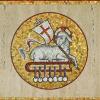
The genitive complement to the word "Apocalypse" gives precision to its meaning. If Jesus Christ is the source of the revelation, the word has a different meaning than if He is the object. The former is evidently here intended, because the context of the verse seems to make Jesus Christ the Cause and Subject, since God gave these revelations to Him to make them known to His servants. Christ speaks in person many times, and He dictates the seven letters. Chapter V. throws considerable light upon this view, because there the ^pvtov "Little Lamb,” is the Revealer and Executor of the revelations (V 9). He paid the price of man’s redemption in His Bloody Sacrifice, acquired for His human nature all divine prerogatives, and in His Unbloody Oblation, He continues, extends and completes His priestly triumphs. He is the Head of the Church, the Master and central figure of history, the King of kings and the Victor over all evil powers. As such He reveals Himself in this prophecy. Yet it is true that the revelations concern themselves with Jesus Christ and His guidance of the Church and the world. And the "mystery of God" (X. 7) and the "great day of Almighty God" mentioned often by the prophets concern Christ no less than the Father. Hence Jesus Christ is also the object of these revelations, which portray Him in His glorious Parousia. The book is therefore a revelation of Jesus Christ and by Jesus Christ.
By virtue of His Hypostatic Union, He acquired as man the right to have all divine knowledge necessary for the mediatorship between God and man and to bring the fruits of the Redemption to all men. He possesses the foreknowledge of everything that pertains to the guidance and destiny of the world. The purpose of this foreknowledge is here to make known whatever will bring safety and consolation to the Christian communities and to the individual Christian, in the dire visitations that are soon to afflict the universal Church. This book is therefore intended to be a message of consolation for all generations by showing what triumphs Christ will win through His Church in the loyalty of His faithful servants.
The "Mystery of God" revealed herein "must befall". It is not the effect of blind fate but a part of God's design. It can befall, because Jesus Christ has been slain making a perpetual oblation in the Church possible, through the mystery of which He will carry to completion all the decrees of God. The victory is so positive a certainty, that in this first age of the Church, He reveals as actually happening the successive events which will lead to His full and final triumph.
These revelations were urgently necessary at this time, for the Christians might after the death of the last Apostles lose courage when compelled to face the fierce persecutions impending. The fulfillment of these prophecies was to begin shortly, but the interval of time separating the many events would be a future revelation. The words ev Ta X ei , do not promise a completion of the whole prophecy at once but a beginning of its enactment very soon. It was not necessary for St. John to have the perspective of time for its accomplishment. It needed only to be clear as was called for in any critical epoch. The Seer demonstrates that he understood the delay in the full realization of the prophecy, when he admonishes the Christians to await the designs of God (XIII. 10; XTV. 12). The events related would become actuality in God’s own time, in their proper order and in the way best fitted to reach the fulfillment of His intentions without frustration, for which the Christians must trust in His wisdom and power.
Sending the angel to St. John puts the seal of truth and reliability upon the recorded prophecies and on the promises to the faithful. The angel is to assist him in receiving the revelations entirely, to explain all unclear and unintelligible parts and guide him in recording all of them correctly. This makes it evident that he did not begin the composition of the book until after he had received all the revelations.
The book is in every sense a prophecy. St. John is called a servant of Christ as the prophets were called the servants of God. The revelations place him in the ranks of the prophets, for as God's spokesman he writes down many exhortations and predictions. He adds his name to the introduction to inform the reader that he who is the author of a gospel is the one who has received these revelations. Such mention was not necessary for the Evangelist John; for the Seer John, however, it was necessary, because there were no human witnesses to the reception of the prophecies. Whether the angel was a visible witness cannot be determined from the text. The first verse only briefly states that the Revelation originated in the mind of God, that Christ is the efficient cause of its disclosure and that its scope is to divulge the mysteries of the future. The witnesses are God, who gave the revelations to Jesus Christ and sent His Angel to assist St. John in receiving and making known the truths to the Christian communities.
Verse 2
St. John had borne witness to the word of God in various ways and on many occasions during a long and active life. The clause may have one of several meanings. As an Apostle, he had preached the word of Christ and God for almost three quarters of a century. He may have written the three epistles before the Apocalypse. And there is not wanting in the Apocalypse itself an indication that he had written the gospel first. In chapter nineteen he calls Christ THE WORD OF GOD giving no definition of that appellation, as he does in the first chapter of the gospel. This may be the testimony he means. He had also borne witness to the "testimony" of Jesus Christ: he had borne witness to the words, miracles and prophecies by which Christ had testified to His own divinity, and he had written a gospel which has for its specific purpose to prove that divinity. And because he had witnessed the proofs given by Christ Himself, he was able to testily to the truth of his Master's revelations. "Seeing" the testimony means also "hearing" it. He had indeed given testimony by preaching the word of God. But this verse, if viewed in the light of the title given Christ in chapter nineteen, seems to refer to the gospel as the specific "testimony" which he claims. St. John may use the word here to convey the same meaning which it commonly conveyed in later times, that he had given testimony by deed as well as by word, by martyrdom as well as by preaching and writing. He was cast into a caldron of boiling oil in Rome but being miraculously preserved from death or harm was banished to Patmos. By his martyrdom he had given the most emphatic testimony of his faith in Christ and of his sincerity in all he had written and preached.
Verse 3
St. John speaks with our Lord's own words when he pronounces blessed whoever reads this prophecy and likewise whoever hears it read. But only then are they blessed if they ponder it in their hearts and regulate their lives by its doctrines. The Vulgate does not follow the Greek text closely. The text connotes the obligation for those to whom the revelations were addressed to read them publicly in the churches as part of the divine liturgy. Both readers and hearers in such congregations are pronounced blessed if they all persevere. This indicates that terrifying trials are drawing near, so that temptation to surrender and apostatize shall be very insistent. But those who take the admonitions seriously and are ready to lose all will persevere.
The modernists hold the Apocalypse to be a book of mere consolations, but St. John calls it a prophecy and thereby makes it rank among the prophecies of the Old Testament, as in truth it completes and sums up all prophecy. It does more than this — it interprets the obscure prophecies scattered through the Old Testament.
"For the time is near" does not mean that all the predictions in the book are imminent, but that the beginning of the judgments is at the door. These words add special significance to what the first verse stated by Ta X ei , "at once".
Some "critics" imagine the first three verses to have been added later by some follower of St. John. However, the words, ideas and style are too eminently Joannine to be anything but genuine. They bear such wonderful resemblance to verses 6 and 16 of the last chapter that they are surely the product of the same mind. St. John probably added them as a brief introduction, after he had finished the whole book, for introductions are ordinarily written last. These verses were certainly written with the contents of the whole book in mind.
2. ADDRESS TO THE CHURCHES
Verses 4-9.
Verse 4
The whole book is addressed to the Seven Churches in Asia. Asia in apostolic times meant proconsular Asia, a part of what is now known as Asia Minor. Many different reasons why the Lord chose those particular churches to receive the revelations at first hand have been advanced. The most probable and natural reason will be stated in verse eleven. Seven is the sacred number in the dealings of Almighty God with men to express perfection and universality. It is the sum of 3 plus 4, the number of the Blessed Trinity plus the number of visible creation. It comprises the activity of God manifesting Himself through visible creation, which He finished in six days or periods of time. In the seventh day its purpose was actualized, for man, the crown of visible creation, appeared. This purpose shall continue in fulfillment until all is consummated. The sacred number SEVEN thus sums up all God's revelations. This book, which is to show the completion of God's purposes in revelation, is addressed to SEVEN bishops or SEVEN congregations, and the contents of the whole book are apportioned among a series of SEVENS.
The Seven Churches represent Christ's kingdom on earth, as the Temple visibly embodied the Old Testament theocracy. These churches are the "place of rest" of the Blessed Trinity, as the Jewish Temple was Jahve's "place of rest", (Isa. XI. 10; LXVI. 1). In the Old Testament, the "place of rest" was located only in one city, the city of the chosen people, while in the New Testament all peoples are chosen to have resting places of the Lord. Hence the book is not addressed to ONE people or city or nation but to a number that represents the whole world, the number of perfection and universality. The signification of these numbers grows clearer as the revelations progress. Satan, Antichrist and the city of the False Prophet also bear the number SEVEN in derision of the Sacred number. The number of the Holy Spirit is likewise SEVEN. This is found to be the sacred number throughout the Old and the New Testaments, possibly to indicate that both are the work of the Holy Spirit, for through the operations of the Seven Gifts, He leads the world to its consummation and final destiny. So then the book in being addressed to these seven churches is addressed to the whole Catholic Church.
In all his letters, except in that to the Hebrews, St. Paul expresses his affections for his followers by wishing them grace and peace. St. Peter too has this salutation in his two letters, and St. John has it in his second letter. The Apocalypse is a prophetical letter and should bear a resemblance to both the prophetical books of the Old Testament and the apostolic letters. The word grace is found only here and in the last chapter. "Peace" bears an ominous significance in view of the terrifying revelations to be made in this prophetical missive.
God is called "He that is, and was, and is to come", which is His stereotype name throughout the Apocalypse. In Exodus (III. 14) God revealed the first part of his name as His own. That title is here given to the Father alone. The addition to the Old Testament title, "He that is to come", points to the future events recorded in this book. As the Father was the Creator and Preserver in the past and the Ruler at present, so will He be the Director of all evolutions of history and the Guide of future ages, although the Lamb is the Executor of His Will.
The "seven spirits" here, as in III. 1, is the Holy Spirit, who in IV 5 appears as the "seven lamps" and in V 6 as the "seven eyes" of the Lamb. Those forms denote His diversified external activity in the Church or mission in the world, and therefore the "seven spirits" are before the throne of God. He obscurely revealed Himself in Isaias (XI. 2) as the "seven gifts" of the Messias and in Zacharias (IV 10) as the "seven eyes". His relationship to the seven churches is here hinted at, because He abides with the Church and will direct and guide it till the consummation. The seven golden lampstands represent the seven churches and the Church Universal. The Father and the Holy Spirit are not named in this verse, are merely given these descriptive titles as a token of their relationship to the Church and their guidance of its destinies.
Verse 5
Grace flows from Jesus Christ as it does from the Father and the Holy Spirit. The divinity of Jesus Christ is thus implied in this new expression of the threefold personality in one God. The symbols of "grace" in the gospel and epistles of St. John and elsewhere in this prophetic epistle are "light" and "life" and "love" and the figures of speech corresponding to those words. St. John employs the definite article when writing "to THE seven churches", as if there were no more churches in Asia. But these churches chosen by Christ are in His intentions the models of all churches in Asia and of the Universal or Catholic Church. This entire message to be sent to each of the seven churches as to ONE reveals the mind of the Apostle and excludes a multiplicity of churches.
Jesus Christ is "the witness, the faithful one", who came "to give testimony to the truth" (John XVHI. 37). These words recall those of St. Paul to Timothy (1 Tim VI. 13). Christ has until death given testimony of the truth by His word, His works and His martyrdom; and the Christians can rest assured that what He shall here reveal is pure truth. The characteristic trait of Christ as being the faithful one is set forth to signify that he will not only reveal in this book the future designs of God but will watch over His followers and lead them from grace to grace and to the final grand triumph. The purpose and result of this new revelation is to give absolute assurance of final "peace" to the Church.
This attribute of "the faithful witness" who assures peace but truth suggests the fact that follows, His Resurrection. He is the "first-born of the dead" (Coll. I. 18), for death gave birth to His immortal life. And since He is the first-born to the glorious life of the body, others who are faithful shall follow in this glorious birth. This new birth is the pattern and cause of all others (Thom) and is a consolation in all persecutions and an encouragement to perseverance until death. In the confident hope of his faithfulness, the Christians shall have peace. Such peace he procured for Himself by his death, wherefrom follows the succeeding idea that by His self-abnegation He overcame the world in a perfect victory (Jo. XVI. 33).
By His victory over the world and over death, Christ has won the right to a name that is above all names (Heb. I. 2-6) and to be the "ruler of the kings of the earth, King of kings and Lord of lords" (Apoc. XIX. 16). Thus the Apostle represents Him in His threefold Messianic dignity as Prophet, Priest and King, who preached the word of God, offered Himself in a sacrificial death and thereby became King of Kings.
The felicitous results from His triple dignity for the Apostle and the bishops to whom he wrote this book are wrapped in words that form a doxology of praise to Christ, namely (1) "who has loved us", (2) "and washed us from our sins in His blood", (3) "and has made us a kingdom, priests to God and His Father". The love of Christ as expressed in that doxology was His human love, the natural affection of His heart made divine by the union of the divine with the human nature in one person. In the strength of that human love He said: "Greater love than this no man has, than that a man lay down his life for his friends" (Jo. XV 13). From clause number one above follows the other happy effect, that Christ by His voluntary death has washed them from their sins by his Blood. What keen, ecstatic joy must the pure, virgin-Apostle have felt in giving utterance to this thought. It expresses the fine enthusiasm of the lofty mind. He is clean because his beloved by a pure act of love washed him clean in His blood. And he owes it to no one but his beloved Lord and Savior, and to Him alone he wished the glory of it, and his wish is fulfilled.
Verse 6
The third and still greater result from the triple dignity of Christ for the apostles is the establishment of an eternal kingdom in which they are the kings and also priests. The elders express this again in V 10. In the apex of the doxology, St. John places the priesthood above royalty, elevating it to the feet of God by the phrase, "priests to God and His Father". He thereby reminds the bishops of their participation in the royal and priestly dignity of Jesus Christ (Heb. IX. 11-12). The last word, "His Father", recalls the other words of St. John spoken by our Lord at the Last Supper (Jo. XIV 23). Through the redeeming blood of Christ, St. John and the bishops were cleansed and made priests acceptable to the Father. The priesthood of Jesus Christ connotes the Eucharistic Sacrifice. Overcome by so much love, he simply adds: "to Him be glory and empire forever and ever". The only two members in this doxology are, "glory and empire". But they comprehend and sum up all the Seer could express. And he closes the doxology with "so be it ever". A creature giving himself unreservedly to God can offer Him only praise and thanksgiving, yet it expresses love and submission, which is all that God demands. The two words embrace all creation. St. John desires for Christ "all glory", which is the homage due Him as God, and "empire", which is the submission to Him as Man of all peoples and kingdoms of this world. This is only just and fair to Him and would be the greatest blessing for the world. St. John in this passage places himself in equal rank with the bishops of the seven churches, because he and they are priests of God and through the priesthood kings and rulers in the kingdom of Christ.
The prevailing ideas of the Apocalypse are contained in the words: "He who is to come — the Prince and Ruler — the Kingdom — and the Priesthood". The order, which is consistent throughout the Apocalypse, is the same as in the last three verses. As here each succeeding idea emanates from the foregoing one naturally and necessarily, so each succeeding chapter evolves out of the foregoing theme naturally and with necessary sequence. This order holds out till the epilogue. No repetition, reduplication or parallelism is conceded in our interpretation, because it does not seem to exist in the text. After the action of the grand drama begins there is a constant development and unchecked onward movement.
Verse 7
Like the prophets of the Old Testament, St. John now loses sight of the perspective of time and points to the final consummation, towards which all the prophecies to be recorded converge. The final Parousia will complete the triumphs of his Lord. And all those who receive the prophecies and take the warnings contained in them to heart will rejoice at the COMING of the Lord in the clouds of Heaven. St. John voices this rejoicing so long pent up in his heart in a cry of exultation. The vision is modelled after Daniel (VII. 13) and St. Matthew (XXIV 30; XXVI. 64) and St. Mark (XIV 62). Clouds body forth His divinity and the myriads of angels at His service. "Every eye shall see Him" contains the doctrine of the resurrection of all flesh. "They also that pierced Him" points to the gospel of St. John (XIX. 34) — St. John has before his mind the whole scene of the passion ending with the thrust of the lance into the Savior's side. This scene described by St. John himself (Jo. XIX. 34) brings in that of Zacharias (XII. 10) as also that of Daniel. It indicates that he wrote the gospel prior to the Apocalypse. Does he want to say that Christ will appear with His cross? Probably yes, because our Lord seems to say so (Mt. XXIV 30). SS. Cyprian, Chrysostom and Jerome drew the conclusion here that His five wounds will be visible marks of glory. Those who "pierced" Him are not only the crucifiers but all the indifferent, the scoffers and other enemies of the cross. These words are a warning not to grow unfaithful when the "great tribulation" shall begin.
The main topic of the book is expressed in this last verse. The whole book deals with Christ's coming as Judge. He executes His judgments upon the Church and the world again and again during the course of ages, but comparatively few understand the events as judgments. In the end, however, all shall see Him. Then shall the wicked bewail themselves, not their sins, because they did not heed His other judgments, which were only acts of mercy urging them to repent and do penance. This verse seems to presage an apostasy of whole tribes and perhaps nations when Christ shall come for the final judgment, and they shall bewail the end of their career of sin which they enjoyed so much.
The fundamental antithesis running like a red line through the book is here announced in the introduction. The good and the bad are assembled in the two camps which compose the Church on the one hand and the "gates of hell" on the other. The judgments will separate them ever more from each other until the separation is complete. Throughout the book, the adherents of the enemy, schismatics, heretics, infidels and followers of Antichrist are "of the earth". The faithful are in "heaven", are those who "dwell in heaven" and are the "saints". The mentality of the two groups is contradictory. The wails of the wicked at the coming of Christ are contrasted with the rejoicing of the faithful.
The verse ends with the double affirmation in Greek "to be sure" and Hebrew "amen", "so be it". It gives the proper solemnity to the grand theme and points to Christ as the "Amen". It is solemn confirmation by the Seer himself of what the verse contains, which is equivalent to a corroboration by the Holy Spirit under whose guidance St. John writes. It is a double assurance of a fulfillment of all that shall be recorded in the book.
Verse 8
Not satisfied with the voicing of his own solemn conviction and the testimony of the "Faithful Witness," St. John adds the testimony of the Father. He is the source of all created things and the end for whom all were created; He is the Alpha and the Omega, the first and last letter of all that is decreed to happen; He is eternal, all-knowing and almighty, the Ruler of all: And therefore events do not begin to exist in His mind but were known to Him from all eternity and do not outgrow His control. He knew the outcome from all eternity, because He is Irresistible Power, who will be able to accomplish His decrees, and nothing can frustrate them Thus by the triumph of His Son Jesus Christ, so the Father assures us, shall all creation be brought to its final destiny.
This coming in the clouds of heaven alludes to the "Shekhina" of the Old Testament and concedes to the Son equality with the Father; and the testimony of the Father confirms that truth. St. John thus christianizes the symbol of the shekhina as he christianized the Gnostic word "logos". The text alludes clearly to Isaias (XLI. 4; XL IV 6; XLVIII. 12), where the prophet writes down the ultimate restoration of Israel after its preservation in the Captivity. At that time the same solemn assurance was necessary to convince the Jews of the undoubtable fulfillment of the prophecy. The Seer uses the Greek alphabet because the book was intended for Greek readers. The Alpha and Omega appear again in XXL XXII.
3. THE COMMISSION
Preparatory Vision Of The Glorified Christ. 9-End.
Verse 9
Verse nine begins the narration of the visions that compose the whole book. St. John mentions himself again as the recipient of the Revelations. In the Gospel such mention was not necessary because he related historical facts witnessed by thousands of competent witnesses, who had long ago testified to their belief in the veracity of the gospels by dying for them Now he is about to relate something whereof he is the sole witness. He mentions his name as does Daniel (VIII. 1; IX. 2; X. 2.) emphasizing thereby the reality of the revelations and the authenticity of their authorship. This man should stand for truth and reliability. He adds "your brother and your partner in the tribulation" to place himself in the ranks of the bishops and call attention to their apostolic dignity and power and participation with him in the priestly gifts and to some degree in ecclesiastical jurisdiction. The word "partner" expresses very weakly the sense of the Greek text, which really signifies that he is a common fellow-sufferer in THE tribulation. The tribulation" is the great Roman persecution which was soon to break forth with renewed fury.
The bishops are his brethren because they share with him the inheritance of the spiritual kingdom of Christ, possessing its powers and prerogatives on earth and expecting to be entitled to the kingdom of glory with Him in Heaven. The "kingdom" is the Church, as it was often so designated by the Lord Himself St. John then reminds the bishops of his own "patience" in persecution, in which he is a shining example to them. His example points out the way to bear up under the persecution. Patience really means constancy in enduring the tribulation as he had endured it for the sake of Jesus. He suggests to them the Eight Beatitudes and all other promises of reward made by our Lord.
He mentions his place of exile, to reveal the place of the reception of the revelations. It reminds the bishops of his martyrdom in Rome, in which he had miraculously escaped death. He came to Patmos an exile, a prisoner of the Lord, for "the word of God and for the testimony of Jesus". Eusebius (III. 18) says that under Domitian, St. John was cast into a cauldron of boiling oil at Rome but being saved by divine power was banished to Patmos. It is a small island in the Aegean Sea, southwest of Ephesus, between Naxos and Samos. The island is barren and unhealthy. Pliny (Natural History IV 12-13) says that it was a common place of exile. It was the last stopping place from Rome to Ephesus. The island is shaped like a crescent with the horns pointing east.
Verse 10
St. John here begins the narration of the revelations. He was "in the spirit on the Lord’s day". The clause rather states that he became rapt in the spirit or elevated to a state of ecstasy or inspiration. He was inspired by the Holy Spirit and he knew it. In this state the senses are either shut off or elevated to a supernatural perfection enabling them to behold scenes hidden from the natural eye (Aug.). The events about to unravel themselves to the vision of the Apostle are in the mental order (Council of Ancyra). He was in communication with the spirit of prophecy. The visions came on the Lord's day, the first day of the week, on which the Christians from apostolic times were wont to assemble for the "breaking of the bread" as is mentioned in the Acts (XX. 7). This rule of assembling for sacrifice on the first day of the week is mentioned by St. Paul (1 Cor. XVI. 2). It is explained in the Didache and by St. Ignatius. St. John on this day was not privileged to offer the Holy Sacrifice but was transported by the Lord in spirit to see its reality, which lies beyond the reach of the senses.
He hears behind him a "great voice", which he hears frequently in the course of the revelations. A clear distinction is always made between the "voice as it were thunder" and the "great voice". This voice announces the beginning of the revelations. It may be the voice of the angel of verse one or the voice of Christ. His likening it to a trumpet expresses its strength and musical tone. It alludes to Joel (II. 1), where the priests are commanded to blow the trumpet to announce the coming of God's judgments. It also alludes to St. Paul's letter to the Thessalonians (IV 16). It is not a trumpet but a voice that has some likeness to the sound of a trumpet.
Verse 11
The trumpet voice enjoins on St. John the command to write in a book whatever shall be revealed to him and to send a copy of it to each of the churches named. Since the seven churches are represented by the seven golden lamps; and since this number corresponds with the seven gifts of the Holy Spirit who directs the Universal Church; and since it symbolizes universality: These seven churches stand for the whole Catholic Church. The book is thus addressed to all Christians.
The seven cities named were situated in the west and center of proconsular Asia, which comprised the ancient kingdom of Pergamus. From Ephesus, evangelized by St. Paul, the Church spread along the valleys of the Meander and the Lycus to the other Phrygian cities, Hierapolis, Laodicea and Colossae. Smyrna, Pergamus, Thyatira and Philadelphia received the faith about the same time including Troas from St. Paul himself. Cysicus, the most important port of Bithynia, was likely also a Christian center (1 Peter, I. 1). Tralles and Magnesia received letters from St. Ignatius some 10 or 15 years later and were then important Christian centers and populous cities. All were in the neighborhood of Ephesus. Why did St. John at the command of Christ select the seven cities named for his message?
That he should choose SEVEN cities is quite intelligible, because it is God's sacred number and the fundamental number of the Apocalypse. And if his words are literally true, it was the number stipulated by the Lord Himself, and His was the choice of these particular churches. Perhaps St. John was better acquainted with those congregations or they were larger at that time. Ephesus was the great seaport, and from there the Roman highway ran north to Smyrna and Pergamus. Sardis and Laodicea were district capitals or seats of Roman government (Conventus). But Thyatira and Philadelphia were unimportant cities. Many another city among those mentioned above could have been chosen. The cities did not correspond to geographical divisions either.
A seemingly natural explanation is obtained from the studies of Ramsay. The seven cities are all situated on the grand circular route that connects up the richest, most influential and most populous provinces of Asia. If a messenger left Patmos, he would disembark at Ephesus and take the Roman highway northward to Smyrna and Pergamus along the imperial mailroute, which thence ran southeast to Thyatira, Sardis, Philadelphia and Laodicea. Thence he would return by the central route of Asia Minor along the valleys of the Cayster and Meander and reach Ephesus. But why should he omit Hierapolis, Tralles and Magnesia, more important cities than Philadelphia or Thyatira? Ramsay supposes each of the seven cities being a distributing point for mail, that the whole of Asia Minor could be reached from these points, if the messenger left a copy of the Revelations at each church with the instruction that copies be made and transmitted to the neighboring churches. "They were the best points on the circuit to serve as centers of communication with seven districts: Pergamus for the North", including Troas and Cysicus . . ; "Thyatira for an inland district on the Northeast and East; Sardis for the whole middle valley of the Hermus; Philadelphia for upper Lydia and North Phrygia; Laodicea for the Lycus valley and for central Phrygia; Ephesus for the Cayster and lower Meander valley and coasts; Smyrna for the lower Hermus valley and north Ionian coast". "Planted at these seven centers, the Apocalypse would spread through their neighborhoods and from thence to the rest of the province".
This ingenious explanation does not explain everything. For practical reasons the seven cities may have been well situated to spread the message throughout the whole of proconsular Asia. But if it were the purpose to spread the Revelations as far and as fast as possible to all Christian communities in Asia, why not also send copies to the cities in Galatia and Greece, which had equally important Christian churches? And why not send copies to the most important churches of all, Jerusalem, Antioch and Rome? Surely those Christians needed to be warned as much as those of proconsular Asia. The Apocalypse itself being inspired and written at the command of Christ states positively that the Lord chose those churches and dictated each letter. Would not St. John prevaricate, when he states that he was commanded to write to the churches named, if the Lord left the choice to him? Our Lord states particular reasons in each letter for which he orders St. John to write.
The following explanation is therefore ventured, because our Lord would more probably select the churches most suitable to receive his message for supernatural than for natural reasons. These seven churches and bishops may have been guilty to such a marked degree of the defects, faults and vices stated in the letters, that they would most likely admit their wrongdoing, if their attention were called to them. Such faults would court spiritual disaster in any persecution. All Christian communities, the whole Church, would at all times profit by a warning against them. They were conspicuous in the churches chosen and for that reason above all others, these seven churches were singled out to receive the message of Christ. On the other hand, they may have been pre-eminent for virtues, which would be the strength and glory of any congregation or Christian and would uphold him in the hour of trial. The seven churches were thus proposed as examples of highly reprehensible faults as well as patterns of divinely commendable virtues; and through them, all congregations of the world would receive a much needed warning against evils and encouragement for fearlessness in virtue.
Verse 12
At the sound of the voice, St. John slowly turned to see the one who spoke. And he saw seven golden lamps, seven separate lamps. The prophet Zacharias describes the vision of the golden lamp with seven arms. That lamp was the Synagogue or Temple. The seven flames fed by olive oil symbolized the seven-fold activity of the Holy Spirit (Zach. IV 6). But here the seven lamps are the seven churches in Asia, to which St. John is to send the revelations. The lamps are all alike, but each one does its own work in serving God. They are golden lamps, because they are permeated with the grace of God and are therefore His precious possessions. The light of each one enlightens heathendom in its own way. The flames allude to the tongues of fire that appeared on Pentecost and to the eyes of the Lamb (V 6) (See Zach. IV). The churches are able to enlighten the world, because the Spirit of God is within them and operates through them. Each gift of the Holy Ghost manifests itself in the Church and in the lives of Christians, and therefore although consisting of but one element they are seven separate flames. Furthermore these seven lamps reveal the kinship of the Catholic Church to the Holy Spirit and visibly manifest His varied influences and activities.
Verse 13
St. John saw Someone standing in the midst of the seven lamps. He does not say how these lamps were arranged nor where the figure stood. The lamps may have stood in a circle as in the vision of chapter five, where the Lamb occupies the central place, or they may have stood in a row and the figure behind them. The Someone did not hover in the air above the flames but stood on His feet. He looked like a "son of man". These words are the very words of Daniel (VII. 13), where they shadowed forth the figure of Christ. So this is evidently the Lord Himself. The name St. John gives Him was not taken from Daniel, for Christ assumed it Himself in almost every chapter of the Gospel. St. John beholds Him in His transfigured humanity and with the attributes He manifests later in action. (II. III. XIX.). Again this description is not picked by St. John from the Old Testament nor from apocryphal writings, which are only fiction, but from an original vision of Christ as He appeared then and there.
A white linen garment flows down to His feet. It is the emblem of His priesthood and calls to mind the Ephod of the high priest. The white linen also symbolizes sanctifying grace and the eminent holiness of Christ. Moreover it is the emblem of victory foreshadowing the holiness of Christ as the cause of victory. The girdle worn by the high priests indicated their continency. Christ wears it around His breast indicating the immunity of His human nature from all carnal as well as sinful desires. The golden girdle is also a symbol of His royalty, because in ancient times gold was presented only to kings and worn by kings. King Alexander presented a golden buckler to Jonathan (1 Mace. X. 89) as an acknowledgement of his royalty. Gold is lastly a symbol of wisdom and here of the divine wisdom of Christ's human mind. Thus the name "son of man" designates Christ as a prophet, the white garment a priest and the golden buckler a king.
Verse 14
In this verse St. John begins to set forth those attributes of Christ that will exert their power in the Apocalypse. "His head and His hairs were white as white wool and as snow". His head means His forehead and the roots of His hair and they are white showing forth His eternity and divine wisdom and His ability to guide the Church aright. For His hair St. John uses the plural, which is not the ordinary use in Greek any more than in English. He thus calls attention to every individual hair and may wish to refer to His manifold activity and to elaborate at the same time the details of His plan in the Church and in the world. The whole description recalls that of God, "the Ancient of Days". (Dan. VII. 9).
His eyes "were like a flame of fire". Those flaming eyes beam with omniscience. They know the deeds of the wicked, and they flame with wrath towards all wickedness. With such eyes He appears again to the Bishop of Thyatira, as the "one who searches the reins and hearts" (II. 23) and in XIX. 12 to judge and fight with justice and to destroy the wicked. But for good and faithful, those eyes beam with love. The power of His eyes was noticed by His disciples (Me. III. 5; X. 21; Lc. XXII. 61) during His mortal life. How much more now did the gaze of those eyes reveal His divinity!
Verse 15
His feet were like bronze glowing in a furnace. Many attempts have been made to describe the meaning of the bronze or mixture of metal meant by the Greek word, x a ^ K0 ^ l fi ai 'V but no one is satisfied with his own explanation. It must have been some mixture of metals that had an awe-inspiring glow when in a molten state. The glowing feet harmonize well with the flaming eyes. The feet are the symbol of stability and of destructive power. He will tread upon everything unholy and will consume it with fire. This vision contrasts the irresistible power of Christ with that of the world-empires which Nabuchodonosor saw in the form of a huge statue that had feet of iron mixed with clay (Dan. II. 33). These glowing feet menace all who give way to false teachings, false moral standards, hypocrisy and apostasy. The Latin translation, "Aurichalcum", for the Greek term points to very fine and precious brass resembling burnished gold. That would be ever emblematic of Christ's justice and purity of intention in treading upon evil.
The voice which the Seer heard was like the roar of the Aegean Sea, euphonic with sublime music for the good but terrifying for the wicked. Like fire, water is another beneficial element as well as a powerful instrument of vengeance. Christ's voice threatens and warns the wicked and defends and encourages the good. He announces His decrees to His Church and halts the attacks of the enemies. The waters symbolize the peoples of the earth. His voice is re-echoed among all peoples, and by it He subjects them all to Himself. (Greg. Bede).
Verse 16
The meaning of the SEVEN STARS which Christ holds in His right hand is given in verse 20. In the Old Testament, stars denoted various offices of God's people; In Numbers (XXIV 17) and Isaias (XIV 12) kings and in Daniel (XII. 3) teachers. The seven stars here represent the bishops of the seven churches. Bishops are the official teachers of Christ's doctrine. In their official capacity, they are the light of the world and like the stars in the firmament should light the faithful over the stormy waves of time. Christ holds them in His hand betokening whence they have their commission, authority and direction, their protection and all weapons with which to represent Him ably and valiantly.
The sharp two-edged sword issuing from His mouth bodies forth the power of His word, its truth and punitive authority. It will pierce the hearts of the sinners (Heb. IV 12) and bring everlasting death to those who resist it. The word of Christ will make the wicked feel the justice of His judgments (XIX. 11), before which all His enemies will come to grief (Bede). The sword is the large Thracian sword foreboding judgment and symbolizing authority and the punitive power of the Church, which Christ will uphold in truth and justice.
His countenance shone as the noon-day sun radiating the divine knowledge and spiritual life with which He animates those who accept His full revelations and submit to His sway. It will sear the conscience of those whose faith and piety is rooted in worldliness and temporal hopes. Those who are not rooted in the love of Christ, which engenders the spirit of sacrifice and penance, will wither in the brightness of His presence in the Church and will fall away.
Verse 17
Moses (Exod. III. 6) and Daniel (VIII. 17) were terrified at the presence of God, and the seraphim veil their faces (Isa. VI. 2) before His Majesty. St. John likewise falls down before the transfigured Christ as he had done on Mt. Tabor. But our Lord touched His beloved disciple, as He did after the Transfiguration, and calmed His fears. After the Resurrection He was the same as now, only His divinity was hidden. Still He is the same yesterday and today without change and is no more terrifying now to those who love Him than when He taught and worked on earth. The text uses the word ok, which means here as elsewhere "a likeness to". He appeared dead. The hand that touched him was the same one that held the seven stars. This is then a mere symbolical action. The words, "fear not", were quite familiar to the ears of the apostles. Our Lord again testifies to His divinity by using the words which in the Old Testament referred only to God: "I am the First and the Last". He is the Creator, and through Him all things will be renewed (Isa. XLI. 4; XIT V. 6; XLVIII. 12; Apoc. XXI. 5; XXII. 13).
Verse 18
This whole vision represents Christ as the bearer of life; He is "the life" or "the Living One". It attributes the Apocalypse to the author of the fourth gospel (John V 26), where Christ claims to "have life in Himself'. It is another divine title and corresponds to many texts in the Old Testament (Jos. III. 10; Ps. XLI. 3; Dan. XII. 7). This life, which is His essence, is in sharp contrast with the inanimate gods of paganism. It is not the mortal life which He led before His death, for that life is dead, but it is the immortal life which He possesses forever after His Resurrection. As to His human nature, He WAS dead and now has entered into everlasting life and is therefore actually living His perfected human life. Death was only a transient phenomenon with Him, and though a real death then, it is no longer a reality now. Hence His assurance to St. John when He said "fear not" had double force. He had experienced real death, while St. John was only scared into apparent death. The life that was now visible in Him was not that of divinity but of His re-vivified humanity yet real and everlasting and linked inseparably with His divine life in the Hypostatic Union.
In consequence of this life, which is His by right of conquest, He holds the keys of death. He walked through the gates of death and took from the hands of Death his keys. He is now the Master of Death. "Death shall no more have dominion over Him". He also has the keys of Hades. He has then dominion and untrammelled authority both over the domain of Death and of Hades. He thus declares Himself the Prophet and the Judge, the One who proclaims the message of life and who will enforce its acceptance through all the moral forces to be described in this book. The message has special reference to the Pour Living Beings (IV 6). And the prerogatives He reveals here will through them become active in shaping the destiny of the Church and of the human race. He lives for those who love His Coming and will bring them life, and they need not fear Him In Isaias (XXXVIII. 10) and in the gospel of St. Matthew (XVI. 18), the underworld is described as having gates. In Psalm IX. 15, Death is given a domain secured by gates. Since His Resurrection, Christ possesses the keys of both, which is the emblem of His ruling power over them.
Verse 19
As inverse eleven where the invisible voice first spoke to him, St. John is ordered to write what he has seen and heard, i.e. the vision of the glorified Christ, the Victor. Christ emphasizes His command with the "therefore", which points to the conclusion that follows from His authority as Creator and Last End of creation and as Victor over Death and Hades. The things he is to write about are further explained to him In the first place it is the condition of the churches as will be revealed in chapters II. and III. and secondly the future events as will be revealed in chapters IV. to XXII.
Verse 20
Christ now explains two items of the "Mystery"; He explains the meaning of the seven stars and of the seven golden lamps. The grammatical construction of the Greek text presents difficulties, because there are two accusatives without a verb to govern them. But they may be governed by the preposition ets omitted but to be understood. 'As for the secret of the seven stars, and as for the seven lamps' might be the rendition of it in English.
The seven stars are the seven bishops of the churches to whom St. John is to write. The stars are like planets receiving from Christ, who is their sun, their light and heat. They depend absolutely on Him for instruction, protection, chastisement and reward. In Malachias (II. 7) the priest is called an angel. Such use of the word in the Old Testament gives us the interpretation of the figurative language and of the visions in the Apocalypse. This explanation of our Lord stamps the whole book an allegory. And the language must be considered metaphorical unless the context argues for the literal sense. According to our Lord’s words, "angel" means a bishop or priest throughout the Apocalypse, unless the context clearly shows him to be a celestial or evil spirit. Protestant interpreters do not like to admit that the "angels" are bishops of the churches, because they contend that there were no monarchical bishops over the churches at this time. But it is clear from Scripture and Tradition, that a bishop presided over the church by apostolic institution in every city. That these angels should be celestial spirits is unacceptable, because one of them is pronounced spiritually "dead" (III. 1) and another "lukewarm" (III. 16). An angel who is spiritually dead is a devil. Christ does not write to devils or make them the heads of His churches. These angels are obviously the bishops of the seven churches, and therefore they receive the blame for whatever is wrong with the congregations.
The seven lamps are the seven churches to which St. John is directed to send the revelations. Stars are heavenly bodies, and lamps are earthly vessels. The pastor is the heavenly representative of divine light, of doctrine and grace; the congregation is the visible reflection of that doctrine and grace. The pastor is the source and origin of divine light; his church is the visible society of faithful upon whom that light falls and whom it enlightens. But not alone the pastor enlightens the world as far as he is known by his teaching and example, the congregation also diffuses its light over the world in its own way and measure.
Westminster Version
The Revelation of Jesus Christ which 1 God gave to him, that he might disclose to his servants what must speedily befall. And he signified it by a message of his angel to his servant John, who 2 bore witness to the word of God and to the testimony of Jesus Christ, even to whatever tilings he saw. Blessed is he 3 that readeth and they that hear the words of this prophecy, and keep the things written in it: for the time is near. John to the seven Churches 4 which are in Asia: grace and peace from him who is and who was and who cometh, and from the seven spirits who are before his throne, and from Jesus Christ, 5 the faithful witness, the first-bom of the dead, and the ruler of the kings of the earth. To him who loveth us and hath loosed us from our sins in his blood, and made us to be a kingdom, priests to 6 God and his Father — to him be the glory and the might for ever and ever: Amen!
Behold he cometh with the clouds, and every eye shall see him, even they 7 who pierced him, and all the tribes of the earth shall wail because of him Yea, Amen! 'I am the Alpha and the Omega,' 8. saith the Lord God, 'who is and who was and who is to come, the Almighty One.'
I John, your brother and copartner 9. in Jesus in the tribulation and in the kingdom and in the patience, came to be in the island which is called Patmos, for the sake of the word of God and my witness to Jesus. I was (rapt) 10. in the spirit on the Lord's day, and I heard behind me a great voice as of a trumpet, saying: 'What thou beholdest, 11. write in a book, and send to the seven Churches, to Ephesus, and to Smyrna, and to Pergamum, and to Thyatira, and to Sardis, and to Philadelphia, and to Laodicea."
And I turned to see what voice it 12. was that spoke to me; and having turned, I beheld seven golden lamps, and in the midst of the lamps, one like to a 13. son of man, clothed with along robe and girt around at the breasts with a golden girdle. But his head and his hair 14. were white as white wool, as snow, and his eyes were like a flame of fire; his feet were like bright bronze, as when 15. refined in a furnace, and his voice was as the voice of many waters. In his right hand he had seven stars, and out of his mouth issued a sharp two-edged sword, and his countenance was as the sun shining in its power.
And when I beheld him, I fell at his 17 feet as dead; and he laid his right hand upon me, saying, 'Fear not! I am the first and the last, and he who liveth; I died, 18 and behold, I am living forever and ever; and I have the keys of Death and Hell Write therefore the tilings which thou 19 has seen, and the tilings which are, and the tilings which are to befall after these, the mystery of the seven 20 stars which thou sawest upon my right hand, and the seven golden lamps: the seven stars are the angels of the seven churches, and the seven lamps are the seven churches.
BOOK I
THE BOOK OF THE SEVEN SEALS
I. INTRODUCTION
A -AUTHOR, PURPOSE AND COMMISSION
1. PROLOGUE, Chapter I. Verses 1-3.
Verse 1
The name Apocalypse is naturally the title of the book because it begins with that word, and it goes by that title in the Canon of the Church and in the oldest Greek manuscripts. St. Irenaeus uses the term "apocalyptic vision" in commenting on its revelations. (V 30, 3.). The word means "revelation," and rightly so, because the book reveals truths heretofore unknown to man.
In the New Testament, the word "apocalypse" nearly always signifies a revelation that goes forth directly from God the Father, Jesus Christ or the Holy Spirit (Rom XVI. 25); (1 Cor. I. 7; Gal. I. 12; Eph. III. 3; 2 Thess. I. 7; 1 Peter I. 7, 13). It stands for the unveiling of hidden truths which remain shrouded in mystery even after the revelation has been made. In substance those visions are a revelation but a revelation clothed in a mysterious garb. They are wrapped in prophetical light, and their content is mostly of an eschatological nature. The word therefore denotes a mystery revealed but not fully unveiled until the Church comes face to face with the facts concerned. St. Paul suggests that all such revelations are difficult of interpretation (1 Cor. XTV. 26). These revelations should then be expected to remain mysterious until their fulfillment.
The genitive complement to the word "Apocalypse" gives precision to its meaning. If Jesus Christ is the source of the revelation, the word has a different meaning than if He is the object. The former is evidently here intended, because the context of the verse seems to make Jesus Christ the Cause and Subject, since God gave these revelations to Him to make them known to His servants. Christ speaks in person many times, and He dictates the seven letters. Chapter V. throws considerable light upon this view, because there the ^pvtov "Little Lamb,” is the Revealer and Executor of the revelations (V 9). He paid the price of man’s redemption in His Bloody Sacrifice, acquired for His human nature all divine prerogatives, and in His Unbloody Oblation, He continues, extends and completes His priestly triumphs. He is the Head of the Church, the Master and central figure of history, the King of kings and the Victor over all evil powers. As such He reveals Himself in this prophecy. Yet it is true that the revelations concern themselves with Jesus Christ and His guidance of the Church and the world. And the "mystery of God" (X. 7) and the "great day of Almighty God" mentioned often by the prophets concern Christ no less than the Father. Hence Jesus Christ is also the object of these revelations, which portray Him in His glorious Parousia. The book is therefore a revelation of Jesus Christ and by Jesus Christ.
By virtue of His Hypostatic Union, He acquired as man the right to have all divine knowledge necessary for the mediatorship between God and man and to bring the fruits of the Redemption to all men. He possesses the foreknowledge of everything that pertains to the guidance and destiny of the world. The purpose of this foreknowledge is here to make known whatever will bring safety and consolation to the Christian communities and to the individual Christian, in the dire visitations that are soon to afflict the universal Church. This book is therefore intended to be a message of consolation for all generations by showing what triumphs Christ will win through His Church in the loyalty of His faithful servants.
The "Mystery of God" revealed herein "must befall". It is not the effect of blind fate but a part of God's design. It can befall, because Jesus Christ has been slain making a perpetual oblation in the Church possible, through the mystery of which He will carry to completion all the decrees of God. The victory is so positive a certainty, that in this first age of the Church, He reveals as actually happening the successive events which will lead to His full and final triumph.
These revelations were urgently necessary at this time, for the Christians might after the death of the last Apostles lose courage when compelled to face the fierce persecutions impending. The fulfillment of these prophecies was to begin shortly, but the interval of time separating the many events would be a future revelation. The words ev Ta X ei , do not promise a completion of the whole prophecy at once but a beginning of its enactment very soon. It was not necessary for St. John to have the perspective of time for its accomplishment. It needed only to be clear as was called for in any critical epoch. The Seer demonstrates that he understood the delay in the full realization of the prophecy, when he admonishes the Christians to await the designs of God (XIII. 10; XTV. 12). The events related would become actuality in God’s own time, in their proper order and in the way best fitted to reach the fulfillment of His intentions without frustration, for which the Christians must trust in His wisdom and power.
Sending the angel to St. John puts the seal of truth and reliability upon the recorded prophecies and on the promises to the faithful. The angel is to assist him in receiving the revelations entirely, to explain all unclear and unintelligible parts and guide him in recording all of them correctly. This makes it evident that he did not begin the composition of the book until after he had received all the revelations.
The book is in every sense a prophecy. St. John is called a servant of Christ as the prophets were called the servants of God. The revelations place him in the ranks of the prophets, for as God's spokesman he writes down many exhortations and predictions. He adds his name to the introduction to inform the reader that he who is the author of a gospel is the one who has received these revelations. Such mention was not necessary for the Evangelist John; for the Seer John, however, it was necessary, because there were no human witnesses to the reception of the prophecies. Whether the angel was a visible witness cannot be determined from the text. The first verse only briefly states that the Revelation originated in the mind of God, that Christ is the efficient cause of its disclosure and that its scope is to divulge the mysteries of the future. The witnesses are God, who gave the revelations to Jesus Christ and sent His Angel to assist St. John in receiving and making known the truths to the Christian communities.
Verse 2
St. John had borne witness to the word of God in various ways and on many occasions during a long and active life. The clause may have one of several meanings. As an Apostle, he had preached the word of Christ and God for almost three quarters of a century. He may have written the three epistles before the Apocalypse. And there is not wanting in the Apocalypse itself an indication that he had written the gospel first. In chapter nineteen he calls Christ THE WORD OF GOD giving no definition of that appellation, as he does in the first chapter of the gospel. This may be the testimony he means. He had also borne witness to the "testimony" of Jesus Christ: he had borne witness to the words, miracles and prophecies by which Christ had testified to His own divinity, and he had written a gospel which has for its specific purpose to prove that divinity. And because he had witnessed the proofs given by Christ Himself, he was able to testily to the truth of his Master's revelations. "Seeing" the testimony means also "hearing" it. He had indeed given testimony by preaching the word of God. But this verse, if viewed in the light of the title given Christ in chapter nineteen, seems to refer to the gospel as the specific "testimony" which he claims. St. John may use the word here to convey the same meaning which it commonly conveyed in later times, that he had given testimony by deed as well as by word, by martyrdom as well as by preaching and writing. He was cast into a caldron of boiling oil in Rome but being miraculously preserved from death or harm was banished to Patmos. By his martyrdom he had given the most emphatic testimony of his faith in Christ and of his sincerity in all he had written and preached.
Verse 3
St. John speaks with our Lord's own words when he pronounces blessed whoever reads this prophecy and likewise whoever hears it read. But only then are they blessed if they ponder it in their hearts and regulate their lives by its doctrines. The Vulgate does not follow the Greek text closely. The text connotes the obligation for those to whom the revelations were addressed to read them publicly in the churches as part of the divine liturgy. Both readers and hearers in such congregations are pronounced blessed if they all persevere. This indicates that terrifying trials are drawing near, so that temptation to surrender and apostatize shall be very insistent. But those who take the admonitions seriously and are ready to lose all will persevere.
The modernists hold the Apocalypse to be a book of mere consolations, but St. John calls it a prophecy and thereby makes it rank among the prophecies of the Old Testament, as in truth it completes and sums up all prophecy. It does more than this — it interprets the obscure prophecies scattered through the Old Testament.
"For the time is near" does not mean that all the predictions in the book are imminent, but that the beginning of the judgments is at the door. These words add special significance to what the first verse stated by Ta X ei , "at once".
Some "critics" imagine the first three verses to have been added later by some follower of St. John. However, the words, ideas and style are too eminently Joannine to be anything but genuine. They bear such wonderful resemblance to verses 6 and 16 of the last chapter that they are surely the product of the same mind. St. John probably added them as a brief introduction, after he had finished the whole book, for introductions are ordinarily written last. These verses were certainly written with the contents of the whole book in mind.
2. ADDRESS TO THE CHURCHES
Verses 4-9.
Verse 4
The whole book is addressed to the Seven Churches in Asia. Asia in apostolic times meant proconsular Asia, a part of what is now known as Asia Minor. Many different reasons why the Lord chose those particular churches to receive the revelations at first hand have been advanced. The most probable and natural reason will be stated in verse eleven. Seven is the sacred number in the dealings of Almighty God with men to express perfection and universality. It is the sum of 3 plus 4, the number of the Blessed Trinity plus the number of visible creation. It comprises the activity of God manifesting Himself through visible creation, which He finished in six days or periods of time. In the seventh day its purpose was actualized, for man, the crown of visible creation, appeared. This purpose shall continue in fulfillment until all is consummated. The sacred number SEVEN thus sums up all God's revelations. This book, which is to show the completion of God's purposes in revelation, is addressed to SEVEN bishops or SEVEN congregations, and the contents of the whole book are apportioned among a series of SEVENS.
The Seven Churches represent Christ's kingdom on earth, as the Temple visibly embodied the Old Testament theocracy. These churches are the "place of rest" of the Blessed Trinity, as the Jewish Temple was Jahve's "place of rest", (Isa. XI. 10; LXVI. 1). In the Old Testament, the "place of rest" was located only in one city, the city of the chosen people, while in the New Testament all peoples are chosen to have resting places of the Lord. Hence the book is not addressed to ONE people or city or nation but to a number that represents the whole world, the number of perfection and universality. The signification of these numbers grows clearer as the revelations progress. Satan, Antichrist and the city of the False Prophet also bear the number SEVEN in derision of the Sacred number. The number of the Holy Spirit is likewise SEVEN. This is found to be the sacred number throughout the Old and the New Testaments, possibly to indicate that both are the work of the Holy Spirit, for through the operations of the Seven Gifts, He leads the world to its consummation and final destiny. So then the book in being addressed to these seven churches is addressed to the whole Catholic Church.
In all his letters, except in that to the Hebrews, St. Paul expresses his affections for his followers by wishing them grace and peace. St. Peter too has this salutation in his two letters, and St. John has it in his second letter. The Apocalypse is a prophetical letter and should bear a resemblance to both the prophetical books of the Old Testament and the apostolic letters. The word grace is found only here and in the last chapter. "Peace" bears an ominous significance in view of the terrifying revelations to be made in this prophetical missive.
God is called "He that is, and was, and is to come", which is His stereotype name throughout the Apocalypse. In Exodus (III. 14) God revealed the first part of his name as His own. That title is here given to the Father alone. The addition to the Old Testament title, "He that is to come", points to the future events recorded in this book. As the Father was the Creator and Preserver in the past and the Ruler at present, so will He be the Director of all evolutions of history and the Guide of future ages, although the Lamb is the Executor of His Will.
The "seven spirits" here, as in III. 1, is the Holy Spirit, who in IV 5 appears as the "seven lamps" and in V 6 as the "seven eyes" of the Lamb. Those forms denote His diversified external activity in the Church or mission in the world, and therefore the "seven spirits" are before the throne of God. He obscurely revealed Himself in Isaias (XI. 2) as the "seven gifts" of the Messias and in Zacharias (IV 10) as the "seven eyes". His relationship to the seven churches is here hinted at, because He abides with the Church and will direct and guide it till the consummation. The seven golden lampstands represent the seven churches and the Church Universal. The Father and the Holy Spirit are not named in this verse, are merely given these descriptive titles as a token of their relationship to the Church and their guidance of its destinies.
Verse 5
Grace flows from Jesus Christ as it does from the Father and the Holy Spirit. The divinity of Jesus Christ is thus implied in this new expression of the threefold personality in one God. The symbols of "grace" in the gospel and epistles of St. John and elsewhere in this prophetic epistle are "light" and "life" and "love" and the figures of speech corresponding to those words. St. John employs the definite article when writing "to THE seven churches", as if there were no more churches in Asia. But these churches chosen by Christ are in His intentions the models of all churches in Asia and of the Universal or Catholic Church. This entire message to be sent to each of the seven churches as to ONE reveals the mind of the Apostle and excludes a multiplicity of churches.
Jesus Christ is "the witness, the faithful one", who came "to give testimony to the truth" (John XVHI. 37). These words recall those of St. Paul to Timothy (1 Tim VI. 13). Christ has until death given testimony of the truth by His word, His works and His martyrdom; and the Christians can rest assured that what He shall here reveal is pure truth. The characteristic trait of Christ as being the faithful one is set forth to signify that he will not only reveal in this book the future designs of God but will watch over His followers and lead them from grace to grace and to the final grand triumph. The purpose and result of this new revelation is to give absolute assurance of final "peace" to the Church.
This attribute of "the faithful witness" who assures peace but truth suggests the fact that follows, His Resurrection. He is the "first-born of the dead" (Coll. I. 18), for death gave birth to His immortal life. And since He is the first-born to the glorious life of the body, others who are faithful shall follow in this glorious birth. This new birth is the pattern and cause of all others (Thom) and is a consolation in all persecutions and an encouragement to perseverance until death. In the confident hope of his faithfulness, the Christians shall have peace. Such peace he procured for Himself by his death, wherefrom follows the succeeding idea that by His self-abnegation He overcame the world in a perfect victory (Jo. XVI. 33).
By His victory over the world and over death, Christ has won the right to a name that is above all names (Heb. I. 2-6) and to be the "ruler of the kings of the earth, King of kings and Lord of lords" (Apoc. XIX. 16). Thus the Apostle represents Him in His threefold Messianic dignity as Prophet, Priest and King, who preached the word of God, offered Himself in a sacrificial death and thereby became King of Kings.
The felicitous results from His triple dignity for the Apostle and the bishops to whom he wrote this book are wrapped in words that form a doxology of praise to Christ, namely (1) "who has loved us", (2) "and washed us from our sins in His blood", (3) "and has made us a kingdom, priests to God and His Father". The love of Christ as expressed in that doxology was His human love, the natural affection of His heart made divine by the union of the divine with the human nature in one person. In the strength of that human love He said: "Greater love than this no man has, than that a man lay down his life for his friends" (Jo. XV 13). From clause number one above follows the other happy effect, that Christ by His voluntary death has washed them from their sins by his Blood. What keen, ecstatic joy must the pure, virgin-Apostle have felt in giving utterance to this thought. It expresses the fine enthusiasm of the lofty mind. He is clean because his beloved by a pure act of love washed him clean in His blood. And he owes it to no one but his beloved Lord and Savior, and to Him alone he wished the glory of it, and his wish is fulfilled.
Verse 6
The third and still greater result from the triple dignity of Christ for the apostles is the establishment of an eternal kingdom in which they are the kings and also priests. The elders express this again in V 10. In the apex of the doxology, St. John places the priesthood above royalty, elevating it to the feet of God by the phrase, "priests to God and His Father". He thereby reminds the bishops of their participation in the royal and priestly dignity of Jesus Christ (Heb. IX. 11-12). The last word, "His Father", recalls the other words of St. John spoken by our Lord at the Last Supper (Jo. XIV 23). Through the redeeming blood of Christ, St. John and the bishops were cleansed and made priests acceptable to the Father. The priesthood of Jesus Christ connotes the Eucharistic Sacrifice. Overcome by so much love, he simply adds: "to Him be glory and empire forever and ever". The only two members in this doxology are, "glory and empire". But they comprehend and sum up all the Seer could express. And he closes the doxology with "so be it ever". A creature giving himself unreservedly to God can offer Him only praise and thanksgiving, yet it expresses love and submission, which is all that God demands. The two words embrace all creation. St. John desires for Christ "all glory", which is the homage due Him as God, and "empire", which is the submission to Him as Man of all peoples and kingdoms of this world. This is only just and fair to Him and would be the greatest blessing for the world. St. John in this passage places himself in equal rank with the bishops of the seven churches, because he and they are priests of God and through the priesthood kings and rulers in the kingdom of Christ.
The prevailing ideas of the Apocalypse are contained in the words: "He who is to come — the Prince and Ruler — the Kingdom — and the Priesthood". The order, which is consistent throughout the Apocalypse, is the same as in the last three verses. As here each succeeding idea emanates from the foregoing one naturally and necessarily, so each succeeding chapter evolves out of the foregoing theme naturally and with necessary sequence. This order holds out till the epilogue. No repetition, reduplication or parallelism is conceded in our interpretation, because it does not seem to exist in the text. After the action of the grand drama begins there is a constant development and unchecked onward movement.
Verse 7
Like the prophets of the Old Testament, St. John now loses sight of the perspective of time and points to the final consummation, towards which all the prophecies to be recorded converge. The final Parousia will complete the triumphs of his Lord. And all those who receive the prophecies and take the warnings contained in them to heart will rejoice at the COMING of the Lord in the clouds of Heaven. St. John voices this rejoicing so long pent up in his heart in a cry of exultation. The vision is modelled after Daniel (VII. 13) and St. Matthew (XXIV 30; XXVI. 64) and St. Mark (XIV 62). Clouds body forth His divinity and the myriads of angels at His service. "Every eye shall see Him" contains the doctrine of the resurrection of all flesh. "They also that pierced Him" points to the gospel of St. John (XIX. 34) — St. John has before his mind the whole scene of the passion ending with the thrust of the lance into the Savior's side. This scene described by St. John himself (Jo. XIX. 34) brings in that of Zacharias (XII. 10) as also that of Daniel. It indicates that he wrote the gospel prior to the Apocalypse. Does he want to say that Christ will appear with His cross? Probably yes, because our Lord seems to say so (Mt. XXIV 30). SS. Cyprian, Chrysostom and Jerome drew the conclusion here that His five wounds will be visible marks of glory. Those who "pierced" Him are not only the crucifiers but all the indifferent, the scoffers and other enemies of the cross. These words are a warning not to grow unfaithful when the "great tribulation" shall begin.
The main topic of the book is expressed in this last verse. The whole book deals with Christ's coming as Judge. He executes His judgments upon the Church and the world again and again during the course of ages, but comparatively few understand the events as judgments. In the end, however, all shall see Him. Then shall the wicked bewail themselves, not their sins, because they did not heed His other judgments, which were only acts of mercy urging them to repent and do penance. This verse seems to presage an apostasy of whole tribes and perhaps nations when Christ shall come for the final judgment, and they shall bewail the end of their career of sin which they enjoyed so much.
The fundamental antithesis running like a red line through the book is here announced in the introduction. The good and the bad are assembled in the two camps which compose the Church on the one hand and the "gates of hell" on the other. The judgments will separate them ever more from each other until the separation is complete. Throughout the book, the adherents of the enemy, schismatics, heretics, infidels and followers of Antichrist are "of the earth". The faithful are in "heaven", are those who "dwell in heaven" and are the "saints". The mentality of the two groups is contradictory. The wails of the wicked at the coming of Christ are contrasted with the rejoicing of the faithful.
The verse ends with the double affirmation in Greek "to be sure" and Hebrew "amen", "so be it". It gives the proper solemnity to the grand theme and points to Christ as the "Amen". It is solemn confirmation by the Seer himself of what the verse contains, which is equivalent to a corroboration by the Holy Spirit under whose guidance St. John writes. It is a double assurance of a fulfillment of all that shall be recorded in the book.
Verse 8
Not satisfied with the voicing of his own solemn conviction and the testimony of the "Faithful Witness," St. John adds the testimony of the Father. He is the source of all created things and the end for whom all were created; He is the Alpha and the Omega, the first and last letter of all that is decreed to happen; He is eternal, all-knowing and almighty, the Ruler of all: And therefore events do not begin to exist in His mind but were known to Him from all eternity and do not outgrow His control. He knew the outcome from all eternity, because He is Irresistible Power, who will be able to accomplish His decrees, and nothing can frustrate them Thus by the triumph of His Son Jesus Christ, so the Father assures us, shall all creation be brought to its final destiny.
This coming in the clouds of heaven alludes to the "Shekhina" of the Old Testament and concedes to the Son equality with the Father; and the testimony of the Father confirms that truth. St. John thus christianizes the symbol of the shekhina as he christianized the Gnostic word "logos". The text alludes clearly to Isaias (XLI. 4; XL IV 6; XLVIII. 12), where the prophet writes down the ultimate restoration of Israel after its preservation in the Captivity. At that time the same solemn assurance was necessary to convince the Jews of the undoubtable fulfillment of the prophecy. The Seer uses the Greek alphabet because the book was intended for Greek readers. The Alpha and Omega appear again in XXL XXII.
3. THE COMMISSION
Preparatory Vision Of The Glorified Christ. 9-End.
Verse 9
Verse nine begins the narration of the visions that compose the whole book. St. John mentions himself again as the recipient of the Revelations. In the Gospel such mention was not necessary because he related historical facts witnessed by thousands of competent witnesses, who had long ago testified to their belief in the veracity of the gospels by dying for them Now he is about to relate something whereof he is the sole witness. He mentions his name as does Daniel (VIII. 1; IX. 2; X. 2.) emphasizing thereby the reality of the revelations and the authenticity of their authorship. This man should stand for truth and reliability. He adds "your brother and your partner in the tribulation" to place himself in the ranks of the bishops and call attention to their apostolic dignity and power and participation with him in the priestly gifts and to some degree in ecclesiastical jurisdiction. The word "partner" expresses very weakly the sense of the Greek text, which really signifies that he is a common fellow-sufferer in THE tribulation. The tribulation" is the great Roman persecution which was soon to break forth with renewed fury.
The bishops are his brethren because they share with him the inheritance of the spiritual kingdom of Christ, possessing its powers and prerogatives on earth and expecting to be entitled to the kingdom of glory with Him in Heaven. The "kingdom" is the Church, as it was often so designated by the Lord Himself St. John then reminds the bishops of his own "patience" in persecution, in which he is a shining example to them. His example points out the way to bear up under the persecution. Patience really means constancy in enduring the tribulation as he had endured it for the sake of Jesus. He suggests to them the Eight Beatitudes and all other promises of reward made by our Lord.
He mentions his place of exile, to reveal the place of the reception of the revelations. It reminds the bishops of his martyrdom in Rome, in which he had miraculously escaped death. He came to Patmos an exile, a prisoner of the Lord, for "the word of God and for the testimony of Jesus". Eusebius (III. 18) says that under Domitian, St. John was cast into a cauldron of boiling oil at Rome but being saved by divine power was banished to Patmos. It is a small island in the Aegean Sea, southwest of Ephesus, between Naxos and Samos. The island is barren and unhealthy. Pliny (Natural History IV 12-13) says that it was a common place of exile. It was the last stopping place from Rome to Ephesus. The island is shaped like a crescent with the horns pointing east.
Verse 10
St. John here begins the narration of the revelations. He was "in the spirit on the Lord’s day". The clause rather states that he became rapt in the spirit or elevated to a state of ecstasy or inspiration. He was inspired by the Holy Spirit and he knew it. In this state the senses are either shut off or elevated to a supernatural perfection enabling them to behold scenes hidden from the natural eye (Aug.). The events about to unravel themselves to the vision of the Apostle are in the mental order (Council of Ancyra). He was in communication with the spirit of prophecy. The visions came on the Lord's day, the first day of the week, on which the Christians from apostolic times were wont to assemble for the "breaking of the bread" as is mentioned in the Acts (XX. 7). This rule of assembling for sacrifice on the first day of the week is mentioned by St. Paul (1 Cor. XVI. 2). It is explained in the Didache and by St. Ignatius. St. John on this day was not privileged to offer the Holy Sacrifice but was transported by the Lord in spirit to see its reality, which lies beyond the reach of the senses.
He hears behind him a "great voice", which he hears frequently in the course of the revelations. A clear distinction is always made between the "voice as it were thunder" and the "great voice". This voice announces the beginning of the revelations. It may be the voice of the angel of verse one or the voice of Christ. His likening it to a trumpet expresses its strength and musical tone. It alludes to Joel (II. 1), where the priests are commanded to blow the trumpet to announce the coming of God's judgments. It also alludes to St. Paul's letter to the Thessalonians (IV 16). It is not a trumpet but a voice that has some likeness to the sound of a trumpet.
Verse 11
The trumpet voice enjoins on St. John the command to write in a book whatever shall be revealed to him and to send a copy of it to each of the churches named. Since the seven churches are represented by the seven golden lamps; and since this number corresponds with the seven gifts of the Holy Spirit who directs the Universal Church; and since it symbolizes universality: These seven churches stand for the whole Catholic Church. The book is thus addressed to all Christians.
The seven cities named were situated in the west and center of proconsular Asia, which comprised the ancient kingdom of Pergamus. From Ephesus, evangelized by St. Paul, the Church spread along the valleys of the Meander and the Lycus to the other Phrygian cities, Hierapolis, Laodicea and Colossae. Smyrna, Pergamus, Thyatira and Philadelphia received the faith about the same time including Troas from St. Paul himself. Cysicus, the most important port of Bithynia, was likely also a Christian center (1 Peter, I. 1). Tralles and Magnesia received letters from St. Ignatius some 10 or 15 years later and were then important Christian centers and populous cities. All were in the neighborhood of Ephesus. Why did St. John at the command of Christ select the seven cities named for his message?
That he should choose SEVEN cities is quite intelligible, because it is God's sacred number and the fundamental number of the Apocalypse. And if his words are literally true, it was the number stipulated by the Lord Himself, and His was the choice of these particular churches. Perhaps St. John was better acquainted with those congregations or they were larger at that time. Ephesus was the great seaport, and from there the Roman highway ran north to Smyrna and Pergamus. Sardis and Laodicea were district capitals or seats of Roman government (Conventus). But Thyatira and Philadelphia were unimportant cities. Many another city among those mentioned above could have been chosen. The cities did not correspond to geographical divisions either.
A seemingly natural explanation is obtained from the studies of Ramsay. The seven cities are all situated on the grand circular route that connects up the richest, most influential and most populous provinces of Asia. If a messenger left Patmos, he would disembark at Ephesus and take the Roman highway northward to Smyrna and Pergamus along the imperial mailroute, which thence ran southeast to Thyatira, Sardis, Philadelphia and Laodicea. Thence he would return by the central route of Asia Minor along the valleys of the Cayster and Meander and reach Ephesus. But why should he omit Hierapolis, Tralles and Magnesia, more important cities than Philadelphia or Thyatira? Ramsay supposes each of the seven cities being a distributing point for mail, that the whole of Asia Minor could be reached from these points, if the messenger left a copy of the Revelations at each church with the instruction that copies be made and transmitted to the neighboring churches. "They were the best points on the circuit to serve as centers of communication with seven districts: Pergamus for the North", including Troas and Cysicus . . ; "Thyatira for an inland district on the Northeast and East; Sardis for the whole middle valley of the Hermus; Philadelphia for upper Lydia and North Phrygia; Laodicea for the Lycus valley and for central Phrygia; Ephesus for the Cayster and lower Meander valley and coasts; Smyrna for the lower Hermus valley and north Ionian coast". "Planted at these seven centers, the Apocalypse would spread through their neighborhoods and from thence to the rest of the province".
This ingenious explanation does not explain everything. For practical reasons the seven cities may have been well situated to spread the message throughout the whole of proconsular Asia. But if it were the purpose to spread the Revelations as far and as fast as possible to all Christian communities in Asia, why not also send copies to the cities in Galatia and Greece, which had equally important Christian churches? And why not send copies to the most important churches of all, Jerusalem, Antioch and Rome? Surely those Christians needed to be warned as much as those of proconsular Asia. The Apocalypse itself being inspired and written at the command of Christ states positively that the Lord chose those churches and dictated each letter. Would not St. John prevaricate, when he states that he was commanded to write to the churches named, if the Lord left the choice to him? Our Lord states particular reasons in each letter for which he orders St. John to write.
The following explanation is therefore ventured, because our Lord would more probably select the churches most suitable to receive his message for supernatural than for natural reasons. These seven churches and bishops may have been guilty to such a marked degree of the defects, faults and vices stated in the letters, that they would most likely admit their wrongdoing, if their attention were called to them. Such faults would court spiritual disaster in any persecution. All Christian communities, the whole Church, would at all times profit by a warning against them. They were conspicuous in the churches chosen and for that reason above all others, these seven churches were singled out to receive the message of Christ. On the other hand, they may have been pre-eminent for virtues, which would be the strength and glory of any congregation or Christian and would uphold him in the hour of trial. The seven churches were thus proposed as examples of highly reprehensible faults as well as patterns of divinely commendable virtues; and through them, all congregations of the world would receive a much needed warning against evils and encouragement for fearlessness in virtue.
Verse 12
At the sound of the voice, St. John slowly turned to see the one who spoke. And he saw seven golden lamps, seven separate lamps. The prophet Zacharias describes the vision of the golden lamp with seven arms. That lamp was the Synagogue or Temple. The seven flames fed by olive oil symbolized the seven-fold activity of the Holy Spirit (Zach. IV 6). But here the seven lamps are the seven churches in Asia, to which St. John is to send the revelations. The lamps are all alike, but each one does its own work in serving God. They are golden lamps, because they are permeated with the grace of God and are therefore His precious possessions. The light of each one enlightens heathendom in its own way. The flames allude to the tongues of fire that appeared on Pentecost and to the eyes of the Lamb (V 6) (See Zach. IV). The churches are able to enlighten the world, because the Spirit of God is within them and operates through them. Each gift of the Holy Ghost manifests itself in the Church and in the lives of Christians, and therefore although consisting of but one element they are seven separate flames. Furthermore these seven lamps reveal the kinship of the Catholic Church to the Holy Spirit and visibly manifest His varied influences and activities.
Verse 13
St. John saw Someone standing in the midst of the seven lamps. He does not say how these lamps were arranged nor where the figure stood. The lamps may have stood in a circle as in the vision of chapter five, where the Lamb occupies the central place, or they may have stood in a row and the figure behind them. The Someone did not hover in the air above the flames but stood on His feet. He looked like a "son of man". These words are the very words of Daniel (VII. 13), where they shadowed forth the figure of Christ. So this is evidently the Lord Himself. The name St. John gives Him was not taken from Daniel, for Christ assumed it Himself in almost every chapter of the Gospel. St. John beholds Him in His transfigured humanity and with the attributes He manifests later in action. (II. III. XIX.). Again this description is not picked by St. John from the Old Testament nor from apocryphal writings, which are only fiction, but from an original vision of Christ as He appeared then and there.
A white linen garment flows down to His feet. It is the emblem of His priesthood and calls to mind the Ephod of the high priest. The white linen also symbolizes sanctifying grace and the eminent holiness of Christ. Moreover it is the emblem of victory foreshadowing the holiness of Christ as the cause of victory. The girdle worn by the high priests indicated their continency. Christ wears it around His breast indicating the immunity of His human nature from all carnal as well as sinful desires. The golden girdle is also a symbol of His royalty, because in ancient times gold was presented only to kings and worn by kings. King Alexander presented a golden buckler to Jonathan (1 Mace. X. 89) as an acknowledgement of his royalty. Gold is lastly a symbol of wisdom and here of the divine wisdom of Christ's human mind. Thus the name "son of man" designates Christ as a prophet, the white garment a priest and the golden buckler a king.
Verse 14
In this verse St. John begins to set forth those attributes of Christ that will exert their power in the Apocalypse. "His head and His hairs were white as white wool and as snow". His head means His forehead and the roots of His hair and they are white showing forth His eternity and divine wisdom and His ability to guide the Church aright. For His hair St. John uses the plural, which is not the ordinary use in Greek any more than in English. He thus calls attention to every individual hair and may wish to refer to His manifold activity and to elaborate at the same time the details of His plan in the Church and in the world. The whole description recalls that of God, "the Ancient of Days". (Dan. VII. 9).
His eyes "were like a flame of fire". Those flaming eyes beam with omniscience. They know the deeds of the wicked, and they flame with wrath towards all wickedness. With such eyes He appears again to the Bishop of Thyatira, as the "one who searches the reins and hearts" (II. 23) and in XIX. 12 to judge and fight with justice and to destroy the wicked. But for good and faithful, those eyes beam with love. The power of His eyes was noticed by His disciples (Me. III. 5; X. 21; Lc. XXII. 61) during His mortal life. How much more now did the gaze of those eyes reveal His divinity!
Verse 15
His feet were like bronze glowing in a furnace. Many attempts have been made to describe the meaning of the bronze or mixture of metal meant by the Greek word, x a ^ K0 ^ l fi ai 'V but no one is satisfied with his own explanation. It must have been some mixture of metals that had an awe-inspiring glow when in a molten state. The glowing feet harmonize well with the flaming eyes. The feet are the symbol of stability and of destructive power. He will tread upon everything unholy and will consume it with fire. This vision contrasts the irresistible power of Christ with that of the world-empires which Nabuchodonosor saw in the form of a huge statue that had feet of iron mixed with clay (Dan. II. 33). These glowing feet menace all who give way to false teachings, false moral standards, hypocrisy and apostasy. The Latin translation, "Aurichalcum", for the Greek term points to very fine and precious brass resembling burnished gold. That would be ever emblematic of Christ's justice and purity of intention in treading upon evil.
The voice which the Seer heard was like the roar of the Aegean Sea, euphonic with sublime music for the good but terrifying for the wicked. Like fire, water is another beneficial element as well as a powerful instrument of vengeance. Christ's voice threatens and warns the wicked and defends and encourages the good. He announces His decrees to His Church and halts the attacks of the enemies. The waters symbolize the peoples of the earth. His voice is re-echoed among all peoples, and by it He subjects them all to Himself. (Greg. Bede).
Verse 16
The meaning of the SEVEN STARS which Christ holds in His right hand is given in verse 20. In the Old Testament, stars denoted various offices of God's people; In Numbers (XXIV 17) and Isaias (XIV 12) kings and in Daniel (XII. 3) teachers. The seven stars here represent the bishops of the seven churches. Bishops are the official teachers of Christ's doctrine. In their official capacity, they are the light of the world and like the stars in the firmament should light the faithful over the stormy waves of time. Christ holds them in His hand betokening whence they have their commission, authority and direction, their protection and all weapons with which to represent Him ably and valiantly.
The sharp two-edged sword issuing from His mouth bodies forth the power of His word, its truth and punitive authority. It will pierce the hearts of the sinners (Heb. IV 12) and bring everlasting death to those who resist it. The word of Christ will make the wicked feel the justice of His judgments (XIX. 11), before which all His enemies will come to grief (Bede). The sword is the large Thracian sword foreboding judgment and symbolizing authority and the punitive power of the Church, which Christ will uphold in truth and justice.
His countenance shone as the noon-day sun radiating the divine knowledge and spiritual life with which He animates those who accept His full revelations and submit to His sway. It will sear the conscience of those whose faith and piety is rooted in worldliness and temporal hopes. Those who are not rooted in the love of Christ, which engenders the spirit of sacrifice and penance, will wither in the brightness of His presence in the Church and will fall away.
Verse 17
Moses (Exod. III. 6) and Daniel (VIII. 17) were terrified at the presence of God, and the seraphim veil their faces (Isa. VI. 2) before His Majesty. St. John likewise falls down before the transfigured Christ as he had done on Mt. Tabor. But our Lord touched His beloved disciple, as He did after the Transfiguration, and calmed His fears. After the Resurrection He was the same as now, only His divinity was hidden. Still He is the same yesterday and today without change and is no more terrifying now to those who love Him than when He taught and worked on earth. The text uses the word ok, which means here as elsewhere "a likeness to". He appeared dead. The hand that touched him was the same one that held the seven stars. This is then a mere symbolical action. The words, "fear not", were quite familiar to the ears of the apostles. Our Lord again testifies to His divinity by using the words which in the Old Testament referred only to God: "I am the First and the Last". He is the Creator, and through Him all things will be renewed (Isa. XLI. 4; XIT V. 6; XLVIII. 12; Apoc. XXI. 5; XXII. 13).
Verse 18
This whole vision represents Christ as the bearer of life; He is "the life" or "the Living One". It attributes the Apocalypse to the author of the fourth gospel (John V 26), where Christ claims to "have life in Himself'. It is another divine title and corresponds to many texts in the Old Testament (Jos. III. 10; Ps. XLI. 3; Dan. XII. 7). This life, which is His essence, is in sharp contrast with the inanimate gods of paganism. It is not the mortal life which He led before His death, for that life is dead, but it is the immortal life which He possesses forever after His Resurrection. As to His human nature, He WAS dead and now has entered into everlasting life and is therefore actually living His perfected human life. Death was only a transient phenomenon with Him, and though a real death then, it is no longer a reality now. Hence His assurance to St. John when He said "fear not" had double force. He had experienced real death, while St. John was only scared into apparent death. The life that was now visible in Him was not that of divinity but of His re-vivified humanity yet real and everlasting and linked inseparably with His divine life in the Hypostatic Union.
In consequence of this life, which is His by right of conquest, He holds the keys of death. He walked through the gates of death and took from the hands of Death his keys. He is now the Master of Death. "Death shall no more have dominion over Him". He also has the keys of Hades. He has then dominion and untrammelled authority both over the domain of Death and of Hades. He thus declares Himself the Prophet and the Judge, the One who proclaims the message of life and who will enforce its acceptance through all the moral forces to be described in this book. The message has special reference to the Pour Living Beings (IV 6). And the prerogatives He reveals here will through them become active in shaping the destiny of the Church and of the human race. He lives for those who love His Coming and will bring them life, and they need not fear Him In Isaias (XXXVIII. 10) and in the gospel of St. Matthew (XVI. 18), the underworld is described as having gates. In Psalm IX. 15, Death is given a domain secured by gates. Since His Resurrection, Christ possesses the keys of both, which is the emblem of His ruling power over them.
Verse 19
As inverse eleven where the invisible voice first spoke to him, St. John is ordered to write what he has seen and heard, i.e. the vision of the glorified Christ, the Victor. Christ emphasizes His command with the "therefore", which points to the conclusion that follows from His authority as Creator and Last End of creation and as Victor over Death and Hades. The things he is to write about are further explained to him In the first place it is the condition of the churches as will be revealed in chapters II. and III. and secondly the future events as will be revealed in chapters IV. to XXII.
Verse 20
Christ now explains two items of the "Mystery"; He explains the meaning of the seven stars and of the seven golden lamps. The grammatical construction of the Greek text presents difficulties, because there are two accusatives without a verb to govern them. But they may be governed by the preposition ets omitted but to be understood. 'As for the secret of the seven stars, and as for the seven lamps' might be the rendition of it in English.
The seven stars are the seven bishops of the churches to whom St. John is to write. The stars are like planets receiving from Christ, who is their sun, their light and heat. They depend absolutely on Him for instruction, protection, chastisement and reward. In Malachias (II. 7) the priest is called an angel. Such use of the word in the Old Testament gives us the interpretation of the figurative language and of the visions in the Apocalypse. This explanation of our Lord stamps the whole book an allegory. And the language must be considered metaphorical unless the context argues for the literal sense. According to our Lord’s words, "angel" means a bishop or priest throughout the Apocalypse, unless the context clearly shows him to be a celestial or evil spirit. Protestant interpreters do not like to admit that the "angels" are bishops of the churches, because they contend that there were no monarchical bishops over the churches at this time. But it is clear from Scripture and Tradition, that a bishop presided over the church by apostolic institution in every city. That these angels should be celestial spirits is unacceptable, because one of them is pronounced spiritually "dead" (III. 1) and another "lukewarm" (III. 16). An angel who is spiritually dead is a devil. Christ does not write to devils or make them the heads of His churches. These angels are obviously the bishops of the seven churches, and therefore they receive the blame for whatever is wrong with the congregations.
The seven lamps are the seven churches to which St. John is directed to send the revelations. Stars are heavenly bodies, and lamps are earthly vessels. The pastor is the heavenly representative of divine light, of doctrine and grace; the congregation is the visible reflection of that doctrine and grace. The pastor is the source and origin of divine light; his church is the visible society of faithful upon whom that light falls and whom it enlightens. But not alone the pastor enlightens the world as far as he is known by his teaching and example, the congregation also diffuses its light over the world in its own way and measure.
"So let us be confident, let us not be unprepared, let us not be outflanked, let us be wise, vigilant, fighting against those who are trying to tear the faith out of our souls and morality out of our hearts, so that we may remain Catholics, remain united to the Blessed Virgin Mary, remain united to the Roman Catholic Church, remain faithful children of the Church."- Abp. Lefebvre