




3 hours ago
When the Abomination Stands in the Holy Place
On the last Sunday after Pentecost, Christ warns of a profaned sanctuary, false prophets, and the final judgment.
On the last Sunday after Pentecost, Christ warns of a profaned sanctuary, false prophets, and the final judgment.
His words carry a terrible urgency for Catholics living through the present crisis.
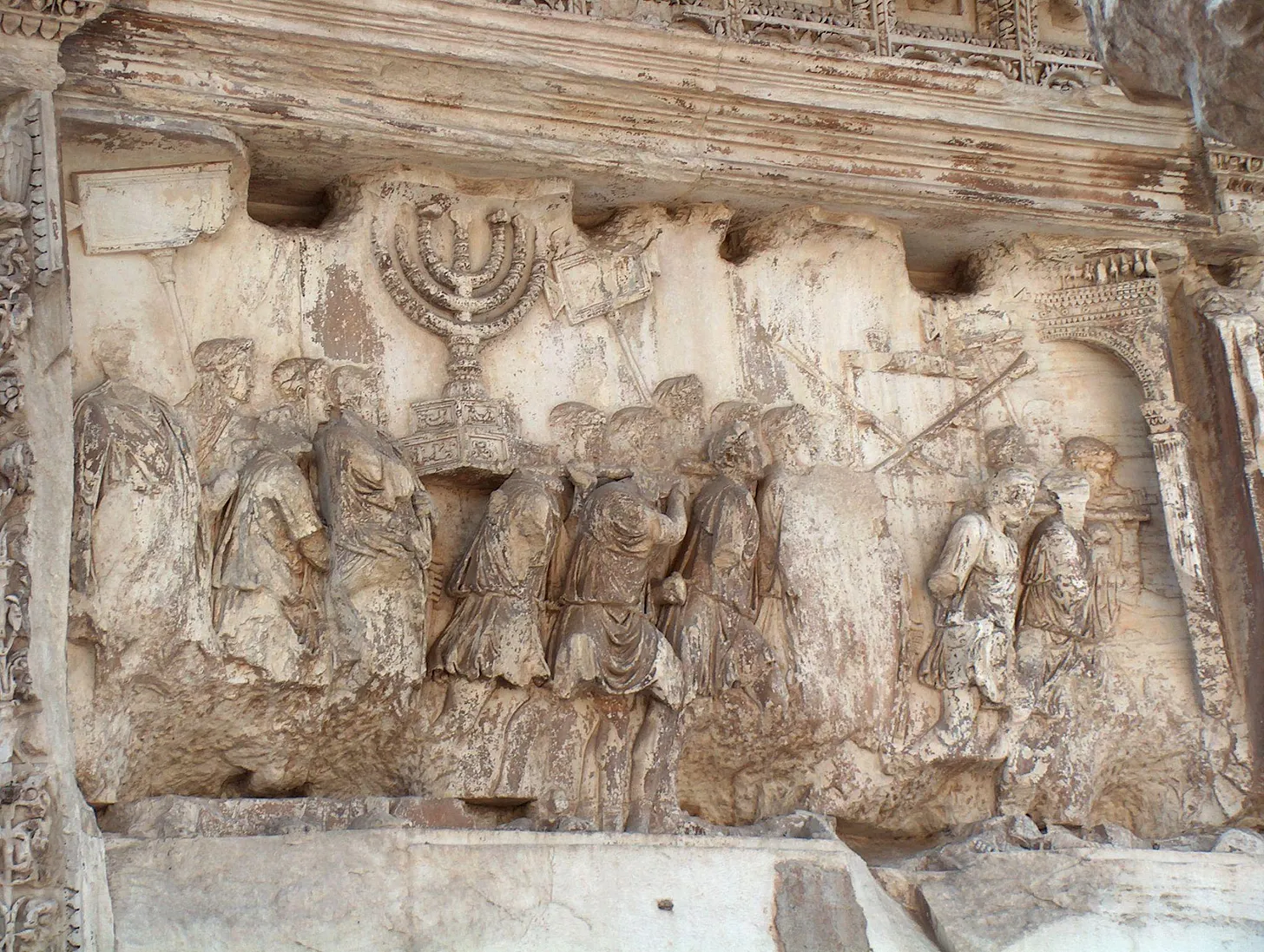
Photograph of the first-century relief on the Arch of Titus showing the Temple treasures carried away from Jerusalem.
The Day Jerusalem Fell
Photograph of the first-century relief on the Arch of Titus showing the Temple treasures carried away from Jerusalem.
The Day Jerusalem Fell
Chris Jackson via Hiraeth in Exile [reprinted with permission of the author] | November 22, 2026
In A.D. 70, Roman soldiers entered the ruins of the Temple in Jerusalem carrying the military standards of their legions.
The Jewish historian Flavius Josephus, who witnessed the war and subsequently wrote its history, records that the Romans placed their standards opposite the Temple’s eastern gate and offered sacrifices before them. Their general, Titus, was acclaimed amid the wreckage.
The sanctuary had burned. Its sacred vessels became the spoils of conquest. The great menorah would eventually be paraded through Rome, its humiliation commemorated in stone on the Arch of Titus, where the relief can still be seen.
The events were the culmination of a catastrophe that Our Lord had foretold approximately forty years earlier.
In today’s Gospel, Christ warns His disciples of the approaching destruction. He speaks of the abomination of desolation standing in the holy place, of terrible suffering, of flight so urgent that a man working in his field must abandon even his cloak.
For the people of Jerusalem, these warnings would become hideously concrete.
The historian Eusebius, writing in the fourth century, preserves an early Christian tradition that the faithful of Jerusalem were warned to leave the city before the war and took refuge at Pella, beyond the Jordan. Whatever uncertainties surround the details of that tradition, it reflects the ancient Christian understanding that Our Lord’s warning demanded obedience.
Christ had told His disciples what was coming. He had also told them something about the entire course of history.
The same Gospel that foretells Jerusalem’s ruin carries us forward to the final tribulation, the appearance of false Christs, and the glorious return of the Son of Man. The Church places these words before us on the final Sunday of her liturgical year because the destruction of Jerusalem prefigures a greater reckoning.
Every earthly kingdom will have its final day. Every institution built upon human power will eventually confront the limits of that power.
And every man will stand before Christ.
The Abomination in the Holy Place
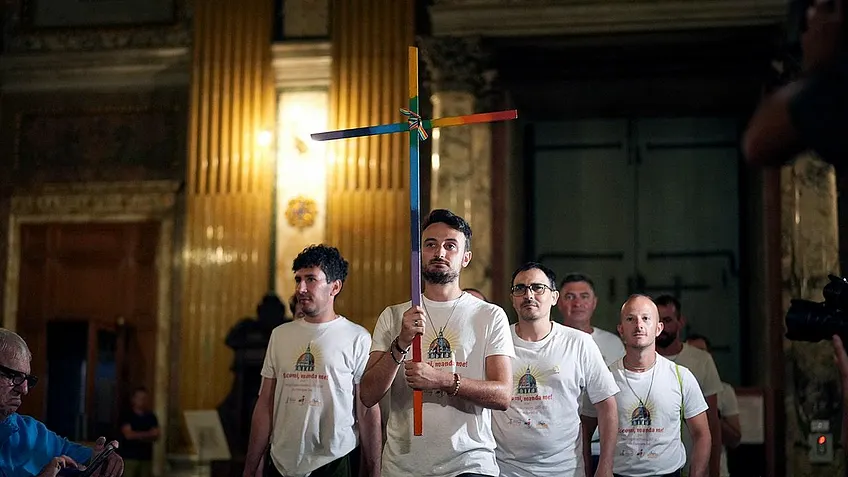
Participants in the September 6, 2025, LGBT Jubilee pilgrimage carry a rainbow-colored cross into St. Peter’s Basilica. The event was included in the Vatican’s official Jubilee calendar.
There is a more disturbing possibility within Our Lord’s prophecy than the physical destruction of Jerusalem.
What if the holy place itself becomes the dwelling place of a counterfeit religion?
The ancient Christian commentators contemplated precisely such a danger.
Writing in the fifth century, St. John Cassian discussed the abomination of desolation in his Conferences, Book VIII, chapter 4. He explained that Scripture sometimes admits both a historical and a future fulfillment. Having referred to the earlier profanation of Jerusalem’s Temple by an idol of Jupiter, he spoke of an abomination that was:
“again to stand in the Church through the coming of Antichrist.”
Cassian understood the ancient sacrilege and the future tribulation as related prophetic events. The abomination which had defiled the sanctuary of the Old Covenant could reappear within the Church during the final persecution.
St. Augustine developed another aspect of this danger in The City of God, Book XX, chapter 19.
Commenting upon St. Paul’s prophecy that the Man of Sin would sit in the Temple of God, Augustine observed that the Temple might signify the Christian Church. He also recorded an interpretation according to which Antichrist represented both an individual leader and the collective body of those who followed him.
Some commentators, Augustine explained, understood the passage to mean that Antichrist would present himself as though he were the Church.
This is an extraordinary possibility.
The deception of Antichrist need not announce itself through an openly foreign religion. It might appropriate the appearance of Christianity, invoke its authority, and claim the obedience of the faithful while advancing doctrines contrary to divine revelation.
St. Jerome supplied the specifically doctrinal interpretation in his commentary on Matthew 24:15–18. The abomination of desolation, he explained, could also signify every form of perverse doctrine standing in the holy place, which he expressly identified as the Church.
There is a terrible difference between an enemy who burns a church and one who occupies its sanctuary while teaching another religion. The former announces his hostility. The latter can demand obedience in the name of the very institution whose Faith he undermines.
Pope St. Pius X recognized the danger of internal subversion when he condemned Modernism in 1907.
In Pascendi Dominici Gregis, he warned that the enemies of Catholic doctrine were already operating within the Church, including among the clergy. They presented themselves as reformers while attacking the foundations of revealed religion.
The subsequent history of the postconciliar revolution gives these warnings particular urgency.
On July 29, 1976, Archbishop Marcel Lefebvre published his Reflections on the Suspension a Divinis, addressing the sanctions imposed upon him for resisting the conciliar reforms.
His language was uncompromising:
Quote:“This Conciliar Church is a schismatic Church, because it breaks with the Catholic Church of all time.”
Lefebvre accused the new establishment of possessing its own dogmas, priesthood, institutions, and worship. He specifically identified the new conception of religious liberty and the reformed understanding of the Mass among the principles he believed contradicted previous Catholic teaching.
His accusation concerned something far more serious than a disagreement over disciplinary preferences or liturgical aesthetics.
He believed that the institutions claiming to represent the Catholic Church were promoting a religion fundamentally incompatible with the Faith they purported to preserve.
The documentary record gives substance to his charge.
In 1928, Pope Pius XI had condemned religious indifferentism in Mortalium Animos, rejecting the proposition that different religions were more or less equally good and praiseworthy. The Catholic Church possessed the truth revealed by Jesus Christ; religious unity could never be achieved by treating contradictory professions of faith as equally acceptable.
The Second Vatican Council’s declaration Dignitatis Humanae, promulgated in 1965, asserted a civil right to religious freedom grounded in human dignity, extending even to those who fail to fulfill their obligation to seek and embrace religious truth, subject to the requirements of public order. Although the declaration claimed to leave traditional Catholic doctrine intact, Lefebvre considered its treatment of religious liberty irreconcilable with the teaching of the previous popes.
The First Vatican Council had already established in Dei Filius that revealed doctrine was entrusted to the Church as a divine deposit to be faithfully guarded and explained. Its meaning could never be altered under the pretext of a more profound understanding.
The question confronting Catholics, therefore, concerns the identity and continuity of the religion being taught.
An imposing ecclesiastical structure cannot resolve that question by appealing to its own authority. The doctrine must be examined.
The comparison with Jerusalem becomes particularly striking here.
The ancient Temple was destroyed, but its destruction could never invalidate God’s promises. The sacrifices of the Old Covenant had already found their fulfillment in the one perfect Sacrifice of Jesus Christ.
The Catholic Church, established by that same divine Redeemer, possesses an entirely different promise. She can never defect from the Faith or cease to exist.
Her enemies, however, can appropriate the outward instruments of religious authority. They can occupy buildings, inherit administrative machinery, and claim the prestige accumulated through centuries of Catholic history.
Such possessions cannot confer divine authority upon error.
The Fathers did not identify Vatican II as the fulfillment of these prophecies. Their writings establish a traditional basis for contemplating a future profanation operating under the appearance of sacred authority. Whether the postconciliar establishment constitutes such a counterfeit must be examined through its doctrines and practices, measured against the Catholic Faith previously professed.
That is precisely the examination modern Catholics are so frequently discouraged from undertaking.
Our Lord’s warning remains: when the abomination stands in the holy place, those who read must understand.
Even the Elect May Be Deceived
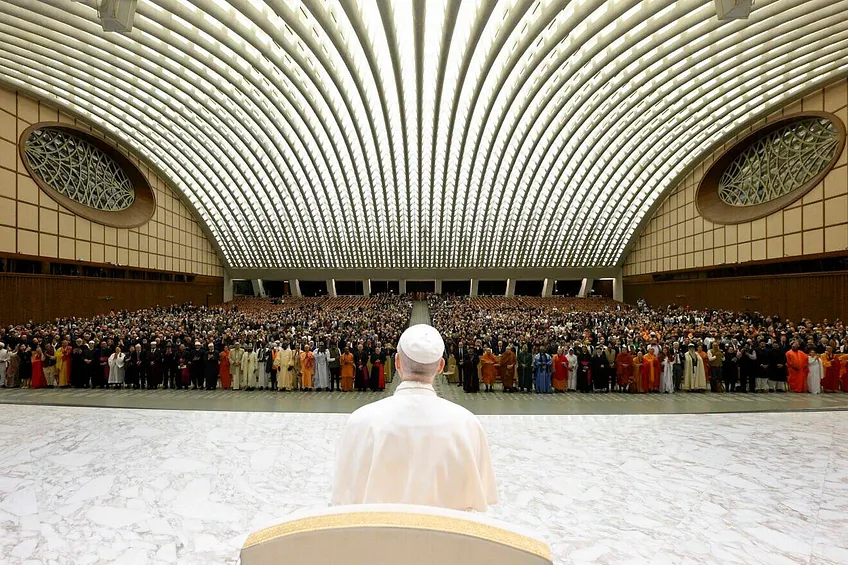
Leo XIV presides over the Vatican’s October 28, 2025, celebration of Nostra Aetate, surrounded by representatives of the world’s religions. Sixty years after Vatican II, interreligious dialogue has become a defining feature of the postconciliar establishment.
Our Lord’s next warning is especially grave.
False Christs and false prophets will arise, accompanied by signs and wonders capable of deceiving, if it were possible, even the elect.
Christ is describing a danger that reaches beyond the obviously wicked. Those who sincerely desire salvation may still be exposed to extraordinary deception.
St. John Chrysostom, in his seventy-sixth homily on St. Matthew, distinguishes the destruction of Jerusalem from the later events associated with Antichrist and the final coming of Our Lord. He emphasizes the terrible power of the deception that will accompany those events.
Christ tells His disciples in advance precisely because they will require steadfastness.
It is worth considering how readily men confuse religious success with divine approval.
A movement attracts enormous crowds. Its leaders enjoy universal praise. Its ceremonies are broadcast across the world. It possesses immense buildings, considerable wealth, and the approval of influential people.
None of these things establishes the truth of its doctrine.
The history of the Church supplies abundant evidence that the Faith can be persecuted by powerful men and defended by those possessing little worldly influence.
St. Athanasius endured exile during the Arian crisis. St. Maximus the Confessor suffered imprisonment and mutilation for resisting the Monothelite heresy. Neither man’s fidelity could be measured by his popularity with the authorities of his day.
Their examples reveal what the Catholic profession of faith can demand when error acquires influence.
There is also a danger in becoming so fascinated with the crisis that one begins treating every sensational claim as an established fact.
Our Lord warns against false prophets. He does not encourage credulity toward everyone who announces that he has discovered the precise identity of Antichrist or the date of the world’s destruction.
Catholics have been given revealed doctrine, the teachings of the Fathers, and the perennial magisterium of the Church. They possess a substantial inheritance against which new claims must be examined.
A man who neglects that inheritance while chasing apocalyptic speculation has exchanged something certain for something uncertain.
The enemy of souls is hardly concerned with which distraction succeeds, provided the soul is drawn away from obedience to God.
What St. Paul Asks of the Faithful
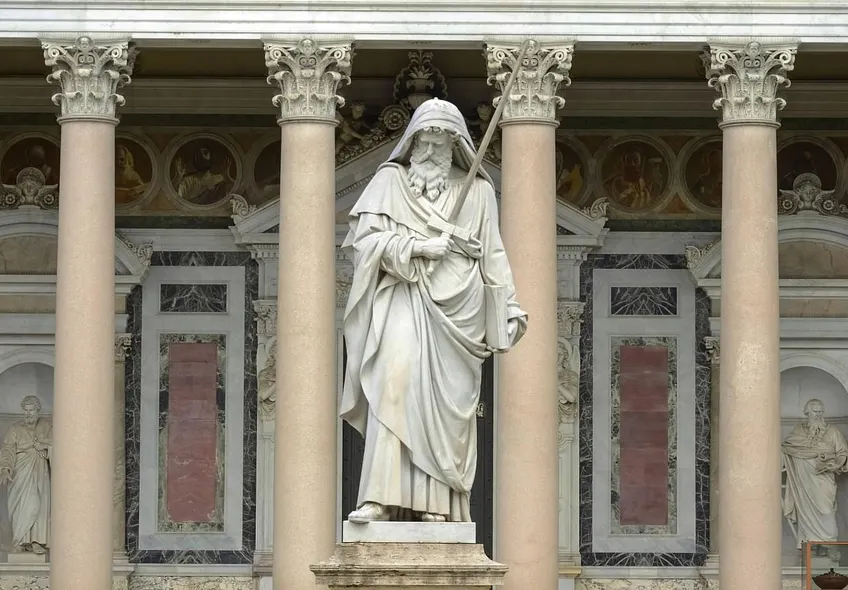
At first glance, today’s Epistle appears almost strangely peaceful beside the Gospel.
Christ speaks of tribulation and cosmic upheaval. St. Paul writes to the Colossians about spiritual wisdom, patience, good works, and thanksgiving.
St. Paul asks God to grant the faithful knowledge of His will, that they may walk worthily of Him and grow in every good work.
He prays that they will be strengthened with patience and long-suffering.
These virtues become particularly necessary during periods of confusion and persecution.
There are Catholics who can explain the entire history of the liturgical revolution but struggle to govern their temper at home. Others have acquired considerable knowledge of ecclesiastical controversies while neglecting regular confession, mental prayer, or their obligations toward members of their families.
The public crisis does not suspend the ordinary demands of sanctity. It makes them more urgent.
A father responsible for the religious education of his children cannot fulfill that obligation merely by possessing correct opinions about Vatican II. He must teach those children their prayers, instruct them in the commandments, bring them to Mass, and show them what obedience to God looks like in everyday life.
A husband who defends Catholic marriage in public must practice fidelity and charity in his own household.
The man who condemns religious indifferentism must be willing to speak honestly about the Catholic Faith when doing so costs him the approval of his acquaintances.
These obligations are seldom dramatic. They are frequently inconvenient. They are also among the places where fidelity is tested most severely.
St. Paul’s language directs the soul toward Christ’s redeeming work. God has delivered the faithful from the power of darkness and brought them into the kingdom of His beloved Son, through whose Blood they possess redemption and the remission of sins.
Salvation comes through the merits of Jesus Christ, applied to souls by His grace. The Catholic must cooperate with that grace through faith, repentance, obedience, and perseverance.
The coming judgment will expose the difference between possessing religious knowledge and actually living according to it.
The Peace Promised Amid Desolation
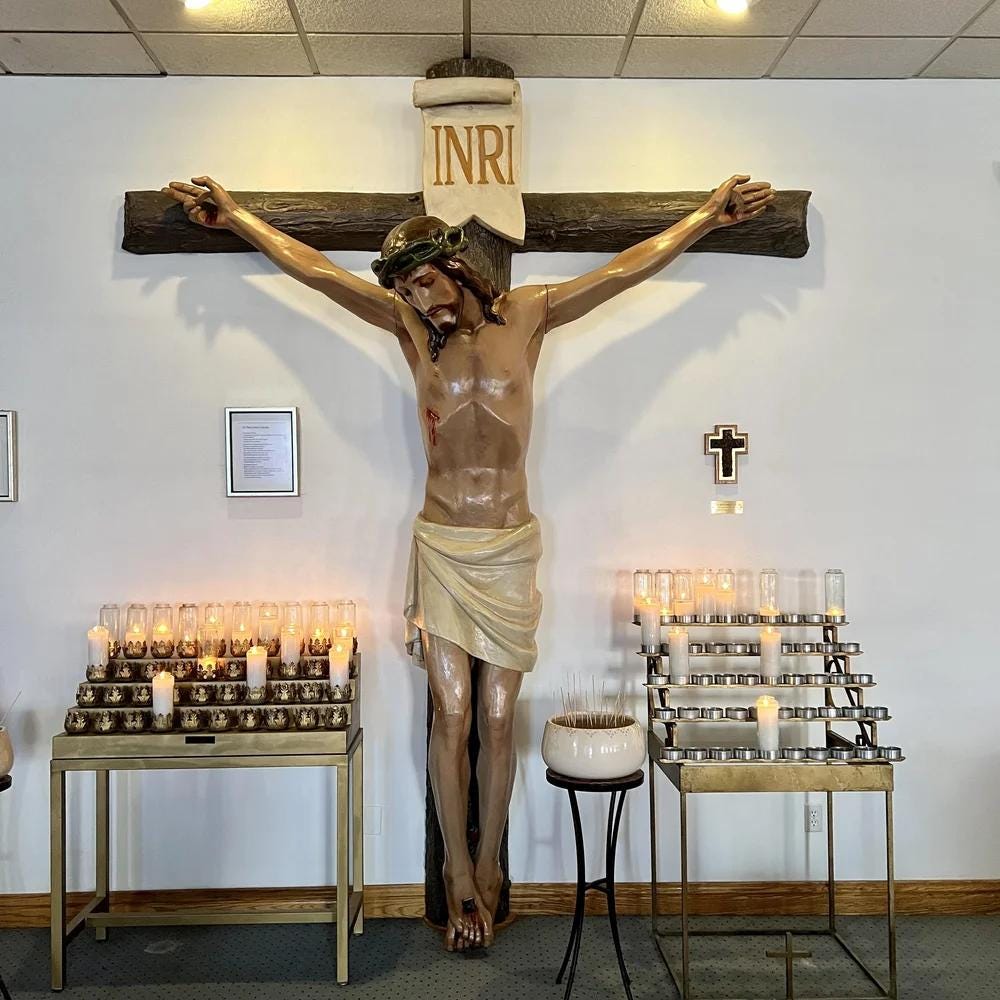
The Mass of this final Sunday contains an extraordinary juxtaposition.
The Gospel presents the destruction of Jerusalem and the approach of the final judgment.
But the Introit begins with the words of God recorded by Jeremias:
Dicit Dominus: Ego cogito cogitationes pacis, et non afflictionis.
The Lord declares that His thoughts are thoughts of peace.
This promise originally came to a people experiencing the consequences of national disaster and exile. They had seen their world overturned, and the prophet announced God’s intention to restore them.
The Church deliberately places that promise at the beginning of a Mass concerned with catastrophe.
It would be easy to mistake God’s peace for the comfortable preservation of our earthly circumstances.
The Scriptures offer no such guarantee.
Jerusalem fell. Christian communities have been scattered by persecution. Monasteries have been destroyed, churches confiscated, and entire Catholic societies brought low by revolution or apostasy.
Holy men have died in prisons. Families have watched their children abandon the Faith.
The peace promised by God reaches beyond the security of earthly institutions.
It is the peace of souls reconciled to Him, sustained by His grace, and prepared for everlasting union with Him.
The Secret of today’s Mass asks God to turn our hearts toward Himself and deliver us from earthly desires so that we may aspire to heavenly things.
That prayer supplies a necessary correction to our instinctive response to calamity.
We naturally want the world around us restored to an earlier condition. Catholics who remember a more recognizably Catholic society have understandable reasons to mourn what has been lost.
The restoration of a Catholic civilization, desirable as it is, remains subordinate to the salvation of souls.
A man can spend his entire life longing for the recovery of Christian society and still lose his own soul through an attachment he refuses to surrender.
Our Lord asks something more intimate and demanding than political nostalgia.
He commands us to be ready.
The Judgment That Concerns Every Soul
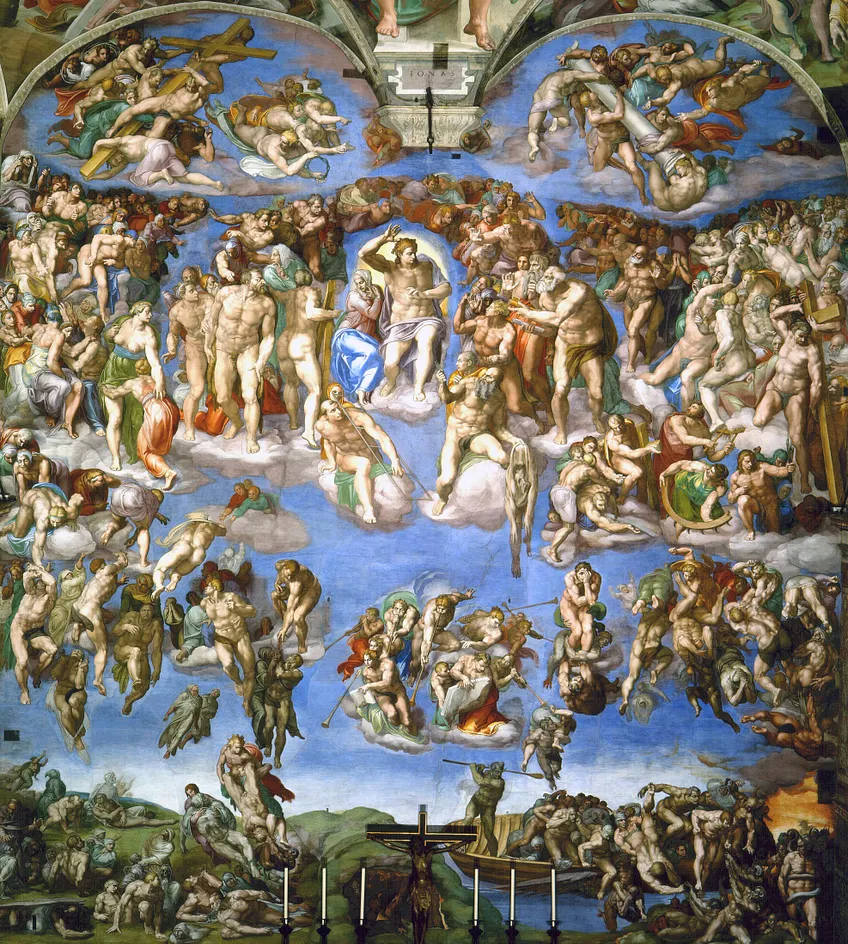
The great fresco in the Sistine Chapel depicts Christ judging the living and the dead. Its powerful imagery reinforces your discussion of death, mortal sin, repentance, and eternity.
There is an uncomfortable truth about the Second Coming that often disappears beneath discussions of prophecy.
Most of us will encounter our judgment through death long before the final consummation of the world.
The precise chronology of the last days is consequently of less immediate importance than our present spiritual condition.
Consider a man who has allowed a serious sin to become habitual.
He knows the Church’s teaching. His conscience has troubled him repeatedly. He intends to confess, amend his life, and begin again.
But there are always more pressing demands.
His work is exhausting. His family requires attention. He has appointments to keep and obligations to discharge. Perhaps he has spent a great deal of time reading about the crisis in the Church, convincing himself that his concern for Catholic orthodoxy compensates for deficiencies in his personal conduct.
He expects another week.
Then comes a sudden illness, an accident, or a death that no one anticipated.
All the ordinary arrangements of his life are interrupted.
The question of his eternal destiny, postponed through countless smaller decisions, has become the only question that matters.
This is why the Church speaks so insistently about the necessity of remaining in the state of grace.
Mortal sin destroys charity in the soul. If a man dies deliberately estranged from God, having refused the repentance and mercy offered to him, his loss is eternal.
The doctrine of hell has never been a pleasant subject. Our Lord spoke of it because He loves souls and desires their salvation.
The saints understood this. Their seriousness about eternity arose from their conviction that Christ’s warnings were true.
Today’s Gospel calls Catholics to recover something of that seriousness.
Go to confession when it is needed. Make a sincere examination of conscience. Abandon the occasions of sin that have repeatedly led to falls. Receive Holy Communion worthily. Give your children the faith that earlier generations labored to preserve.
And when the Church’s present afflictions become particularly discouraging, recall that Our Lord foretold tribulation without withdrawing His promises.
He remains sovereign over history.
The Words That Cannot Pass Away
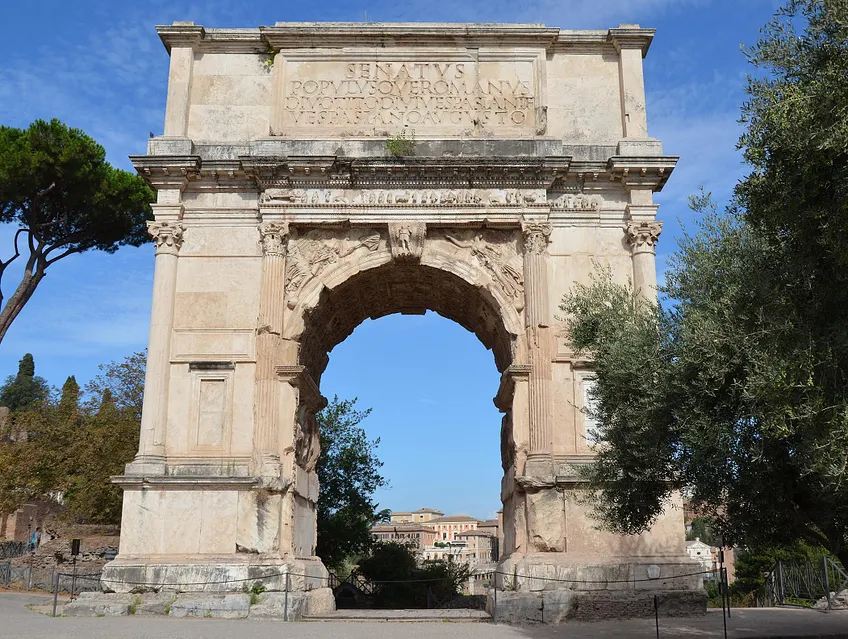
The Arch of Titus — Rome. Photograph of the entire surviving triumphal arch. Its contrast with the opening image is intentional: Rome celebrated its victory over Jerusalem, but the monument now bears witness to Christ's prophecy.
The final sentence of today’s Gospel deserves to remain in our thoughts throughout the coming week.
Caelum et terra transibunt, verba autem mea non praeteribunt.
Heaven and earth shall pass away, but His words shall never pass away.
The Roman armies that destroyed Jerusalem eventually disappeared. The empire that erected monuments to its triumph has long since ceased to exist.
The Arch of Titus survives, weathered by nearly two millennia, still displaying the sacred vessels carried away from the ruined Temple.
The Roman conquerors intended their monument to celebrate the permanence of imperial glory.
History has given it another significance.
It stands as a reminder of the extraordinary accuracy of Christ’s prophecy and of the mortality of every earthly power.
The enemies of the Church will likewise have their appointed hour. Human institutions may flourish for generations, then collapse with a speed no one anticipated.
Our Lord’s promise concerns something infinitely greater.
His revelation remains true. His commandments retain their authority. The merits of His Passion remain sufficient for the salvation of souls. His Church will endure according to His divine promises, even amid the gravest persecutions.
As the liturgical year draws to its conclusion, the Church asks us to examine the direction of our lives.
Have we become more faithful during these past twelve months? Have we grown in prayer and charity? Have we resisted temptation more firmly, received the sacraments more worthily, and taken greater care of the souls entrusted to us?
Such questions admit of no comfortable substitute.
The Collect of today’s Mass asks God to stir up the wills of His faithful, that they may pursue good works more earnestly and receive more abundant assistance from His mercy.
It is a fitting prayer for the last Sunday of the ecclesiastical year.
We have been warned of the end. We have been promised the assistance of divine grace.
The remaining question is how faithfully we shall use the time that God has given us.
Prayer for the Last Sunday after Pentecost
Excita, quaesumus, Domine, tuorum fidelium voluntates: ut divini operis fructum propensius exsequentes, pietatis tuae remedia maiora percipiant.
Stir up, we beseech Thee, O Lord, the wills of Thy faithful people: that they, seeking more earnestly the fruit of divine grace, may more abundantly receive the healing gifts of Thy loving kindness.
Through Our Lord Jesus Christ, Thy Son, Who liveth and reigneth with Thee in the unity of the Holy Ghost, God, world without end. Amen.
Sources and Further Reading
- Roman Missal (1962), Twenty-Fourth and Last Sunday after Pentecost: Epistle, Colossians 1:9–14; Gospel, Matthew 24:15–35; Collect, Introit, and Secret. 1962 Roman Missal — Mass Propers
- Flavius Josephus, The Jewish War, Book VI, chapters 4 and 6: The destruction of the Jerusalem Temple and the Roman military standards placed beside its eastern gate. Read the primary account
- Eusebius of Caesarea, Ecclesiastical History, Book III, chapter 5: The ancient tradition concerning the flight of Jerusalem’s Christians to Pella. Read the text
- St. John Cassian, Conferences, Book VIII, chapter 4: The double fulfillment of biblical prophecies and the abomination of desolation standing within the Church through Antichrist. Read Cassian
- St. Augustine, The City of God, Book XX, chapter 19: The Man of Sin, the Temple of God, and the interpretation of Antichrist presenting himself as the Church. Read Augustine
- St. Jerome, Commentary on Matthew, Book IV, Matthew 24:15–18: The interpretation of the abomination of desolation as perverted doctrine standing within the Church. Read Jerome
- Pope St. Pius X, Pascendi Dominici Gregis (September 8, 1907): The condemnation of Modernism and the infiltration of doctrinal error within the Church. Read the encyclical
- Archbishop Marcel Lefebvre, Reflections on the Suspension a Divinis (July 29, 1976): His criticism of the Conciliar Church, its doctrines, institutions, and worship. Read Lefebvre’s statement
- First Vatican Council, Dei Filius, chapter IV (1870): The preservation and unchanging meaning of revealed dogma. Original Latin text
- Pope Pius XI, Mortalium Animos (January 6, 1928): Catholic teaching concerning religious unity and the errors of indifferentism. Read the encyclical
- Second Vatican Council, Dignitatis Humanae (December 7, 1965), paragraph 2: The conciliar declaration concerning religious freedom as a civil right. Read the declaration
- St. John Chrysostom, Homily 76 on Matthew: The destruction of Jerusalem, the appearance of false Christs, and the Second Coming. Read the homily
"So let us be confident, let us not be unprepared, let us not be outflanked, let us be wise, vigilant, fighting against those who are trying to tear the faith out of our souls and morality out of our hearts, so that we may remain Catholics, remain united to the Blessed Virgin Mary, remain united to the Roman Catholic Church, remain faithful children of the Church."- Abp. Lefebvre